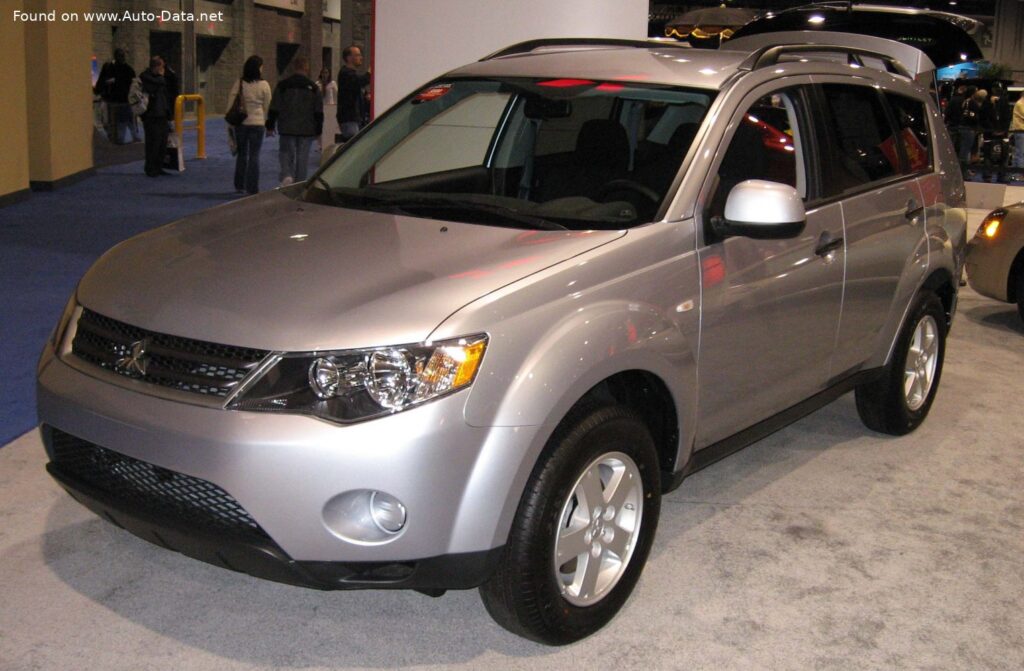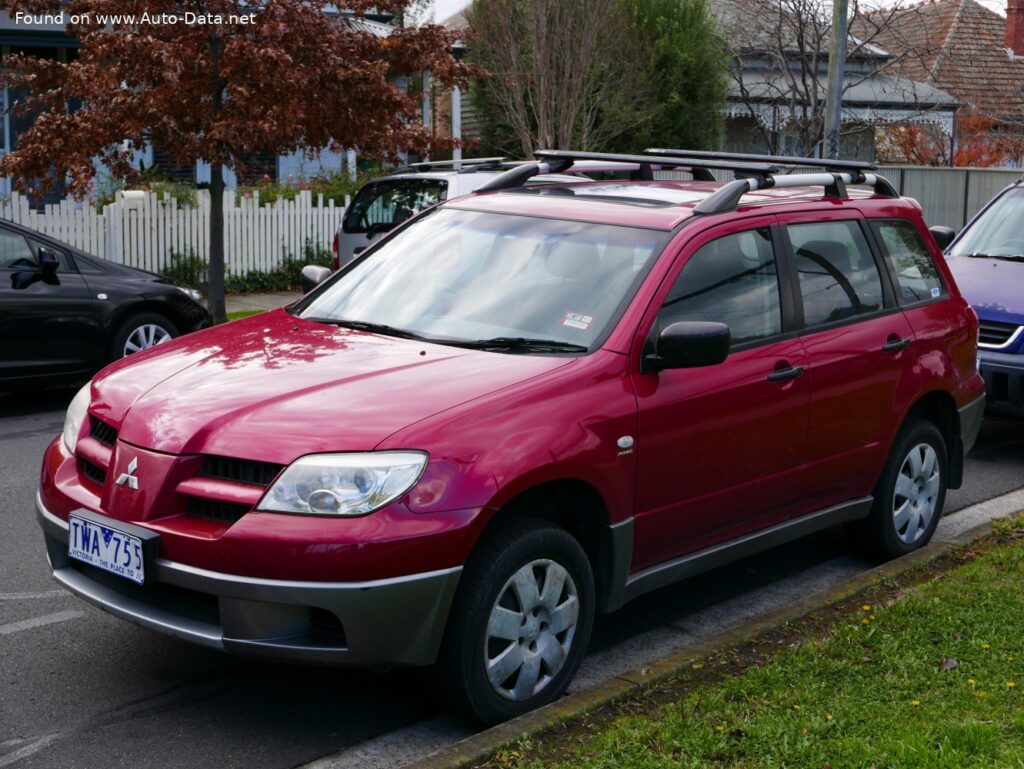
The Mitsubishi Outlander I 2.4 (140 Hp) Sportronic, produced between 2003 and 2004, represents Mitsubishi’s initial foray into the compact crossover SUV segment. This vehicle was primarily marketed in Europe and Asia, offering a blend of practicality, affordability, and Mitsubishi’s established engineering expertise. While not officially sold in the United States during its first generation, the Outlander I laid the groundwork for the model’s eventual introduction to the North American market. It aimed to compete with established European rivals like the Honda CR-V and Toyota RAV4, offering a compelling alternative with its unique styling and available features.
Mitsubishi Outlander I: A First Generation Overview
The Outlander I was designed to appeal to buyers seeking a versatile vehicle suitable for both urban commuting and weekend adventures. Its crossover architecture, combining elements of a traditional SUV with the ride comfort of a passenger car, proved popular in markets where space efficiency and maneuverability were highly valued. The “Sportronic” designation refers to the four-speed automatic transmission, a key feature aimed at providing a smooth and convenient driving experience. The 2.4-liter engine was chosen for its balance of power and fuel economy, making it a practical choice for everyday use.
Engine & Performance
Powering the Mitsubishi Outlander I 2.4 Sportronic is a 2.4-liter inline-four cylinder gasoline engine, designated the 4G64. This naturally aspirated engine produces 140 horsepower at 5000 rpm and 213 Newton-meters (157.1 lb.-ft.) of torque at 2500 rpm. The engine’s power-to-weight ratio, at approximately 59.5 horsepower per liter, provided adequate performance for its intended purpose. The engine utilizes a multi-port fuel injection system and a single overhead camshaft (SOHC) valvetrain. The four-speed automatic transmission, the “Sportronic” component, allows for a degree of driver control, offering the ability to manually select gears for enhanced responsiveness when needed. The drivetrain is front-wheel drive, prioritizing fuel efficiency and simplicity. While not a performance-oriented vehicle, the Outlander I offered sufficient power for comfortable cruising and everyday driving tasks.
Design & Features
The Mitsubishi Outlander I is a five-door SUV/Crossover with seating for five passengers. Its styling was contemporary for the early 2000s, featuring a relatively high roofline and a compact footprint. The body’s design prioritized practicality and interior space. The vehicle’s interior was designed with functionality in mind, offering a comfortable and reasonably spacious cabin. Key features included a relatively generous trunk space, ranging from 691 liters (24.4 cubic feet) with the rear seats up to 1708 liters (60.32 cubic feet) with the rear seats folded down. Safety features for the time included an Anti-lock Braking System (ABS). The suspension system, comprised of an independent McPherson strut setup at the front and an independent multi-link setup at the rear, aimed to provide a comfortable ride and stable handling. Hydraulic power steering contributed to ease of maneuverability. The vehicle rode on 7J x 16 inch wheel rims, fitted with 225/60 R16 tires.
Technical Specifications
| Brand | Mitsubishi |
| Model | Outlander |
| Generation | Outlander I |
| Type (Engine) | 2.4 (140 Hp) Sportronic |
| Start of production | 2003 |
| End of production | 2004 |
| Powertrain Architecture | Internal Combustion engine |
| Body type | SUV, Crossover |
| Seats | 5 |
| Doors | 5 |
| Fuel Type | Petrol (Gasoline) |
| Power | 140 Hp @ 5000 rpm |
| Power per litre | 59.5 Hp/l |
| Torque | 213 Nm @ 2500 rpm / 157.1 lb.-ft. @ 2500 rpm |
| Engine layout | Front, Transverse |
| Engine Model/Code | 4G64 |
| Engine displacement | 2351 cm3 / 143.47 cu. in. |
| Number of cylinders | 4 |
| Engine configuration | Inline |
| Cylinder Bore | 86.5 mm / 3.41 in. |
| Piston Stroke | 100 mm / 3.94 in. |
| Compression ratio | 10.8:1 |
| Number of valves per cylinder | 4 |
| Fuel injection system | Multi-port manifold injection |
| Engine aspiration | Naturally aspirated engine |
| Valvetrain | SOHC |
| Engine oil capacity | 4.3 l / 4.54 US qt | 3.78 UK qt |
| Coolant | 7 l / 7.4 US qt | 6.16 UK qt |
| Trunk (boot) space – minimum | 691 l / 24.4 cu. ft. |
| Trunk (boot) space – maximum | 1708 l / 60.32 cu. ft. |
| Fuel tank capacity | 60 l / 15.85 US gal | 13.2 UK gal |
| Length | 4550 mm / 179.13 in. |
| Width | 1750 mm / 68.9 in. |
| Height | 1684 mm / 66.3 in. |
| Wheelbase | 2878 mm / 113.31 in. |
| Front track | 1496 mm / 58.9 in. |
| Rear (Back) track | 1506 mm / 59.29 in. |
| Drivetrain Architecture | The Internal combustion engine (ICE) drives the front wheels of the vehicle. |
| Drive wheel | Front wheel drive |
| Number of gears and type of gearbox | 4 gears, automatic transmission |
| Front suspension | Independent, type McPherson with coil spring and anti-roll bar |
| Rear suspension | Independent multi-link spring suspension with stabilizer |
| Front brakes | Disc |
| Rear brakes | Drum |
| Assisting systems | ABS (Anti-lock braking system) |
| Steering type | Steering rack and pinion |
| Power steering | Hydraulic Steering |
| Tires size | 225/60 R16 |
| Wheel rims size | 7J x 16 |
The Mitsubishi Outlander I, despite its limited production run, served as a crucial stepping stone for the Outlander model line. It established the vehicle’s core characteristics – a practical crossover design, a comfortable ride, and a focus on everyday usability – that would continue to define subsequent generations. While not a groundbreaking vehicle in terms of innovation, it provided a solid foundation for Mitsubishi’s expansion into the increasingly popular compact SUV market.