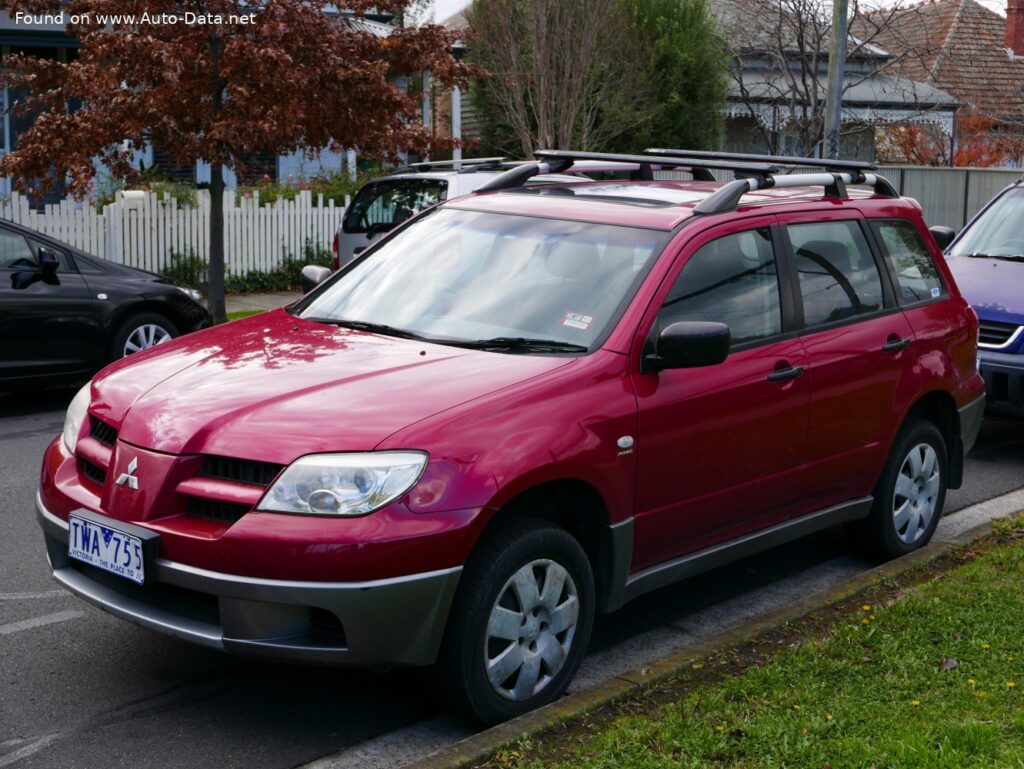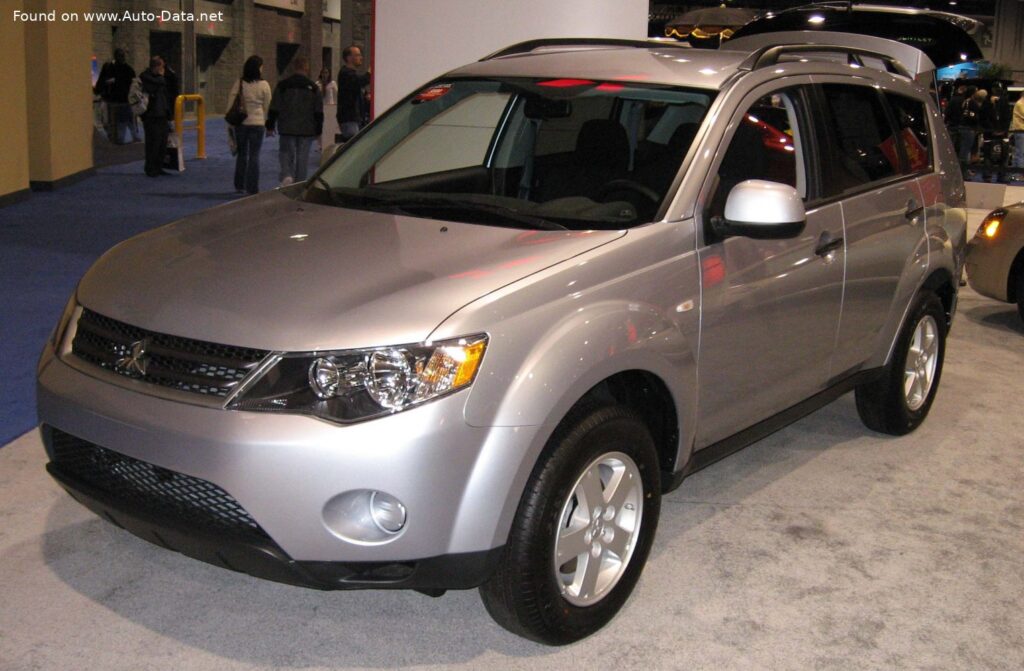
The Mitsubishi Outlander II, produced between 2006 and 2009, represents the second generation of Mitsubishi’s compact crossover SUV. Sold primarily in Europe and Asia, the Outlander II aimed to provide a practical and versatile vehicle for families, blending the comfort of a passenger car with the capability of a sport utility vehicle. While not widely available in the North American market, it played a significant role in establishing Mitsubishi’s presence in the growing crossover segment globally. This article details the specifications and characteristics of the 2.0 DI-D variant, equipped with a 140 horsepower diesel engine and an automatic transmission.
Mitsubishi Outlander II 2.0 DI-D: Overview
The Outlander II marked a significant step forward for Mitsubishi in terms of design and technology. It offered a more refined driving experience compared to its predecessor, with improved handling and a more comfortable interior. The 2.0 DI-D engine was a key component of the European lineup, offering a balance of fuel efficiency and performance. The vehicle was positioned as a competitor to models like the Honda CR-V, Toyota RAV4, and Nissan X-Trail, offering a compelling alternative with its distinctive styling and available all-wheel-drive system.
Engine & Performance
The heart of the Outlander II 2.0 DI-D is a 1,968 cc (120.09 cubic inches) inline-four cylinder diesel engine, designated the BSY. This engine produces 140 horsepower at 4,000 rpm and 310 Nm (228.64 lb-ft) of torque at 1,750 rpm. The engine utilizes a pump-nozzle (unit injector) fuel injection system and is equipped with a turbocharger and intercooler to enhance performance. This configuration delivers a respectable power-to-weight ratio of 11.9 kg/Hp and a torque-to-weight ratio of 5.4 kg/Nm. The engine’s output translates to a combined fuel consumption of 7.5 liters per 100 kilometers (31.4 US mpg, 37.7 UK mpg, 13.3 km/l). The engine meets Euro 4 emission standards, reflecting the environmental regulations in place during its production period. Power is delivered to all four wheels via a six-speed automatic transmission, providing smooth and efficient gear changes.
Design & Features
The Mitsubishi Outlander II is a five-door SUV/Crossover with seating for five passengers. Its exterior design features a relatively conservative yet modern aesthetic, typical of early 21st-century SUVs. The vehicle’s dimensions are 4,640 mm (182.68 inches) in length, 1,800 mm (70.87 inches) in width, and 1,720 mm (67.72 inches) in height, with a wheelbase of 2,670 mm (105.12 inches). The interior prioritizes practicality and comfort, offering a spacious cabin and a versatile cargo area. The trunk offers a minimum capacity of 541 liters (19.11 cubic feet), expanding to 1,691 liters (59.72 cubic feet) with the rear seats folded down. Safety features include an Anti-lock Braking System (ABS), essential for maintaining control during emergency braking. The suspension utilizes coil springs on both the front and rear axles, providing a comfortable ride. The vehicle rides on 18-inch wheel rims with 225/55 R18 tires. The Outlander II’s design focused on providing a functional and family-friendly vehicle, prioritizing space and usability over outright sporty aesthetics.
Technical Specifications
| Brand | Mitsubishi |
| Model | Outlander |
| Generation | Outlander II |
| Type (Engine) | 2.0 DI-D (140 Hp) Automatic |
| Start of production | November, 2006 |
| End of production | October, 2009 |
| Powertrain Architecture | Internal Combustion engine |
| Body type | SUV, Crossover |
| Seats | 5 |
| Doors | 5 |
| Fuel consumption (urban) | 9 l/100 km (26.1 US mpg, 31.4 UK mpg, 11.1 km/l) |
| Fuel consumption (extra urban) | 6.4 l/100 km (36.8 US mpg, 44.1 UK mpg, 15.6 km/l) |
| Fuel consumption (combined) | 7.5 l/100 km (31.4 US mpg, 37.7 UK mpg, 13.3 km/l) |
| Fuel Type | Diesel |
| Emission standard | Euro 4 |
| Weight-to-power ratio | 11.9 kg/Hp |
| Weight-to-torque ratio | 5.4 kg/Nm |
| Power | 140 Hp @ 4000 rpm |
| Power per litre | 71.1 Hp/l |
| Torque | 310 Nm @ 1750 rpm (228.64 lb.-ft. @ 1750 rpm) |
| Engine layout | Front, Transverse |
| Engine Model/Code | BSY |
| Engine displacement | 1968 cm3 (120.09 cu. in.) |
| Number of cylinders | 4 |
| Engine configuration | Inline |
| Cylinder Bore | 81 mm (3.19 in.) |
| Piston Stroke | 95.5 mm (3.76 in.) |
| Compression ratio | 18:1 |
| Number of valves per cylinder | 4 |
| Fuel injection system | Pump-nozzle (Unit Injector) |
| Engine aspiration | Turbocharger, Intercooler |
| Kerb Weight | 1665 kg (3670.7 lbs.) |
| Max. weight | 2350 kg (5180.86 lbs.) |
| Max load | 685 kg (1510.17 lbs.) |
| Trunk (boot) space – minimum | 541 l (19.11 cu. ft.) |
| Trunk (boot) space – maximum | 1691 l (59.72 cu. ft.) |
| Fuel tank capacity | 60 l (15.85 US gal | 13.2 UK gal) |
| Length | 4640 mm (182.68 in.) |
| Width | 1800 mm (70.87 in.) |
| Height | 1720 mm (67.72 in.) |
| Wheelbase | 2670 mm (105.12 in.) |
| Front track | 1540 mm (60.63 in.) |
| Rear (Back) track | 1540 mm (60.63 in.) |
| Drive wheel | All wheel drive (4×4) |
| Number of gears and type of gearbox | 6 gears, automatic transmission |
| Front suspension | Coil spring |
| Rear suspension | Coil spring |
| Front brakes | Ventilated discs |
| Rear brakes | Disc |
| Assisting systems | ABS (Anti-lock braking system) |
| Steering type | Steering rack and pinion |
| Tires size | 225/55 R18 |
| Wheel rims size | 18 |