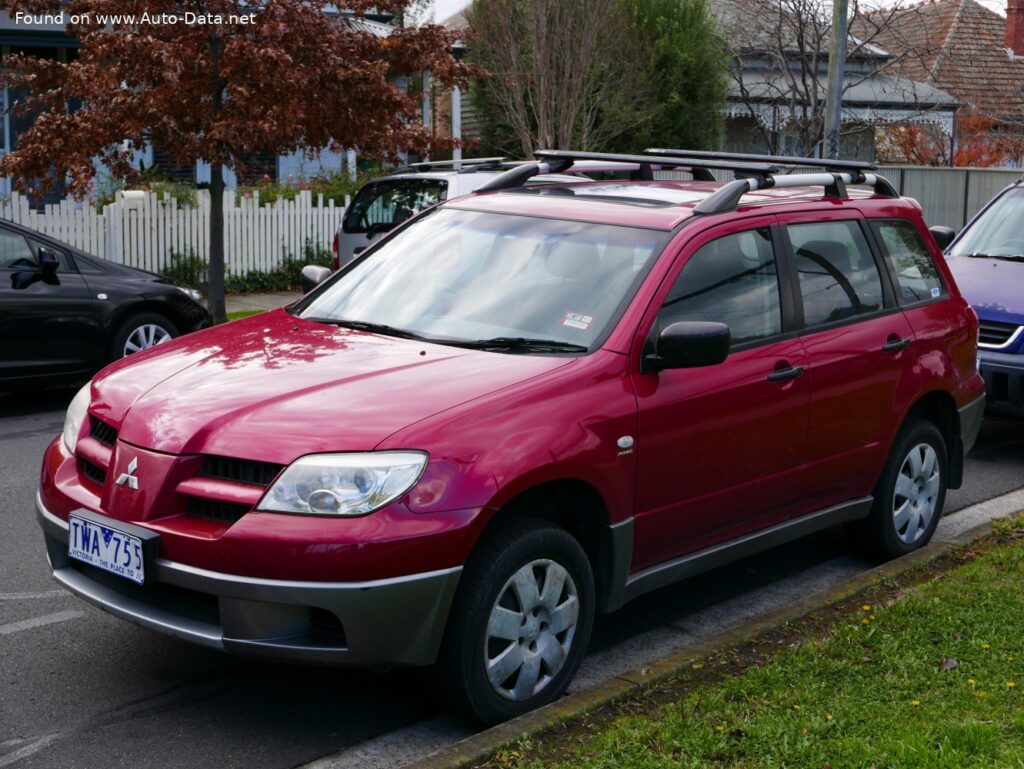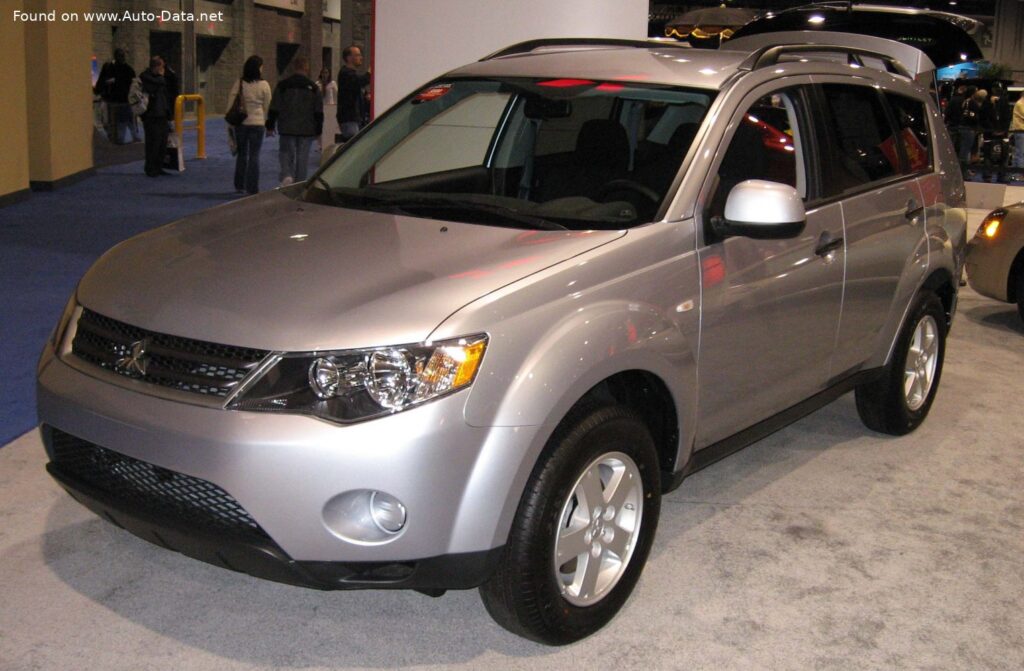
The Mitsubishi Outlander II, produced from 2005 to 2009, represents the second generation of Mitsubishi’s compact crossover SUV. Positioned as a competitor to vehicles like the Honda CR-V and Toyota RAV4, the Outlander II aimed to offer a blend of practicality, affordability, and available all-wheel drive. While not initially a major seller in the North American market, it played a significant role in expanding Mitsubishi’s global presence, particularly in Europe and Asia, where the demand for compact SUVs was growing. This generation marked a shift towards a more refined and car-like driving experience compared to its predecessor, focusing on improved comfort and interior space.
Mitsubishi Outlander II 2.4i: An Overview
The 2.4i variant of the Outlander II, equipped with a 2.4-liter inline-four engine producing 170 horsepower, was a key offering in the lineup. It catered to buyers seeking a balance between fuel efficiency and adequate performance for everyday driving. The Outlander II’s design incorporated Mitsubishi’s styling cues of the era, with a focus on a modern and approachable aesthetic. The vehicle was offered with either front-wheel drive or Mitsubishi’s Super All-Wheel Control (S-AWC) system, enhancing its all-weather capability.
Engine & Performance
The heart of the Outlander II 2.4i is the 4B12 2.4-liter inline-four cylinder engine. This naturally aspirated engine delivers 170 horsepower at 6000 rpm and 232 Nm (171.11 lb.-ft.) of torque at 4100 rpm. The engine utilizes a multi-port fuel injection system and a double overhead camshaft (DOHC) valvetrain, contributing to its relatively smooth operation. Acceleration from 0 to 100 km/h (0-62 mph) takes 9.6 seconds, while the 0-60 mph sprint is achieved in approximately 9.1 seconds. The Outlander II 2.4i has a top speed of 190 km/h (118.06 mph). Fuel economy is rated at 9.4 liters per 100 kilometers (25 US mpg combined), with figures varying between 12.6 l/100km (18.7 US mpg) in urban driving and 7.6 l/100km (30.9 US mpg) on the highway. The engine’s power-to-weight ratio is 9.8 kg/Hp, and the torque-to-weight ratio is 7.2 kg/Nm.
Design & Features
The Mitsubishi Outlander II is a five-door SUV/Crossover, offering seating for five passengers. Its body style reflects the growing trend towards more car-like SUVs, prioritizing comfort and practicality. The vehicle’s dimensions are 4640 mm (182.68 in) in length, 1800 mm (70.87 in) in width, and 1720 mm (67.72 in) in height, with a wheelbase of 2670 mm (105.12 in). Interior space is a key feature, with a trunk capacity ranging from 541 liters (19.11 cu. ft.) with the rear seats up to 1691 liters (59.72 cu. ft.) when folded down.
Safety features for the era included ABS (Anti-lock Braking System) as standard equipment. The Outlander II’s suspension utilizes coil springs on both the front and rear axles, providing a comfortable ride. Braking is handled by ventilated discs at the front and solid discs at the rear. The steering system employs a rack and pinion setup. The vehicle rides on 225/55 R18 tires. The Outlander II’s design prioritized a blend of functionality and modern aesthetics, appealing to families and individuals seeking a versatile vehicle.
Technical Specifications
| Brand | Mitsubishi |
| Model | Outlander |
| Generation | Outlander II |
| Type (Engine) | 2.4i (170 Hp) |
| Start of production | October, 2005 |
| End of production | September, 2009 |
| Powertrain Architecture | Internal Combustion engine |
| Body type | SUV, Crossover |
| Seats | 5 |
| Doors | 5 |
| Fuel consumption (urban) | 12.6 l/100 km (18.7 US mpg) |
| Fuel consumption (extra urban) | 7.6 l/100 km (30.9 US mpg) |
| Fuel consumption (combined) | 9.4 l/100 km (25 US mpg) |
| Fuel Type | Petrol (Gasoline) |
| Acceleration 0 – 100 km/h | 9.6 sec |
| Acceleration 0 – 62 mph | 9.6 sec |
| Acceleration 0 – 60 mph | 9.1 sec |
| Maximum speed | 190 km/h (118.06 mph) |
| Emission standard | Euro 4 |
| Weight-to-power ratio | 9.8 kg/Hp |
| Weight-to-torque ratio | 7.2 kg/Nm |
| Power | 170 Hp @ 6000 rpm |
| Torque | 232 Nm @ 4100 rpm (171.11 lb.-ft. @ 4100 rpm) |
| Engine layout | Front, Transverse |
| Engine Model/Code | 4B12 |
| Engine displacement | 2360 cm3 (144.02 cu. in.) |
| Number of cylinders | 4 |
| Engine configuration | Inline |
| Number of valves per cylinder | 4 |
| Fuel injection system | Multi-port manifold injection |
| Engine aspiration | Naturally aspirated engine |
| Valvetrain | DOHC |
| Engine oil capacity | 4.6 l (4.86 US qt | 4.05 UK qt) |
| Coolant capacity | 7.5 l (7.93 US qt | 6.6 UK qt) |
| Kerb Weight | 1665 kg (3670.7 lbs.) |
| Max. weight | 2350 kg (5180.86 lbs.) |
| Max load | 685 kg (1510.17 lbs.) |
| Trunk (boot) space – minimum | 541 l (19.11 cu. ft.) |
| Trunk (boot) space – maximum | 1691 l (59.72 cu. ft.) |
| Fuel tank capacity | 60 l (15.85 US gal | 13.2 UK gal) |
| Length | 4640 mm (182.68 in.) |
| Width | 1800 mm (70.87 in.) |
| Height | 1720 mm (67.72 in.) |
| Wheelbase | 2670 mm (105.12 in.) |
| Front track | 1540 mm (60.63 in.) |
| Rear (Back) track | 1540 mm (60.63 in.) |
| Drive wheel | All wheel drive (4×4) |
| Number of gears | 6 gears, manual transmission |
| Front suspension | Coil spring |
| Rear suspension | Coil spring |
| Front brakes | Ventilated discs |
| Rear brakes | Disc |
| Assisting systems | ABS (Anti-lock braking system) |
| Steering type | Steering rack and pinion |
| Tires size | 225/55 R18 |