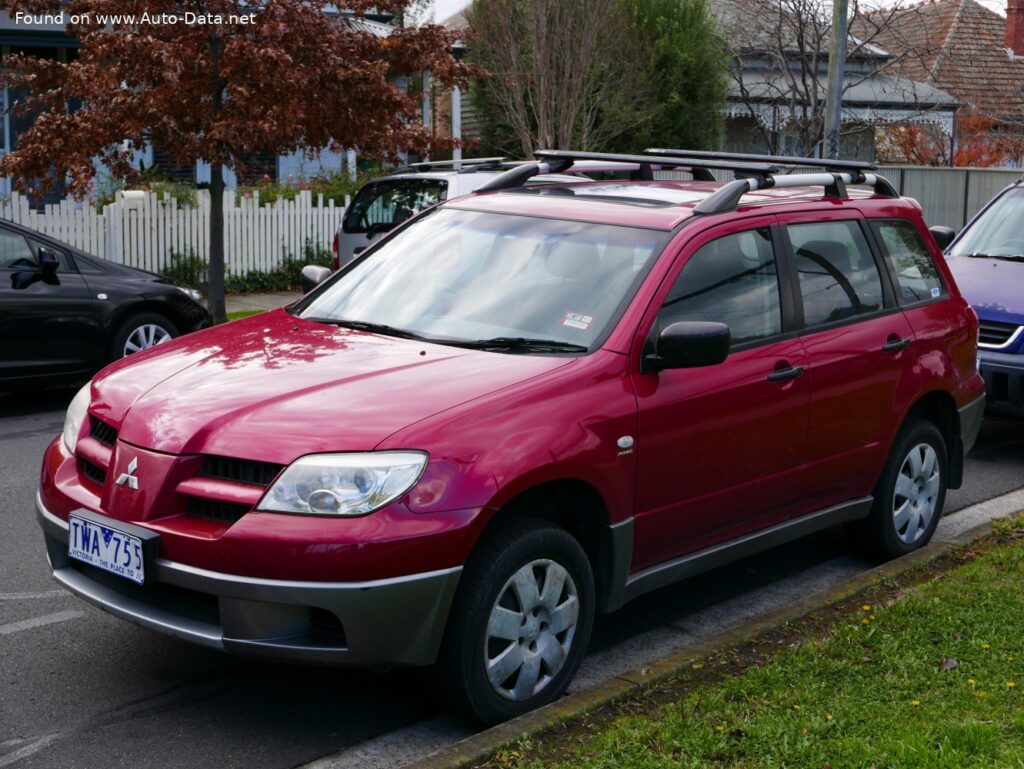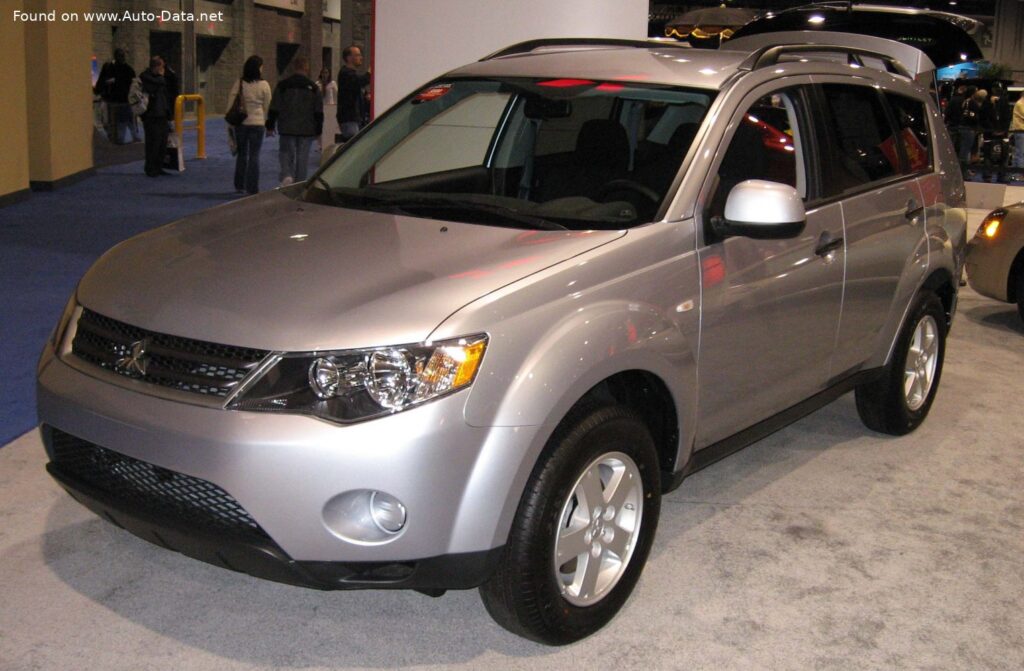
The Mitsubishi Outlander II, produced between 2007 and 2009, represents the second generation of Mitsubishi’s popular crossover SUV. Positioned as a competitor to vehicles like the Honda CR-V and Toyota RAV4, the Outlander II aimed to offer a blend of practicality, comfort, and available all-wheel drive. While not initially a major seller in the North American market, it played a significant role in expanding Mitsubishi’s global presence, particularly in Europe and Asia, where the demand for compact SUVs was growing. The 3.0 i V6 24V XL variant, detailed here, was a higher-specification model offering a more powerful engine option.
Mitsubishi Outlander II 3.0 i V6 24V XL: An Overview
The Outlander II marked a significant step forward in design and refinement compared to its predecessor. It moved away from a more utilitarian aesthetic towards a more modern and car-like crossover appearance. The 3.0 i V6 XL trim level specifically focused on providing a more premium experience with enhanced features and a more potent engine. This model was designed to appeal to buyers seeking a versatile vehicle capable of handling both daily commutes and weekend adventures.
Engine & Performance
The heart of the Outlander II 3.0 i V6 XL is a 3.0-liter, naturally aspirated V6 engine, designated the 6B31. This engine produces 220 horsepower at 6,250 rpm and 281 Newton-meters (207.25 lb-ft) of torque at 4,000 rpm. The engine features a SOHC valvetrain and multi-port fuel injection. Power is delivered to all four wheels via a six-speed automatic transmission and an all-wheel-drive system. Acceleration from 0 to 100 km/h (0-62 mph) takes 9.7 seconds, while 0 to 60 mph is achieved in approximately 9.2 seconds. The vehicle boasts a top speed of 200 km/h (124.27 mph). Fuel economy is rated at 10.6 liters per 100 kilometers (22.2 US mpg) combined, with 15.9 l/100km (14.8 US mpg) in urban settings and 8 l/100km (29.4 US mpg) on the open road. The engine’s power-to-weight ratio is 7.6 kg/Hp, and the torque-to-weight ratio is 5.9 kg/Nm.
Design & Features
The Mitsubishi Outlander II is a five-door SUV/Crossover with seating for five passengers. Its body style reflects the growing trend towards more car-like SUVs, offering a comfortable ride and relatively agile handling. The exterior design features a sloping roofline and a relatively compact footprint. The XL trim level included features such as alloy wheels, upgraded interior trim, and potentially additional comfort and convenience options depending on the specific market. Safety features, while standard for the era, included ABS (Anti-lock Braking System) and ventilated front disc brakes with rear discs. Interior space is a key strength, offering 541 liters (19.11 cu. ft.) of trunk space with the rear seats up, expanding to 1691 liters (59.72 cu. ft.) when folded down. The vehicle’s dimensions are 4640 mm (182.68 in.) in length, 1800 mm (70.87 in.) in width, and 1720 mm (67.72 in.) in height, with a wheelbase of 2670 mm (105.12 in.).
Technical Specifications
| Brand | Mitsubishi |
| Model | Outlander |
| Generation | Outlander II |
| Type (Engine) | 3.0 i V6 24V XL (220 Hp) |
| Start of production | October, 2007 |
| End of production | September, 2009 |
| Powertrain Architecture | Internal Combustion engine |
| Body type | SUV, Crossover |
| Seats | 5 |
| Doors | 5 |
| Fuel consumption (urban) | 15.9 l/100 km (14.8 US mpg) |
| Fuel consumption (extra urban) | 8 l/100 km (29.4 US mpg) |
| Fuel consumption (combined) | 10.6 l/100 km (22.2 US mpg) |
| Fuel Type | Petrol (Gasoline) |
| Acceleration 0 – 100 km/h | 9.7 sec |
| Acceleration 0 – 62 mph | 9.7 sec |
| Acceleration 0 – 60 mph | 9.2 sec |
| Maximum speed | 200 km/h (124.27 mph) |
| Emission standard | Euro 4 |
| Weight-to-power ratio | 7.6 kg/Hp |
| Weight-to-torque ratio | 5.9 kg/Nm |
| Power | 220 Hp @ 6250 rpm |
| Torque | 281 Nm @ 4000 rpm (207.25 lb.-ft. @ 4000 rpm) |
| Engine layout | Front, Transverse |
| Engine Model/Code | 6B31 |
| Engine displacement | 2998 cm3 (182.95 cu. in.) |
| Number of cylinders | 6 |
| Engine configuration | V-engine |
| Cylinder Bore | 87.6 mm (3.45 in.) |
| Piston Stroke | 82.9 mm (3.26 in.) |
| Compression ratio | 9.5:1 |
| Number of valves per cylinder | 4 |
| Fuel injection system | Multi-port manifold injection |
| Engine aspiration | Naturally aspirated engine |
| Valvetrain | SOHC |
| Engine oil capacity | 4.3 l (4.54 US qt | 3.78 UK qt) |
| Coolant capacity | 9.5 l (10.04 US qt | 8.36 UK qt) |
| Kerb Weight | 1665 kg (3670.7 lbs.) |
| Max. weight | 2350 kg (5180.86 lbs.) |
| Max load | 685 kg (1510.17 lbs.) |
| Trunk (boot) space – minimum | 541 l (19.11 cu. ft.) |
| Trunk (boot) space – maximum | 1691 l (59.72 cu. ft.) |
| Fuel tank capacity | 60 l (15.85 US gal | 13.2 UK gal) |
| Length | 4640 mm (182.68 in.) |
| Width | 1800 mm (70.87 in.) |
| Height | 1720 mm (67.72 in.) |
| Wheelbase | 2670 mm (105.12 in.) |
| Front track | 1540 mm (60.63 in.) |
| Rear track | 1540 mm (60.63 in.) |
| Drive wheel | All wheel drive (4×4) |
| Number of gears | 6 |
| Gearbox type | Automatic transmission |
| Front suspension | Coil spring |
| Rear suspension | Coil spring |
| Front brakes | Ventilated discs |
| Rear brakes | Disc |
| Assisting systems | ABS (Anti-lock braking system) |
| Steering type | Steering rack and pinion |
| Tires size | 225/55 R18 |
The Mitsubishi Outlander II 3.0 i V6 XL offered a compelling package for buyers seeking a versatile and capable crossover SUV. While its time on the market was relatively short, it represented a significant step forward for Mitsubishi in terms of design, refinement, and performance.