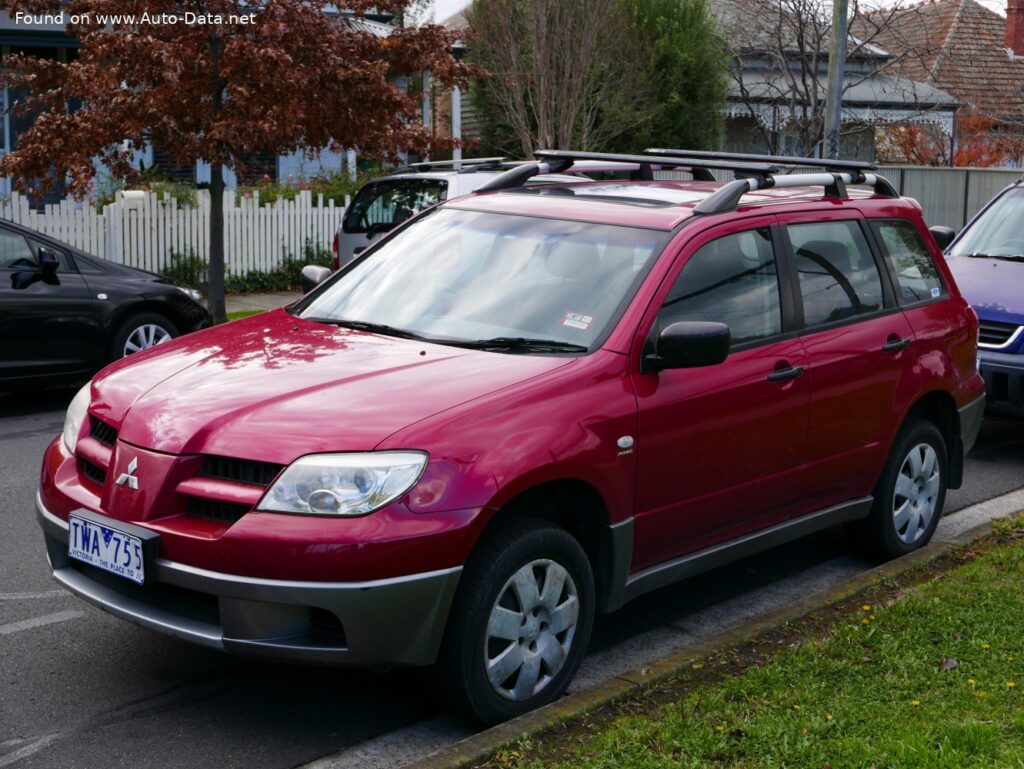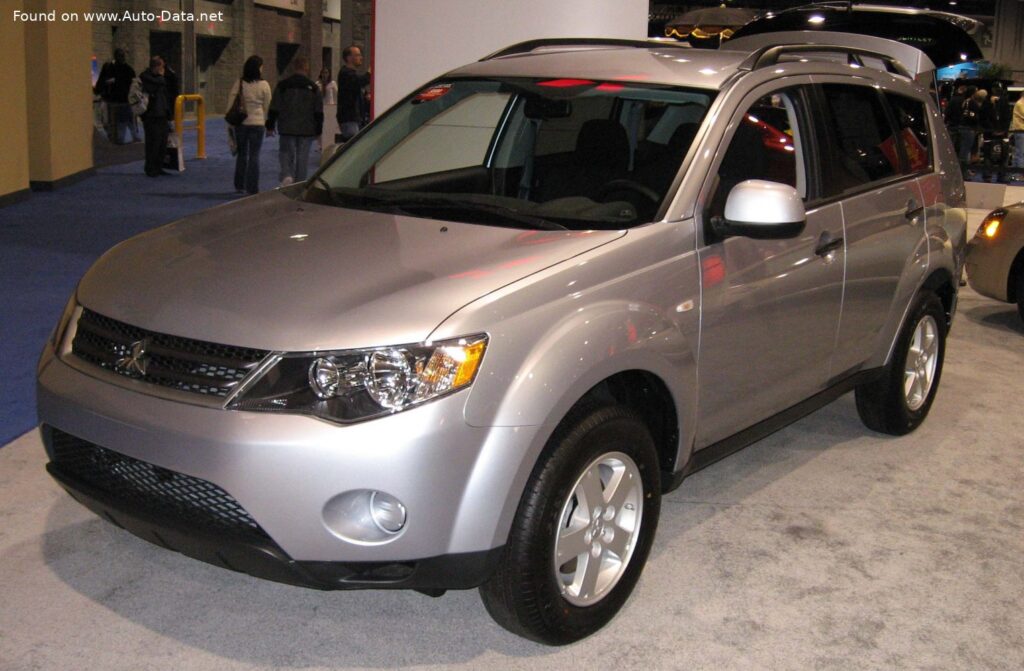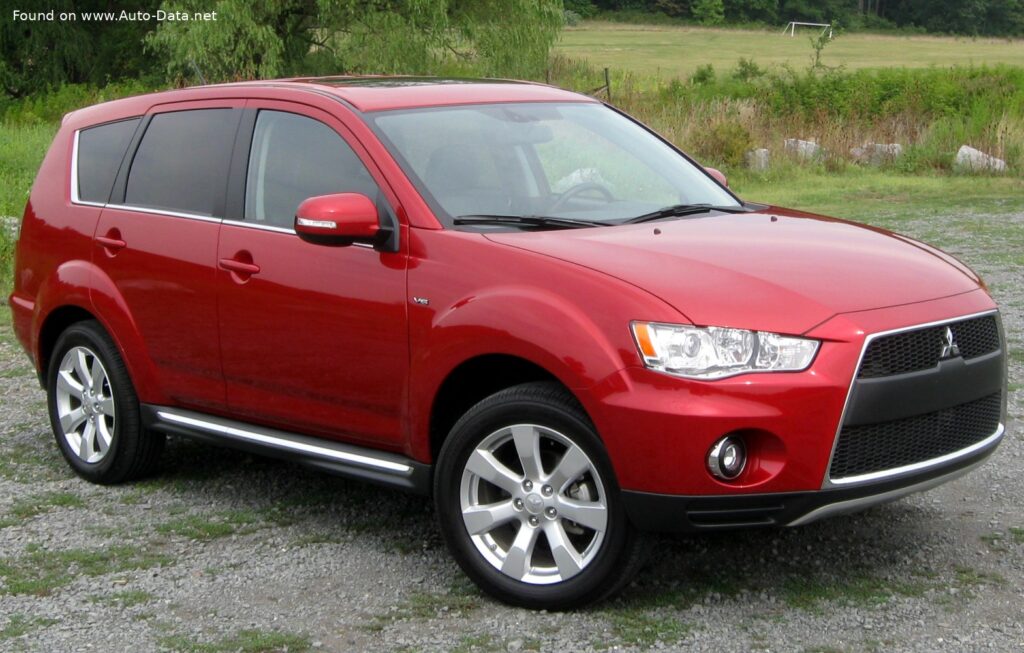
The Mitsubishi Outlander II, particularly the facelifted version introduced in 2009, represents a significant step forward for Mitsubishi in the increasingly popular crossover SUV segment. Produced from 2010 to 2012, this generation Outlander aimed to blend the practicality of an SUV with the driving dynamics of a passenger car. While not initially a major seller in the United States, the Outlander II found a strong niche in European and Asian markets, offering a compelling alternative to established competitors with its focus on fuel efficiency, available all-wheel drive, and a relatively spacious interior. This article details the 2.2 DI-D variant, equipped with a 156 horsepower diesel engine and Mitsubishi’s TC-SST (Twin Clutch Sportronic Shift Transmission) automated manual gearbox.
Mitsubishi Outlander II (Facelift 2009) Overview
The Outlander II, and specifically the 2009 facelift, was designed to address criticisms of the first-generation model, offering improved styling, a more refined interior, and enhanced mechanical components. The facelift brought changes to the front fascia, including a revised grille and headlights, as well as updates to the interior trim and technology. The 2.2 DI-D model was a key offering in Europe, where diesel engines were – and continue to be – highly favored for their fuel economy and torque characteristics. The TC-SST transmission provided a sporty driving experience, offering quick shifts and a degree of driver control not typically found in traditional automatic transmissions.
Engine & Performance
The heart of the Outlander II 2.2 DI-D is a 2.2-liter inline-four cylinder diesel engine, producing 156 horsepower at 4000 rpm and 380 Nm (280.27 lb.-ft.) of torque at 2000 rpm. This engine utilizes a turbocharger and intercooler to enhance performance and efficiency. The diesel commonrail fuel injection system ensures precise fuel delivery, contributing to both power output and reduced emissions. The engine’s 16.6:1 compression ratio is typical for a diesel engine, maximizing combustion efficiency. Paired with the TC-SST six-speed automated manual transmission and a four-wheel-drive system, the Outlander II 2.2 DI-D achieves a 0-100 km/h (0-62 mph) acceleration time of 11.1 seconds and a maximum speed of 198 km/h (123.03 mph). The weight-to-power ratio of 11 kg/Hp and weight-to-torque ratio of 4.5 kg/Nm demonstrate a reasonable balance between engine output and vehicle mass.
Design & Features
The Mitsubishi Outlander II is a five-door SUV/Crossover, offering seating for five passengers. Its body style reflects the growing trend towards more car-like SUVs, prioritizing comfort and practicality. The 2009 facelift brought a more modern and aggressive front-end design. Inside, the Outlander II offers a functional and reasonably spacious cabin. Key features include a standard air conditioning system, power windows and locks, and an audio system. Safety features, crucial for a modern vehicle, include ABS (Anti-lock Braking System). The Outlander II’s cargo capacity is a strong point, offering 774 liters (27.33 cu. ft.) with the rear seats up and expanding to 1691 liters (59.72 cu. ft.) with the rear seats folded down. The vehicle’s dimensions – 4665 mm (183.66 in.) in length, 1800 mm (70.87 in.) in width, and 1680 mm (66.14 in.) in height – position it within the compact SUV segment.
Technical Specifications
| Brand | Mitsubishi |
| Model | Outlander |
| Generation | Outlander II (facelift 2009) |
| Type (Engine) | 2.2 DI-D (156 Hp) TC-SST 4WD |
| Start of production | 2010 |
| End of production | 2012 |
| Powertrain Architecture | Internal Combustion engine |
| Body type | SUV, Crossover |
| Seats | 5 |
| Doors | 5 |
| Fuel consumption (economy) – urban (NEDC) | 9.3 l/100 km (25.3 US mpg, 30.4 UK mpg, 10.8 km/l) |
| Fuel consumption (economy) – extra urban (NEDC) | 6 l/100 km (39.2 US mpg, 47.1 UK mpg, 16.7 km/l) |
| Fuel consumption (economy) – combined (NEDC) | 7.2 l/100 km (32.7 US mpg, 39.2 UK mpg, 13.9 km/l) |
| CO2 emissions (NEDC) | 189 g/km |
| Fuel Type | Diesel |
| Acceleration 0 – 100 km/h | 11.1 sec |
| Acceleration 0 – 62 mph | 11.1 sec |
| Acceleration 0 – 60 mph | 10.5 sec |
| Maximum speed | 198 km/h (123.03 mph) |
| Emission standard | Euro 5 |
| Weight-to-power ratio | 11 kg/Hp |
| Weight-to-torque ratio | 4.5 kg/Nm |
| Power | 156 Hp @ 4000 rpm |
| Torque | 380 Nm @ 2000 rpm (280.27 lb.-ft. @ 2000 rpm) |
| Engine layout | Front, Transverse |
| Engine Model/Code | 4HK |
| Engine displacement | 2179 cm3 (132.97 cu. in.) |
| Number of cylinders | 4 |
| Engine configuration | Inline |
| Cylinder Bore | 85 mm (3.35 in.) |
| Piston Stroke | 96 mm (3.78 in.) |
| Compression ratio | 16.6:1 |
| Number of valves per cylinder | 4 |
| Fuel injection system | Diesel Commonrail |
| Engine aspiration | Turbocharger, Intercooler |
| Valvetrain | DOHC |
| Engine oil capacity | 5 l (5.28 US qt | 4.4 UK qt) |
| Coolant | 7.6 l (8.03 US qt | 6.69 UK qt) |
| Kerb Weight | 1720 kg (3791.95 lbs.) |
| Max. weight | 2410 kg (5313.14 lbs.) |
| Max load | 690 kg (1521.19 lbs.) |
| Trunk (boot) space – minimum | 774 l (27.33 cu. ft.) |
| Trunk (boot) space – maximum | 1691 l (59.72 cu. ft.) |
| Fuel tank capacity | 60 l (15.85 US gal | 13.2 UK gal) |
| Max. roof load | 80 kg (176.37 lbs.) |
| Permitted trailer load with brakes (12%) | 2000 kg (4409.25 lbs.) |
| Permitted trailer load without brakes | 750 kg (1653.47 lbs.) |
| Permitted towbar download | 80 kg (176.37 lbs.) |
| Length | 4665 mm (183.66 in.) |
| Width | 1800 mm (70.87 in.) |
| Height | 1680 mm (66.14 in.) |
| Wheelbase | 2670 mm (105.12 in.) |
| Front track | 1540 mm (60.63 in.) |
| Rear (Back) track | 1540 mm (60.63 in.) |
| Ride height (ground clearance) | 176 mm (6.93 in.) |
| Minimum turning circle (turning diameter) | 10.6 m (34.78 ft.) |
| Drivetrain Architecture | The Internal combustion engine (ICE) drives the front wheels permanently, and the rear wheels are driven through an electrically or mechanically operated clutch if necessary. |
| Drive wheel | All wheel drive (4×4) |
| Number of gears and type of gearbox | 6 gears, automatic transmission TC-SST |
The Mitsubishi Outlander II 2.2 DI-D TC-SST 4WD offered a compelling package for buyers seeking a practical, fuel-efficient, and capable crossover SUV, particularly in markets where diesel engines and all-wheel drive were highly valued.