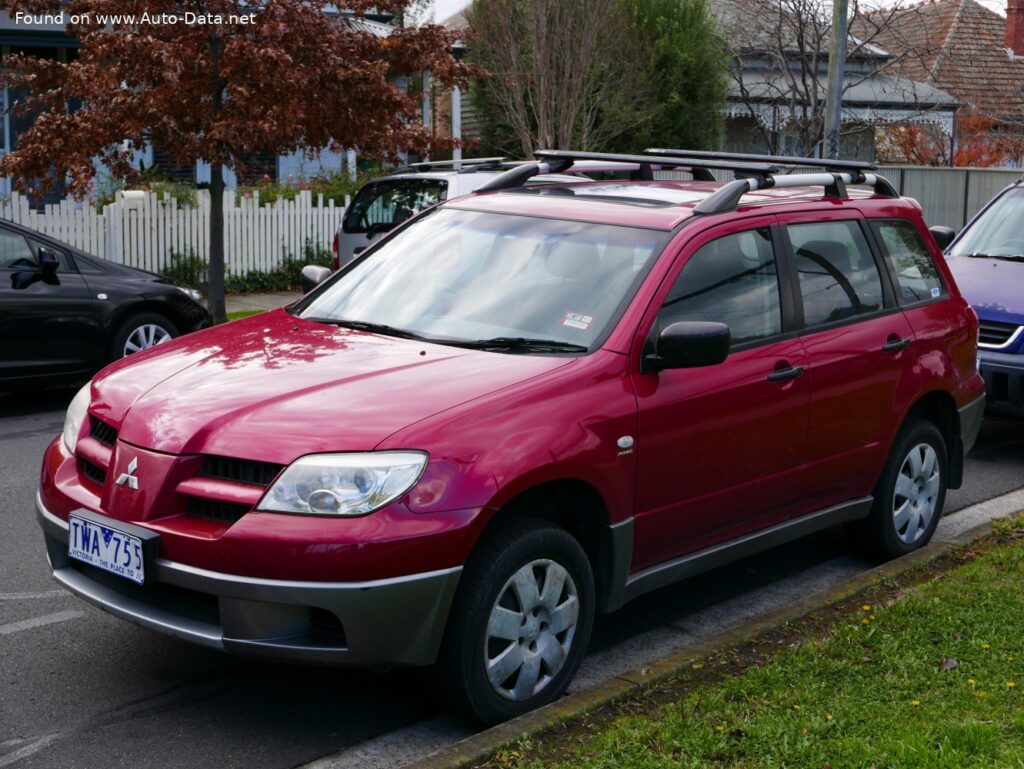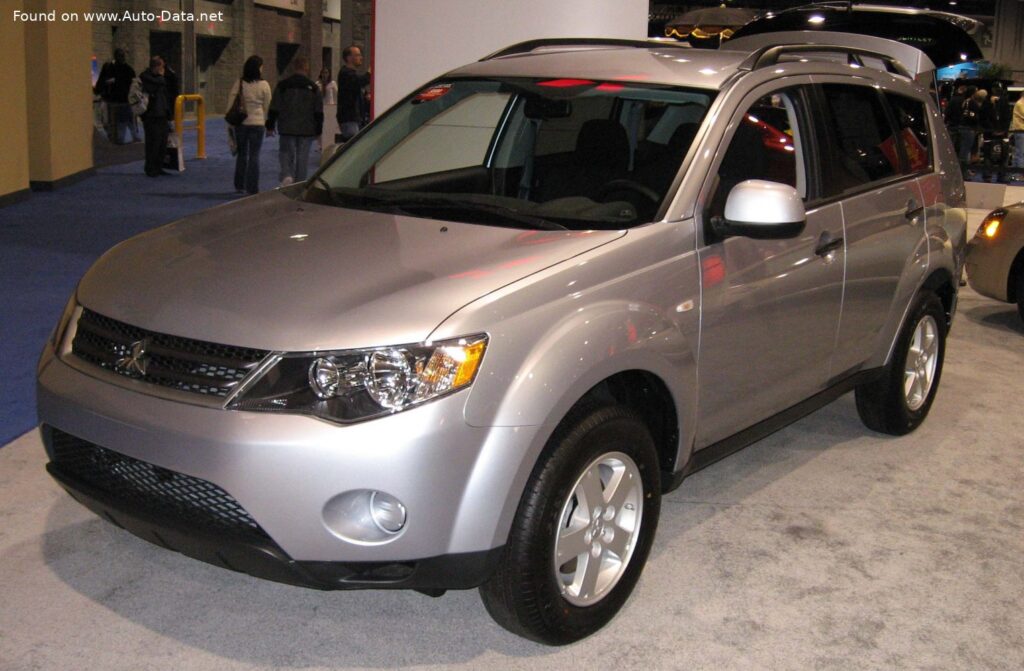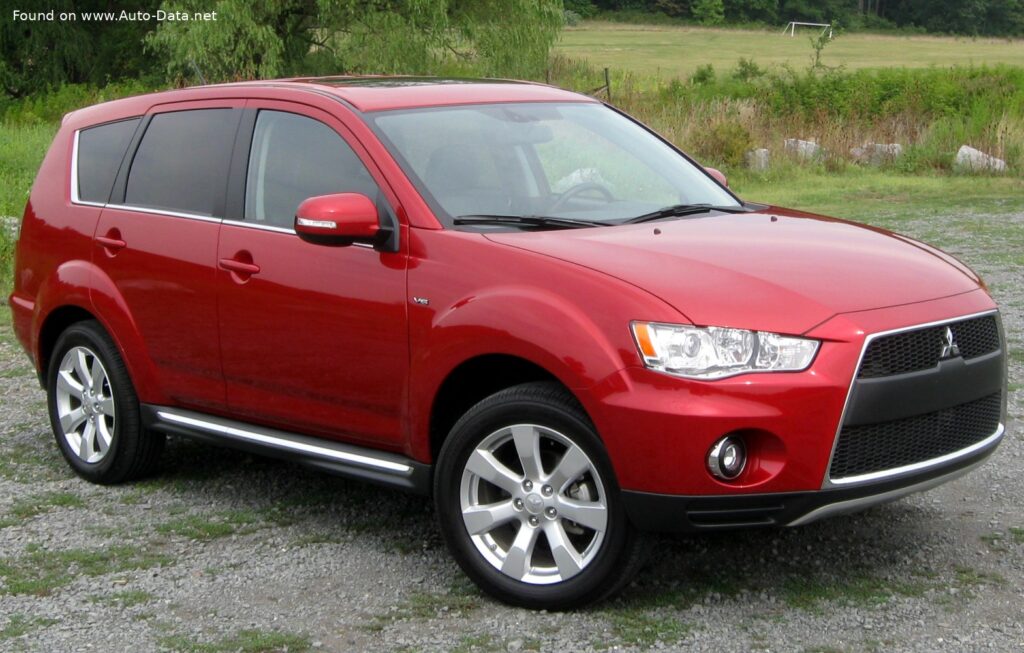
The Mitsubishi Outlander II, particularly the facelifted version introduced in 2009, represents a significant step forward for Mitsubishi in the increasingly popular crossover SUV segment. Positioned as a practical and versatile vehicle, the Outlander II aimed to blend the comfort of a passenger car with the capability of a sport utility vehicle. While not initially a major seller in the United States, the Outlander II found a stronger foothold in European and Asian markets, where compact SUVs were gaining considerable traction. The 2.2 DI-D variant, equipped with a turbocharged diesel engine, was a key offering in these regions, providing a balance of fuel efficiency and performance.
Mitsubishi Outlander II (Facelift 2009) 2.2 DI-D: An Overview
The facelifted 2009 model year brought cosmetic and minor mechanical updates to the Outlander II, refining its appearance and enhancing its overall appeal. This iteration of the Outlander continued to offer five-passenger seating and a practical cargo area, making it suitable for families and individuals alike. The 2.2 DI-D engine option, producing 177 horsepower, was particularly popular in Europe due to its favorable fuel economy and torque characteristics. Production of this specific configuration ran from 2010 to 2012.
Engine & Performance
The heart of the Outlander II 2.2 DI-D is a 2.3-liter (2268 cm3) inline-four cylinder diesel engine, designated the 4N14. This engine utilizes a turbocharger with an intercooler to boost power output to 177 horsepower at 4000 rpm and 380 Nm (280.27 lb.-ft.) of torque at 2000 rpm. The diesel commonrail fuel injection system ensures efficient combustion and contributes to the engine’s relatively low emissions. Power is delivered to all four wheels via a six-speed manual transmission and a sophisticated all-wheel-drive system. The drivetrain operates with a front-wheel-drive bias, engaging the rear wheels as needed through an electrically or mechanically operated clutch. This configuration provides enhanced traction in various driving conditions. Performance figures include a 0-100 km/h (0-62 mph) acceleration time of 9.8 seconds and a maximum speed of 200 km/h (124.27 mph). The weight-to-power ratio of 9.2 kg/Hp and weight-to-torque ratio of 4.3 kg/Nm demonstrate a reasonable balance between engine output and vehicle mass.
Design & Features
The Mitsubishi Outlander II is a five-door SUV/Crossover, characterized by its relatively compact dimensions and practical design. The 2009 facelift brought subtle styling revisions, including updated front and rear fascias, revised headlights, and a refreshed interior. The vehicle’s dimensions – 4665 mm (183.66 in) in length, 1800 mm (70.87 in) in width, and 1680 mm (66.14 in) in height – position it within the compact SUV class. Inside, the Outlander II offers a functional and comfortable cabin with seating for five. The trunk space is a notable feature, offering 774 liters (27.33 cu. ft.) with the rear seats up and expanding to 1691 liters (59.72 cu. ft.) when folded down. Safety features, typical for vehicles of this era, include ABS (Anti-lock Braking System). The Outlander II’s suspension setup consists of an independent McPherson strut front suspension with a transverse stabilizer and an independent multi-link rear suspension, also with a transverse stabilizer, providing a comfortable ride and stable handling. Ground clearance is a respectable 185 mm (7.28 in), enhancing its off-road capability.
Technical Specifications
| Brand | Mitsubishi |
| Model | Outlander |
| Generation | Outlander II (facelift 2009) |
| Type (Engine) | 2.2 DI-D (177 Hp) 4WD |
| Start of production | 2010 |
| End of production | 2012 |
| Powertrain Architecture | Internal Combustion engine |
| Body type | SUV, Crossover |
| Seats | 5 |
| Doors | 5 |
| Fuel consumption (urban) | 7.7 l/100 km (30.5 US mpg, 36.7 UK mpg, 13 km/l) |
| Fuel consumption (extra urban) | 5.3 l/100 km (44.4 US mpg, 53.3 UK mpg, 18.9 km/l) |
| Fuel consumption (combined) | 6.2 l/100 km (37.9 US mpg, 45.6 UK mpg, 16.1 km/l) |
| CO2 emissions | 163 g/km |
| Fuel Type | Diesel |
| Acceleration 0 – 100 km/h | 9.8 sec |
| Acceleration 0 – 62 mph | 9.8 sec |
| Acceleration 0 – 60 mph | 9.3 sec |
| Maximum speed | 200 km/h (124.27 mph) |
| Emission standard | Euro 5 |
| Weight-to-power ratio | 9.2 kg/Hp |
| Weight-to-torque ratio | 4.3 kg/Nm |
| Power | 177 Hp @ 4000 rpm |
| Torque | 380 Nm @ 2000 rpm (280.27 lb.-ft. @ 2000 rpm) |
| Engine layout | Front, Transverse |
| Engine Model/Code | 4N14 |
| Engine displacement | 2268 cm3 (138.4 cu. in.) |
| Number of cylinders | 4 |
| Engine configuration | Inline |
| Cylinder Bore | 86 mm (3.39 in.) |
| Piston Stroke | 97.6 mm (3.84 in.) |
| Number of valves per cylinder | 4 |
| Fuel injection system | Diesel Commonrail |
| Engine aspiration | Turbocharger, Intercooler |
| Valvetrain | DOHC |
| Engine oil capacity | 5.5 l (5.81 US qt | 4.84 UK qt) |
| Coolant capacity | 8.3 l (8.77 US qt | 7.3 UK qt) |
| Kerb Weight | 1620 kg (3571.49 lbs.) |
| Max. weight | 2170 kg (4784.03 lbs.) |
| Max load | 550 kg (1212.54 lbs.) |
| Trunk (boot) space – minimum | 774 l (27.33 cu. ft.) |
| Trunk (boot) space – maximum | 1691 l (59.72 cu. ft.) |
| Fuel tank capacity | 60 l (15.85 US gal | 13.2 UK gal) |
| Max. roof load | 80 kg (176.37 lbs.) |
| Permitted trailer load with brakes (12%) | 2000 kg (4409.25 lbs.) |
| Permitted trailer load without brakes | 750 kg (1653.47 lbs.) |
| Permitted towbar download | 100 kg (220.46 lbs.) |
| Length | 4665 mm (183.66 in.) |
| Width | 1800 mm (70.87 in.) |
| Height | 1680 mm (66.14 in.) |
| Wheelbase | 2670 mm (105.12 in.) |
| Front track | 1540 mm (60.63 in.) |
| Rear track | 1540 mm (60.63 in.) |
| Ride height (ground clearance) | 185 mm (7.28 in.) |
| Minimum turning circle | 10.6 m (34.78 ft.) |
| Front brakes | Ventilated discs, 294 mm |
| Rear brakes | Disc, 302 mm |
| Number of gears | 6 |
| Type of gearbox | Manual transmission |
| Front suspension | Independent type McPherson, Transverse stabilizer |
| Rear suspension | Independent multi-link suspension, Transverse stabilizer |
| Tires size | 215/70 R16 |
| Wheel rims size | 6.5J x 16 |