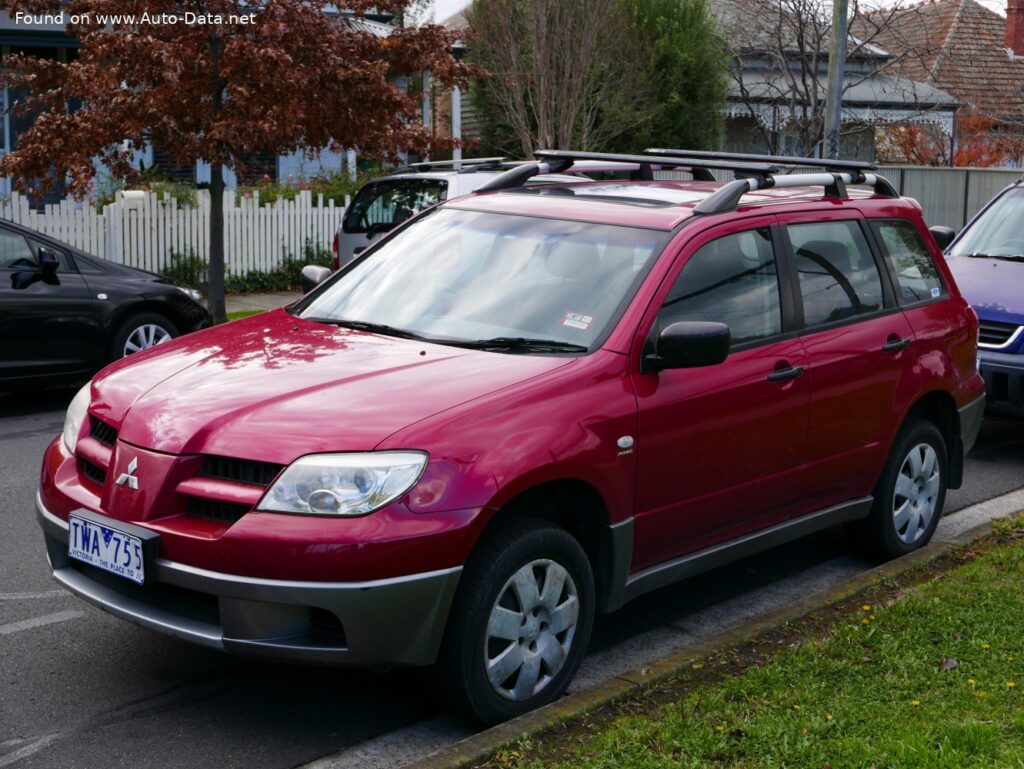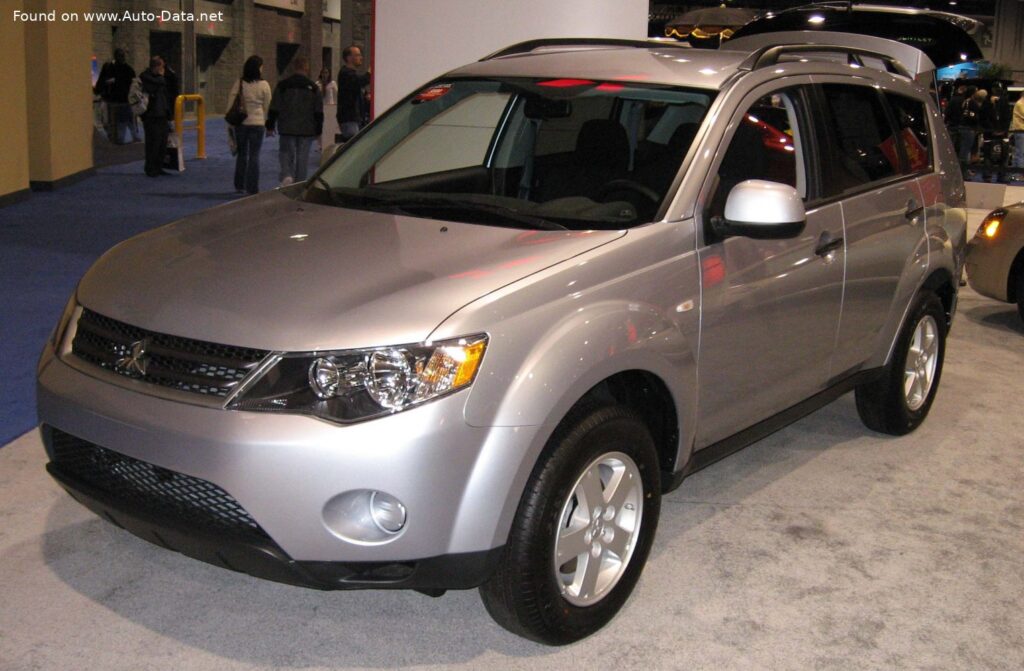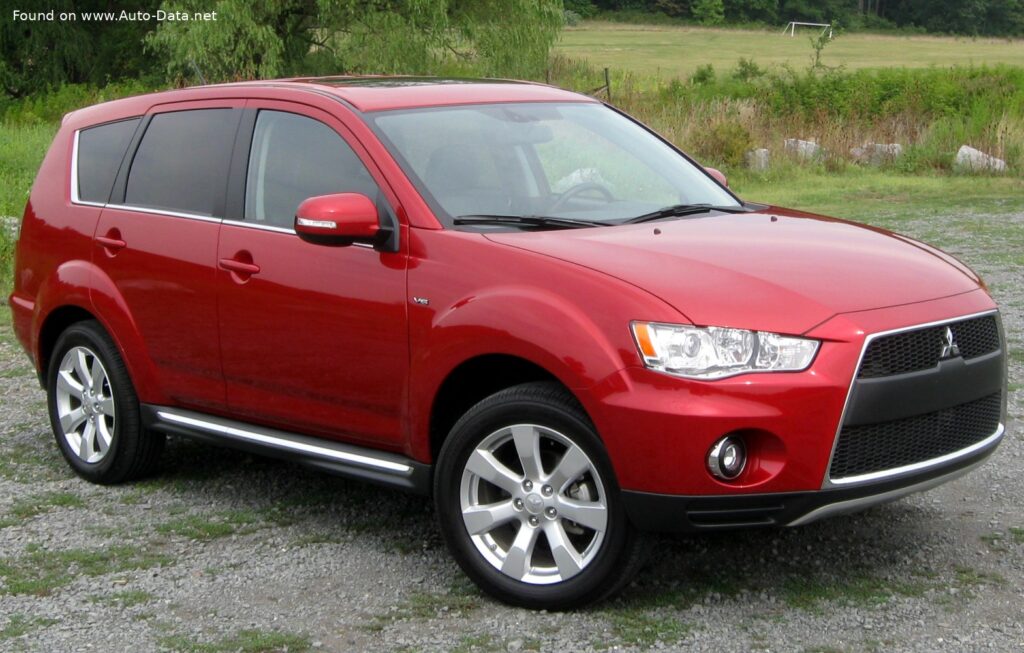
The Mitsubishi Outlander II, particularly the facelifted version introduced in 2009, represents a significant step in Mitsubishi’s foray into the increasingly popular crossover SUV segment. While not initially a major seller in the United States compared to competitors like the Honda CR-V or Toyota RAV4, the Outlander II offered a compelling blend of practicality, available all-wheel drive, and a more powerful engine option in the form of the 3.0-liter V6. This generation Outlander was primarily aimed at the European and Asian markets, where compact SUVs with all-wheel drive capabilities were in high demand. The 2009 facelift brought styling updates and refinements to the existing platform, enhancing its appeal and competitiveness.
Mitsubishi Outlander II (2009-2012) 3.0 V6: An Overview
The Outlander II, produced from 2006 to 2012 (with the facelift arriving in 2009), was designed to offer a more versatile and spacious alternative to traditional station wagons. It distinguished itself with its unibody construction, offering a comfortable ride and car-like handling. The 3.0 V6 model, equipped with a six-speed automatic transmission and all-wheel drive, was positioned as the premium offering within the Outlander II lineup. It catered to buyers seeking additional power and enhanced all-weather capability. The facelifted model featured revised front and rear styling, interior enhancements, and improvements to the vehicle’s overall refinement.
Engine & Performance
The heart of the 2009-2012 Mitsubishi Outlander II 3.0 V6 is the 6B31 engine, a 3.0-liter naturally aspirated V6 producing 230 horsepower at 6,250 rpm and 291 Nm (214.63 lb-ft) of torque at 3,750 rpm. This engine delivers a power-to-weight ratio of 7.4 kg/Hp, translating to 134.5 Hp per tonne. The engine utilizes a SOHC valvetrain with Mitsubishi’s MIVEC (Mitsubishi Innovative Valve timing Electronic Control) technology, optimizing valve timing for improved performance and fuel efficiency. The six-speed automatic transmission provides smooth and responsive gear changes, while the all-wheel-drive system enhances traction and stability in various driving conditions. Fuel consumption is rated at 10.4 liters per 100 kilometers (22.6 US mpg, 27.2 UK mpg, 9.6 km/l).
Design & Features
The Mitsubishi Outlander II is a five-door SUV/Crossover with seating for five passengers. Its design emphasizes practicality and versatility. The vehicle’s dimensions – 4,665 mm (183.66 in) in length, 1,800 mm (70.87 in) in width, and 1,680 mm (66.14 in) in height – provide ample interior space for passengers and cargo. The facelifted model featured a revised front grille, headlights, and bumper, giving it a more modern and aggressive appearance. Inside, the Outlander II offers a comfortable and functional cabin with a focus on usability. Key features include a spacious trunk with a minimum capacity of 589 liters (20.8 cu. ft.) expanding to 1,691 liters (59.72 cu. ft.) with the rear seats folded down. Safety features, typical for the era, include ABS (Anti-lock Braking System) and a robust chassis designed for occupant protection. The vehicle also boasts a respectable ground clearance of 215 mm (8.46 in) and capable approach, departure, and ramp-over angles (22°, 21°, and 19° respectively).
Technical Specifications
| Brand | Mitsubishi |
| Model | Outlander |
| Generation | Outlander II (facelift 2009) |
| Type | 3.0 V6 (230 Hp) Automatic 4WD |
| Start of production | 2009 |
| End of production | 2012 |
| Powertrain Architecture | Internal Combustion engine |
| Body type | SUV, Crossover |
| Seats | 5 |
| Doors | 5 |
| Fuel consumption (combined) | 10.4 l/100 km (22.6 US mpg, 27.2 UK mpg, 9.6 km/l) |
| Fuel Type | Petrol (Gasoline) |
| Weight-to-power ratio | 7.4 kg/Hp |
| Weight-to-torque ratio | 5.9 kg/Nm |
| Power | 230 Hp @ 6250 rpm |
| Torque | 291 Nm @ 3750 rpm (214.63 lb.-ft. @ 3750 rpm) |
| Engine layout | Front, Transverse |
| Engine Model/Code | 6B31 |
| Engine displacement | 2998 cm3 (182.95 cu. in.) |
| Number of cylinders | 6 |
| Engine configuration | V-engine |
| Cylinder Bore | 87.6 mm (3.45 in.) |
| Piston Stroke | 82.9 mm (3.26 in.) |
| Compression ratio | 10.5:1 |
| Number of valves per cylinder | 4 |
| Fuel injection system | Multi-port manifold injection |
| Engine aspiration | Naturally aspirated engine |
| Valvetrain | SOHC, MIVEC |
| Engine oil capacity | 4.3 l (4.54 US qt | 3.78 UK qt) |
| Coolant | 9.5 l (10.04 US qt | 8.36 UK qt) |
| Kerb Weight | 1710 kg (3769.9 lbs.) |
| Max. weight | 2335 kg (5147.79 lbs.) |
| Max load | 625 kg (1377.89 lbs.) |
| Trunk (boot) space – minimum | 589 l (20.8 cu. ft.) |
| Trunk (boot) space – maximum | 1691 l (59.72 cu. ft.) |
| Fuel tank capacity | 60 l (15.85 US gal | 13.2 UK gal) |
| Permitted trailer load with brakes (12%) | 1600 kg (3527.4 lbs.) |
| Permitted trailer load without brakes | 750 kg (1653.47 lbs.) |
| Permitted towbar download | 160 kg (352.74 lbs.) |
| Length | 4665 mm (183.66 in.) |
| Width | 1800 mm (70.87 in.) |
| Height | 1680 mm (66.14 in.) |
| Wheelbase | 2670 mm (105.12 in.) |
| Front track | 1540 mm (60.63 in.) |
| Rear track | 1540 mm (60.63 in.) |
| Front overhang | 990 mm (38.98 in.) |
| Rear overhang | 1005 mm (39.57 in.) |
| Ride height (ground clearance) | 215 mm (8.46 in.) |
| Minimum turning circle | 10.6 m (34.78 ft.) |
| Drivetrain Architecture | ICE drives front wheels, rear wheels driven via clutch |
| Drive wheel | All wheel drive (4×4) |
| Number of gears | 6 |
| Gearbox type | Automatic transmission |
| Front suspension | Independent type McPherson, Transverse stabilizer |
| Rear suspension | Independent multi-link suspension, Transverse stabilizer |
| Front brakes | Ventilated discs |
| Rear brakes | Disc |
| Assisting systems | ABS (Anti-lock braking system) |
| Steering type | Steering rack and pinion |
| Power steering | Hydraulic Steering |
| Tires size | 225/55 R18 |
| Wheel rims size | 8J x 18 |