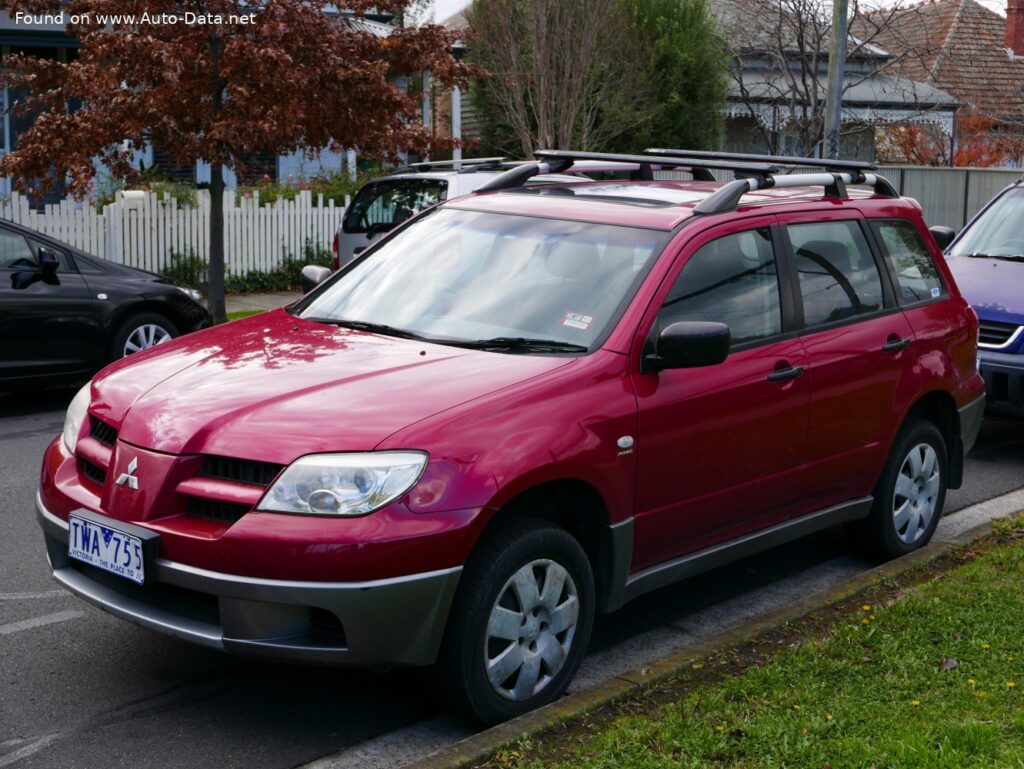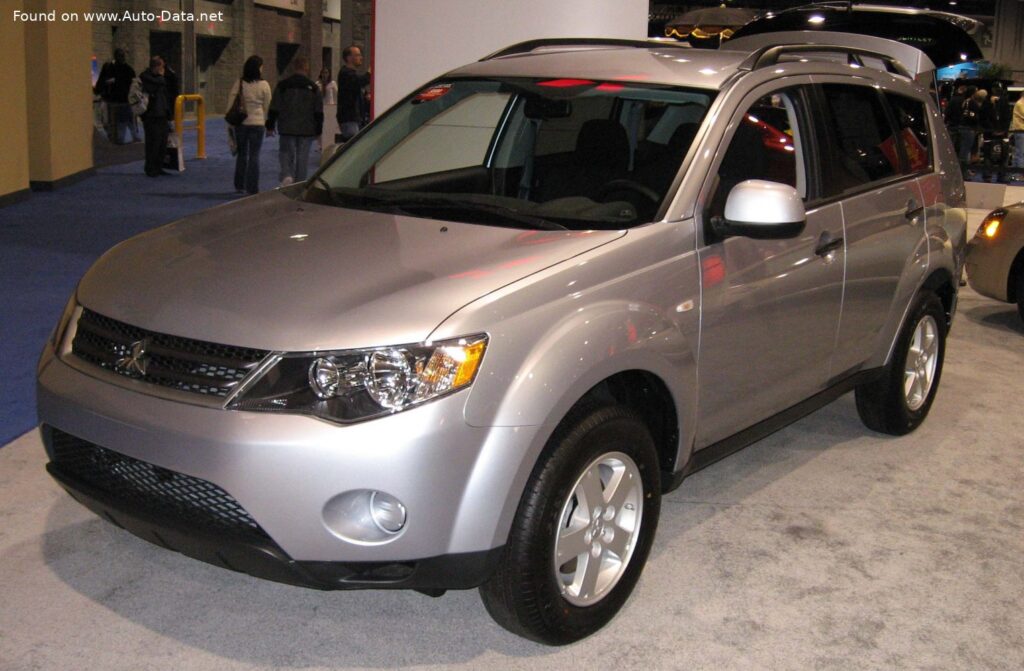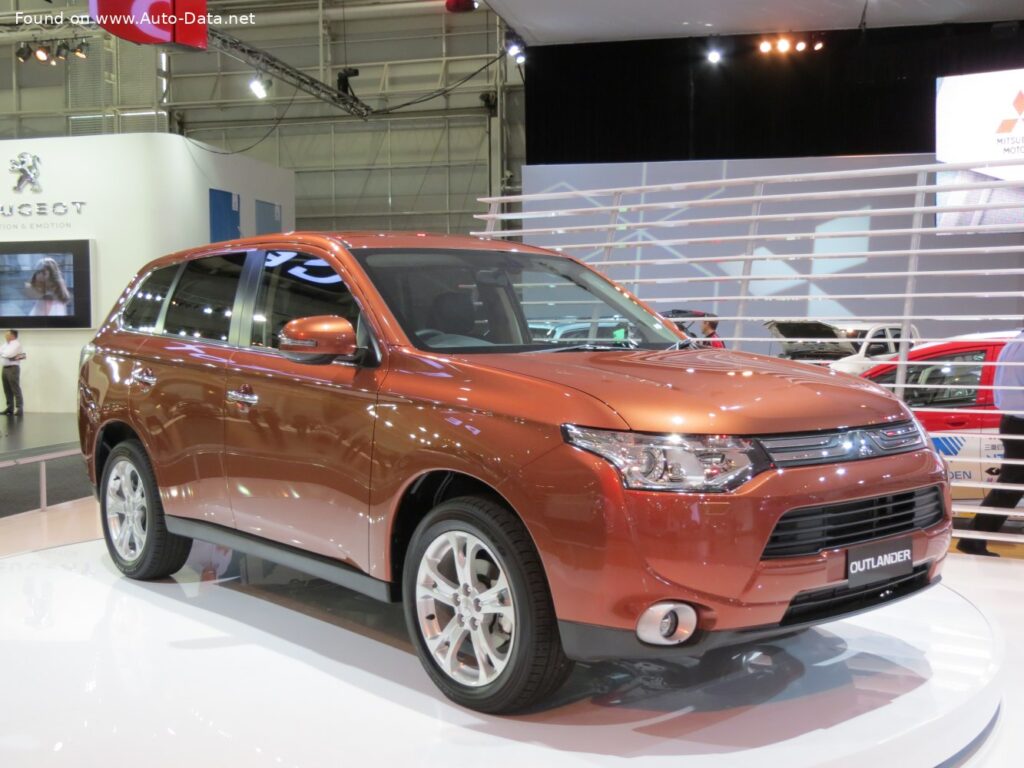
The Mitsubishi Outlander III, produced from 2012 to 2015, represents the third generation of Mitsubishi’s popular compact crossover SUV. Positioned as a family-oriented vehicle, the Outlander III aimed to provide a blend of practicality, fuel efficiency, and available all-wheel drive. While not initially a major seller in the North American market compared to competitors like the Honda CR-V or Toyota RAV4, it offered a compelling alternative with its unique styling and available features. This particular variant, the 2.0 MIVEC 150 Hp 2WD Automatic, was primarily marketed in Europe and other regions outside of North America, where smaller displacement engines were favored due to taxation and fuel costs.
Mitsubishi Outlander III: Overview and Market Positioning
The Outlander III marked a significant evolution in Mitsubishi’s crossover design. It moved away from the more utilitarian styling of its predecessor, adopting a more refined and aerodynamic appearance. The vehicle was designed to appeal to buyers seeking a versatile vehicle capable of handling both daily commutes and weekend adventures. The 2.0 MIVEC engine option, while not available in all markets, provided a balance between performance and fuel economy, making it a popular choice in regions with higher fuel prices and stricter emissions regulations. The Outlander III competed in the increasingly crowded compact SUV segment, facing competition from established players and emerging rivals.
Engine & Performance
The Mitsubishi Outlander III 2.0 MIVEC is powered by a 2.0-liter inline four-cylinder gasoline engine, designated the 4J11. This naturally aspirated engine produces 150 horsepower at 6000 rpm and 195 Nm (143.82 lb.-ft.) of torque between 4100 and 4200 rpm. Power is delivered to the front wheels via a conventional automatic transmission. Acceleration from 0 to 100 km/h (0-62 mph) takes 12.6 seconds, while the 0-60 mph sprint is achieved in approximately 12 seconds. The vehicle has a maximum speed of 185 km/h (114.95 mph). The engine utilizes multi-port fuel injection and a Single Overhead Camshaft (SOHC) valvetrain. The weight-to-power ratio is 10.1 kg/Hp, and the weight-to-torque ratio is 7.8 kg/Nm. Fuel economy is rated at 8.0 l/100 km (29.4 US mpg) in urban driving, 5.7 l/100 km (41.3 US mpg) in extra-urban driving, and 6.5 l/100 km (36.2 US mpg) combined. It meets Euro 5 emission standards.
Design & Features
The Outlander III is a five-door SUV/Crossover with seating for five passengers. It features a relatively spacious interior for its class, with a trunk offering 145 liters (5.12 cu. ft.) of space with the rear seats up and expanding to 986 liters (34.82 cu. ft.) when folded down. The vehicle’s exterior design is characterized by its flowing lines and distinctive front grille. Standard safety features included ABS (Anti-lock Braking System). The suspension consists of an independent McPherson strut setup at the front and an independent multi-link suspension at the rear, providing a comfortable ride. The vehicle rides on 16-inch wheel rims. The Outlander III’s dimensions are 4665 mm (183.66 in.) in length, 1800 mm (70.87 in.) in width, and 1680 mm (66.14 in.) in height, with a wheelbase of 2670 mm (105.12 in.). The minimum turning circle is 10.6 meters (34.78 ft).
Technical Specifications
| Brand | Mitsubishi |
| Model | Outlander |
| Generation | Outlander III |
| Type (Engine) | 2.0 MIVEC (150 Hp) 2WD Automatic |
| Start of production | 2012 |
| End of production | 2015 |
| Powertrain Architecture | Internal Combustion engine |
| Body type | SUV, Crossover |
| Seats | 5 |
| Doors | 5 |
| Fuel consumption (urban) | 8 l/100 km (29.4 US mpg) |
| Fuel consumption (extra urban) | 5.7 l/100 km (41.3 US mpg) |
| Fuel consumption (combined) | 6.5 l/100 km (36.2 US mpg) |
| Fuel Type | Petrol (Gasoline) |
| Acceleration 0 – 100 km/h | 12.6 sec |
| Acceleration 0 – 62 mph | 12.6 sec |
| Acceleration 0 – 60 mph | 12 sec |
| Maximum speed | 185 km/h (114.95 mph) |
| Emission standard | Euro 5 |
| Weight-to-power ratio | 10.1 kg/Hp |
| Weight-to-torque ratio | 7.8 kg/Nm |
| Power | 150 Hp @ 6000 rpm |
| Torque | 195 Nm @ 4100-4200 rpm (143.82 lb.-ft.) |
| Engine layout | Front, Transverse |
| Engine Model/Code | 4J11 |
| Engine configuration | Inline |
| Fuel injection system | Multi-port manifold injection |
| Engine aspiration | Naturally aspirated engine |
| Valvetrain | SOHC |
| Engine oil capacity | 4.3 l (4.54 US qt | 3.78 UK qt) |
| Coolant capacity | 7.5 l (7.93 US qt | 6.6 UK qt) |
| Kerb Weight | 1515 kg (3340 lbs.) |
| Trunk (boot) space – minimum | 145 l (5.12 cu. ft.) |
| Trunk (boot) space – maximum | 986 l (34.82 cu. ft.) |
| Fuel tank capacity | 60 l (15.85 US gal | 13.2 UK gal) |
| Length | 4665 mm (183.66 in.) |
| Width | 1800 mm (70.87 in.) |
| Height | 1680 mm (66.14 in.) |
| Wheelbase | 2670 mm (105.12 in.) |
| Minimum turning circle | 10.6 m (34.78 ft.) |
| Drive wheel | All wheel drive (4×4) |
| Front suspension | Independent, type McPherson with coil spring and anti-roll bar |
| Rear suspension | Independent multi-link suspension |
| Front brakes | Ventilated discs |
| Rear brakes | Disc |
| Assisting systems | ABS (Anti-lock braking system) |
| Steering type | Steering rack and pinion |
| Wheel rims size | 16 |
The Mitsubishi Outlander III 2.0 MIVEC offered a practical and reasonably efficient option in the compact crossover segment, particularly in markets where smaller engines were preferred. While not a sales leader in all regions, it provided a compelling alternative with its blend of features, space, and available all-wheel drive.