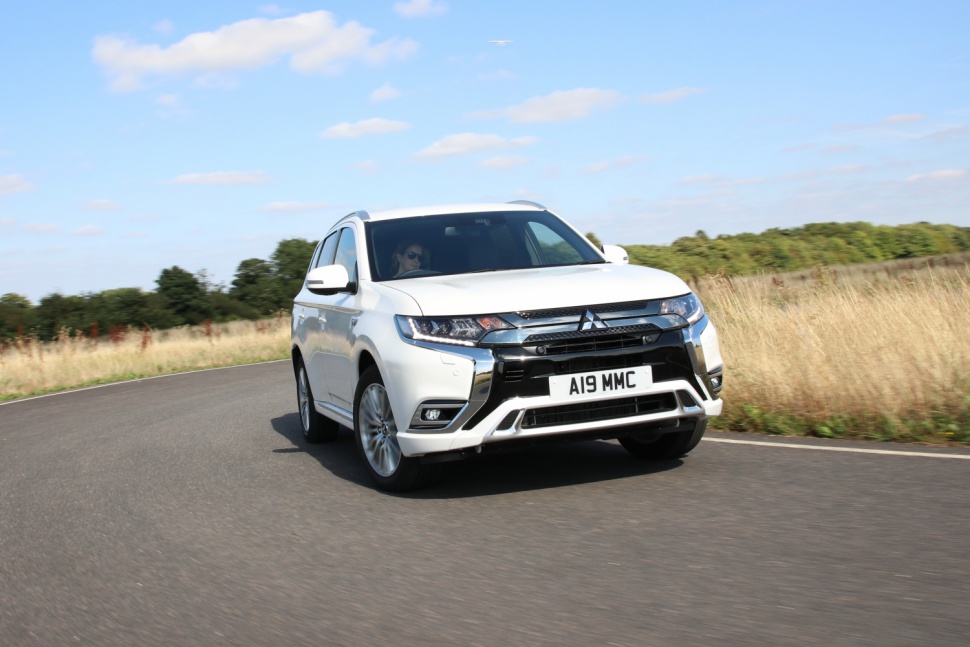
The Mitsubishi Outlander III, particularly the facelifted version introduced in 2018, represents Mitsubishi’s entry into the competitive compact SUV and crossover market. While not initially a major seller in the United States compared to rivals like the Honda CR-V or Toyota RAV4, the Outlander offered a unique selling proposition with its standard seven-passenger seating – a relatively uncommon feature in its class. This generation, produced from 2019 to 2021, aimed to balance practicality, fuel efficiency, and affordability, catering to families and individuals seeking a versatile vehicle. The 2.0 MIVEC 4WD CVT model detailed here was a key variant, offering a balance between performance and economy.
Mitsubishi Outlander III (2018 Facelift): Overview
The Outlander III, launched originally in 2012, received a significant facelift in 2018 to modernize its appearance and enhance its appeal. This update included revised front and rear styling, interior refinements, and updated safety technologies. The 2.0 MIVEC engine option, paired with a continuously variable transmission (CVT) and four-wheel drive, was positioned as a mainstream offering within the Outlander range. It was primarily sold in markets outside of North America, where Mitsubishi focused on different powertrain options for the US market.
Engine & Performance
The heart of the 2019-2021 Mitsubishi Outlander III 2.0 MIVEC 4WD CVT is a 2.0-liter inline-four cylinder gasoline engine. This naturally aspirated engine produces 150 horsepower at 6000 rpm and 195 Nm (143.82 lb.-ft.) of torque at 4200 rpm. While not a performance-oriented engine, it provides adequate power for everyday driving and highway cruising. The engine features Mitsubishi’s MIVEC (Mitsubishi Innovative Valve timing and lift Electronic Control) technology, which optimizes valve timing for improved fuel efficiency and responsiveness. Power is delivered to all four wheels via a CVT, which prioritizes smooth acceleration and fuel economy over traditional gear changes. Acceleration from 0 to 60 mph is achieved in approximately 12.6 seconds, and the vehicle has a top speed of 118.06 mph (190 km/h). The weight-to-power ratio of 10.3 kg/Hp indicates a moderate power output relative to its weight.
Design & Features
The Mitsubishi Outlander III is a five-door SUV/Crossover body style, designed to accommodate up to seven passengers across three rows of seating. The 2018 facelift brought a more aggressive front fascia with a redesigned grille and headlights, along with updated taillights and rear bumper. The interior features a functional layout with a focus on practicality. Key features include a standard touchscreen infotainment system, climate control, and a range of safety technologies. The Outlander prioritizes passenger space and cargo capacity, offering 519 liters (18.33 cu. ft.) of trunk space with all seats in place. The vehicle’s dimensions – 4695 mm (184.84 in.) in length, 1810 mm (71.26 in.) in width, and 1710 mm (67.32 in.) in height – position it within the compact SUV segment. Ground clearance of 190 mm (7.48 in.) provides reasonable capability for light off-road driving. The approach, departure, and ramp-over angles are all 21.0 degrees, further enhancing its off-road potential.
Technical Specifications
| Brand | Mitsubishi |
| Model | Outlander |
| Generation | Outlander III (facelift 2018) |
| Type (Engine) | 2.0 MIVEC (150 Hp) 4WD CVT |
| Start of production | 2019 |
| End of production | February, 2021 |
| Powertrain Architecture | Internal Combustion engine |
| Body type | SUV, Crossover |
| Seats | 7 |
| Doors | 5 |
| Fuel consumption (combined) | 8.7 l/100 km |
| Fuel consumption (US mpg) | 27 US mpg |
| Fuel consumption (UK mpg) | 32.5 UK mpg |
| CO2 emissions | 196 g/km |
| Fuel Type | Petrol (Gasoline) |
| Acceleration 0 – 100 km/h | 13.3 sec |
| Acceleration 0 – 62 mph | 13.3 sec |
| Acceleration 0 – 60 mph | 12.6 sec |
| Maximum speed | 190 km/h (118.06 mph) |
| Emission standard | Euro 6d |
| Weight-to-power ratio | 10.3 kg/Hp |
| Weight-to-torque ratio | 7.9 kg/Nm |
| Power | 150 Hp @ 6000 rpm |
| Power per litre | 75.1 Hp/l |
| Torque | 195 Nm @ 4200 rpm (143.82 lb.-ft. @ 4200 rpm) |
| Engine layout | Front, Transverse |
| Engine Model/Code | 4J11 |
| Engine displacement | 1998 cm3 (121.93 cu. in.) |
| Number of cylinders | 4 |
| Engine configuration | Inline |
| Number of valves per cylinder | 4 |
| Fuel injection system | Multi-port manifold injection |
| Engine aspiration | Naturally aspirated engine |
| Valvetrain | SOHC |
| Engine oil capacity | 4.3 l (4.54 US qt | 3.78 UK qt) |
| Coolant capacity | 6 l (6.34 US qt | 5.28 UK qt) |
| Kerb Weight | 1540 kg (3395.12 lbs.) |
| Trunk (boot) space – minimum | 519 l (18.33 cu. ft.) |
| Fuel tank capacity | 60 l (15.85 US gal | 13.2 UK gal) |
| Permitted trailer load with brakes (12%) | 1600 kg (3527.4 lbs.) |
| Length | 4695 mm (184.84 in.) |
| Width | 1810 mm (71.26 in.) |
| Height | 1710 mm (67.32 in.) |
| Wheelbase | 2670 mm (105.12 in.) |
| Front track | 1540 mm (60.63 in.) |
| Rear (Back) track | 1540 mm (60.63 in.) |
| Ride height (ground clearance) | 190 mm (7.48 in.) |
| Drive wheel | All wheel drive (4×4) |
| Number of gears and type of gearbox | automatic transmission CVT |
| Front suspension | Independent type McPherson |
| Rear suspension | Independent multi-link suspension |
| Front brakes | Ventilated discs |
| Rear brakes | Disc |
| Assisting systems | ABS (Anti-lock braking system) |
| Steering type | Steering rack and pinion |
| Wheel rims size | 18 |
The Mitsubishi Outlander III (2018 facelift) 2.0 MIVEC 4WD CVT offered a practical and reasonably efficient option for families seeking a seven-seater SUV. While not a standout performer in terms of power or handling, it provided a comfortable ride, ample space, and a good level of standard equipment. Its relatively short production run in this configuration reflects Mitsubishi’s evolving strategy in the global automotive market.