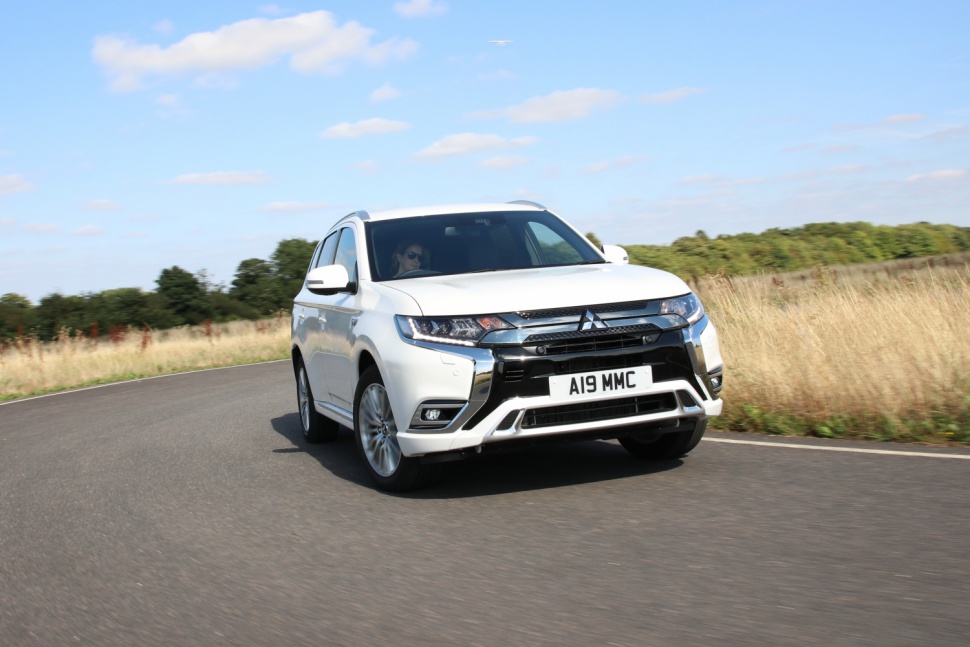
The Mitsubishi Outlander III, particularly the facelifted version introduced in 2018, represents a significant iteration of Mitsubishi’s popular crossover SUV. Positioned as a mid-size vehicle, the Outlander competes with models like the Honda CR-V, Toyota RAV4, and Nissan Rogue. This generation, produced from 2012 to 2021, aimed to offer a blend of practicality, fuel efficiency, and available seating for up to seven passengers. The 2018 facelift brought styling updates, improved interior materials, and enhancements to the vehicle’s safety technology. While not a major seller in the United States compared to its competitors, the Outlander offered a compelling alternative for buyers seeking a versatile and reasonably priced SUV.
Mitsubishi Outlander III (2018 Facelift) 2.4 MIVEC
The 2018 facelift of the third-generation Mitsubishi Outlander focused on refining an already established platform. The updates included a revised front fascia with a more prominent grille, redesigned headlights, and a refreshed interior layout. The 2.4 MIVEC engine variant, producing 166 horsepower, was a key offering in many markets, providing a balance between performance and fuel economy. This model year saw continued emphasis on safety features and a user-friendly infotainment system, aiming to appeal to families and individuals alike.
Engine & Performance
The Mitsubishi Outlander III (2018 facelift) 2.4 MIVEC is powered by a 2.4-liter inline-four cylinder gasoline engine, designated the 4J12. This naturally aspirated engine produces 166 horsepower at 6000 rpm and 220 Nm (162.26 lb.-ft.) of torque at 4200 rpm. The engine features Mitsubishi’s MIVEC (Mitsubishi Innovative Valve timing and lift Electronic Control) technology, which optimizes valve timing for improved performance and fuel efficiency across a wider range of engine speeds. Power is delivered to the front wheels via a continuously variable transmission (CVT). The CVT is designed to provide smooth, seamless acceleration and contribute to better fuel economy. The weight-to-power ratio is 9.1 kg/Hp, and the weight-to-torque ratio is 6.9 kg/Nm. The engine’s maximum speed is rated at 6500 rpm. The engine utilizes a multi-port fuel injection system and a single overhead camshaft (SOHC) valvetrain. A Start & Stop system is included to further enhance fuel efficiency during city driving.
Design & Features
The 2018 Mitsubishi Outlander III maintains the crossover SUV body style of its predecessors, offering a practical and spacious interior. It is a five-door vehicle with seating for up to seven passengers, depending on the configuration. The exterior design, updated with the facelift, features a more aggressive front end and refined detailing. Inside, the Outlander offers a comfortable cabin with a focus on functionality. Key features include a standard infotainment system with a touchscreen display, available navigation, and smartphone integration. Safety features were also enhanced with the facelift, including available forward collision mitigation, lane departure warning, and adaptive cruise control. The Outlander’s interior is designed to be versatile, with folding rear seats to maximize cargo space. Trunk space ranges from a minimum of 292 liters (10.31 cu. ft.) with all seats in place to a maximum of 1792 liters (63.28 cu. ft.) with the rear seats folded down. The vehicle has a fuel tank capacity of 63 liters (16.64 US gal).
Technical Specifications
| Brand | Mitsubishi |
| Model | Outlander |
| Generation | Outlander III (facelift 2018) |
| Type (Engine) | 2.4 MIVEC (166 Hp) CVT |
| Start of production | 2018 |
| End of production | 2021 |
| Powertrain Architecture | Internal Combustion engine |
| Body type | SUV, Crossover |
| Seats | 7 |
| Doors | 5 |
| Fuel consumption (economy) – urban (EPA) | 9.4 l/100 km (25 US mpg) |
| Fuel consumption (economy) – extra urban (EPA) | 7.8 l/100 km (30.2 US mpg) |
| Fuel consumption (economy) – combined (EPA) | 8.7 l/100 km (27 US mpg) |
| Fuel Type | Petrol (Gasoline) |
| Emission standard | LEV III ULEV70 |
| Weight-to-power ratio | 9.1 kg/Hp |
| Weight-to-torque ratio | 6.9 kg/Nm |
| Power | 166 Hp @ 6000 rpm |
| Power per litre | 70.3 Hp/l |
| Torque | 220 Nm @ 4200 rpm (162.26 lb.-ft. @ 4200 rpm) |
| Maximum engine speed | 6500 rpm |
| Engine layout | Front, Transverse |
| Engine Model/Code | 4J12 |
| Engine displacement | 2360 cm3 (144.02 cu. in.) |
| Number of cylinders | 4 |
| Engine configuration | Inline |
| Cylinder Bore | 88 mm (3.46 in.) |
| Piston Stroke | 97 mm (3.82 in.) |
| Compression ratio | 10.5:1 |
| Number of valves per cylinder | 4 |
| Fuel injection system | Multi-port manifold injection |
| Engine aspiration | Naturally aspirated engine |
| Valvetrain | SOHC |
| Engine oil capacity | 4.3 l (4.54 US qt | 3.78 UK qt) |
| Coolant | 6 l (6.34 US qt | 5.28 UK qt) |
| Kerb Weight | 1510-1520 kg (3328.98 – 3351.03 lbs.) |
| Max. weight | 2205 kg (4861.19 lbs.) |
| Max load | 685-695 kg (1510.17 – 1532.21 lbs.) |
| Trunk (boot) space – minimum | 292 l (10.31 cu. ft.) |
| Trunk (boot) space – maximum | 1792 l (63.28 cu. ft.) |
| Fuel tank capacity | 63 l (16.64 US gal | 13.86 UK gal) |
| Max. roof load | 50 kg (110.23 lbs.) |
| Permitted trailer load with brakes (12%) | 680 kg (1499.14 lbs.) |
| Permitted trailer load without brakes | 567 kg (1250.02 lbs.) |
| Permitted towbar download | 68 kg (149.91 lbs.) |
| Length | 4695 mm (184.84 in.) |
| Width | 1810 mm (71.26 in.) |
| Height | 1710 mm (67.32 in.) |
| Wheelbase | 2670 mm (105.12 in.) |
| Front track | 1539 mm (60.59 in.) |
| Rear (Back) track | 1539 mm (60.59 in.) |
| Ride height (ground clearance) | 216 mm (8.5 in.) |
| Minimum turning circle (turning diameter) | 10.6 m (34.78 ft.) |
| Drivetrain Architecture | Front wheel drive |
| Number of gears and type of gearbox | automatic transmission CVT |
| Front suspension | Independent, type McPherson with coil spring and anti-roll bar |
| Rear suspension | Independent multi-link spring suspension with stabilizer |
| Front brakes | Ventilated discs, 295 mm |
| Rear brakes | Disc, 302 mm |
| Assisting systems | ABS (Anti-lock braking system) |
| Steering type | Steering rack and pinion |
| Power steering | Electric Steering |
| Tires size | 225/55 R18 |
| Wheel rims size | 7J x 18 |