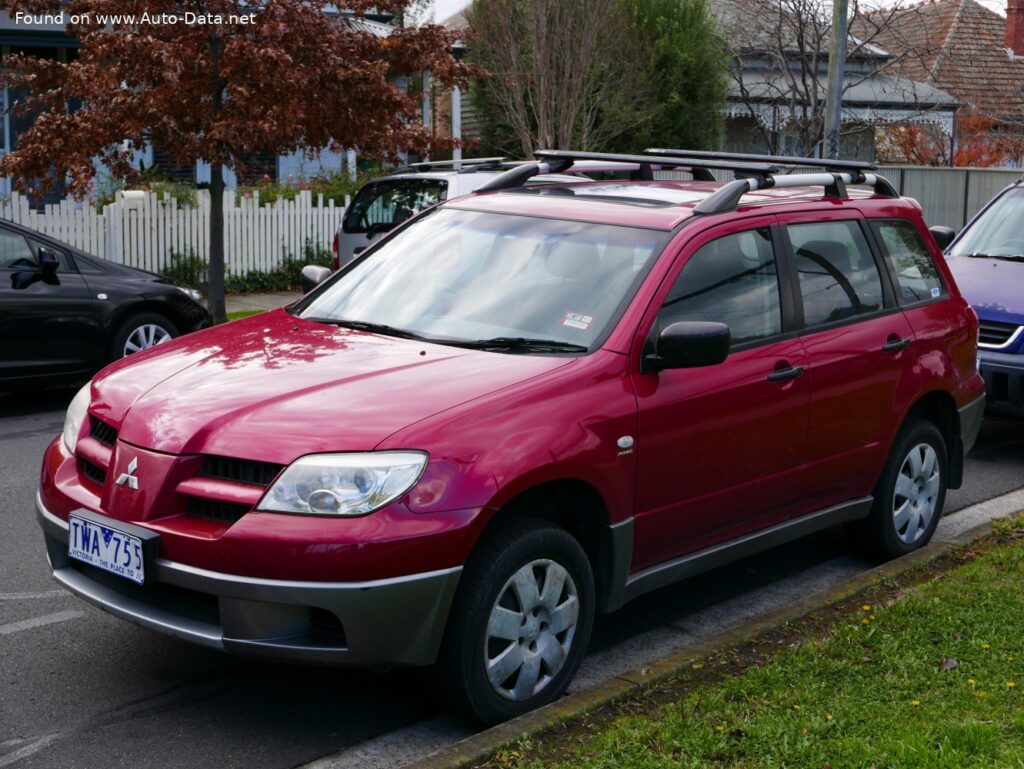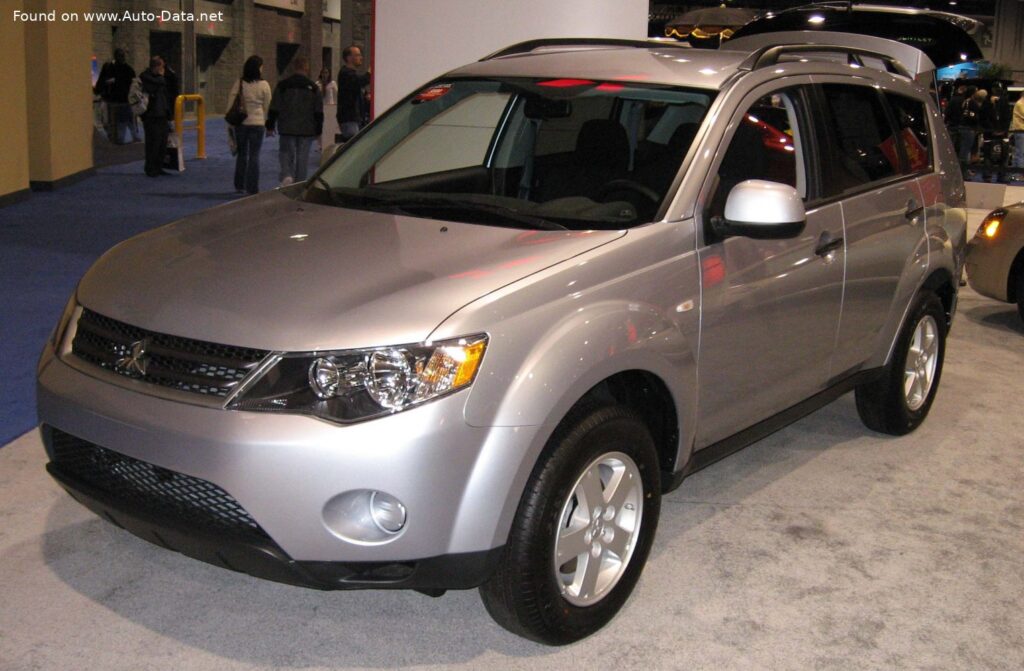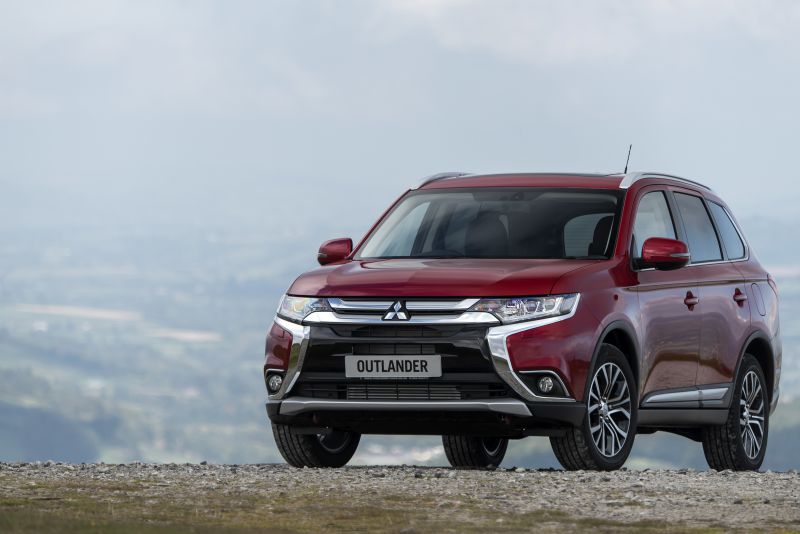
The Mitsubishi Outlander III, particularly the facelifted version introduced in 2015, represents a significant iteration of Mitsubishi’s popular crossover SUV. Positioned as a competitor in the compact SUV segment, the Outlander III aimed to balance practicality, fuel efficiency, and affordability. While not initially a major seller in the North American market compared to rivals like the Honda CR-V or Toyota RAV4, it offered a compelling alternative with its available all-wheel-drive system and spacious interior. The 2015 facelift brought styling updates and refinements to the vehicle, enhancing its appeal. This version of the Outlander was primarily sold in Europe, Asia, and Australia, where the demand for compact SUVs with all-wheel-drive capabilities is strong.
Mitsubishi Outlander III (Facelift 2015) 2.4 MIVEC
The facelifted Outlander III, produced from 2015 to 2018, continued Mitsubishi’s commitment to providing a versatile and family-friendly SUV. The 2.4 MIVEC variant, equipped with a continuously variable transmission (CVT) and four-wheel drive, was a common configuration in many markets. The “MIVEC” designation refers to Mitsubishi’s innovative Multi-point fuel Injection Variable valve timing Electronic Control system, designed to optimize engine performance and fuel economy across a wide range of driving conditions. This model aimed to deliver a balance between power and efficiency, making it suitable for both urban commuting and longer journeys.
Engine & Performance
The heart of the 2015 Mitsubishi Outlander III 2.4 MIVEC is a 2.4-liter inline-four cylinder gasoline engine. This naturally aspirated engine produces 167 horsepower at 6000 rpm and 222 Nm (163.74 lb.-ft.) of torque at 4100 rpm. The engine features a double overhead camshaft (DOHC) valvetrain with four valves per cylinder, contributing to its responsive nature. Power is delivered to all four wheels via a CVT, which provides smooth and seamless acceleration. While not a performance-oriented vehicle, the Outlander 2.4 MIVEC achieves a 0-100 km/h (0-62 mph) time of 10.5 seconds and a top speed of 198 km/h (123.03 mph). The engine’s power-to-weight ratio is 9 kg/Hp, and its torque-to-weight ratio is 6.8 kg/Nm. Fuel economy is rated at 7.7 l/100 km (30.5 US mpg) combined, with 9.8 l/100 km (24 US mpg) in urban settings and 6.5 l/100 km (36.2 US mpg) on the highway.
Design & Features
The Mitsubishi Outlander III is a five-door SUV/Crossover with seating for five passengers. The 2015 facelift brought subtle but noticeable changes to the exterior, including a revised front fascia with a bolder grille and updated headlights. The vehicle’s dimensions are 4695 mm (184.84 in) in length, 1800 mm (70.87 in) in width, and 1680 mm (66.14 in) in height, with a wheelbase of 2670 mm (105.12 in). Inside, the Outlander offers a practical and comfortable cabin with a focus on usability. Trunk space is generous, ranging from 477 liters (16.85 cu. ft.) with the rear seats up to 1640 liters (57.92 cu. ft.) with the seats folded down. Standard features typically included air conditioning, power windows and locks, and a basic audio system. Safety features, depending on the trim level, could include ABS, stability control, and multiple airbags. The vehicle’s ride height (ground clearance) is 215 mm (8.46 in), providing adequate capability for light off-road driving.
Technical Specifications
| Brand | Mitsubishi |
| Model | Outlander |
| Generation | Outlander III (facelift 2015) |
| Type (Engine) | 2.4 MIVEC (167 Hp) 4WD CVT |
| Start of production | 2015 |
| End of production | 2018 |
| Powertrain Architecture | Internal Combustion engine |
| Body type | SUV, Crossover |
| Seats | 5 |
| Doors | 5 |
| Fuel consumption (urban) | 9.8 l/100 km (24 US mpg) |
| Fuel consumption (extra urban) | 6.5 l/100 km (36.2 US mpg) |
| Fuel consumption (combined) | 7.7 l/100 km (30.5 US mpg) |
| Fuel Type | Petrol (Gasoline) |
| Acceleration 0 – 100 km/h | 10.5 sec |
| Acceleration 0 – 62 mph | 10.5 sec |
| Acceleration 0 – 60 mph | 10 sec |
| Maximum speed | 198 km/h (123.03 mph) |
| Emission standard | Euro 5 |
| Weight-to-power ratio | 9 kg/Hp |
| Weight-to-torque ratio | 6.8 kg/Nm |
| Power | 167 Hp @ 6000 rpm |
| Torque | 222 Nm @ 4100 rpm (163.74 lb.-ft. @ 4100 rpm) |
| Maximum engine speed | 6500 rpm |
| Engine layout | Front, Transverse |
| Engine Model/Code | 4J12 |
| Engine displacement | 2360 cm3 (144.02 cu. in.) |
| Number of cylinders | 4 |
| Engine configuration | Inline |
| Cylinder Bore | 88 mm (3.46 in.) |
| Piston Stroke | 97 mm (3.82 in.) |
| Compression ratio | 10.5:1 |
| Number of valves per cylinder | 4 |
| Fuel injection system | Multi-port manifold injection |
| Engine aspiration | Naturally aspirated engine |
| Valvetrain | SOHC |
| Engine oil capacity | 4.6 l (4.86 US qt | 4.05 UK qt) |
| Coolant | 6 l (6.34 US qt | 5.28 UK qt) |
| Kerb Weight | 1505 kg (3317.96 lbs.) |
| Max. weight | 2210 kg (4872.22 lbs.) |
| Max load | 705 kg (1554.26 lbs.) |
| Trunk (boot) space – minimum | 477 l (16.85 cu. ft.) |
| Trunk (boot) space – maximum | 1640 l (57.92 cu. ft.) |
| Fuel tank capacity | 60 l (15.85 US gal | 13.2 UK gal) |
| Permitted trailer load with brakes (12%) | 1600 kg (3527.4 lbs.) |
| Length | 4695 mm (184.84 in.) |
| Width | 1800 mm (70.87 in.) |
| Height | 1680 mm (66.14 in.) |
| Wheelbase | 2670 mm (105.12 in.) |
| Front track | 1540 mm (60.63 in.) |
| Rear (Back) track | 1540 mm (60.63 in.) |
| Ride height (ground clearance) | 215 mm (8.46 in.) |
| Minimum turning circle (turning diameter) | 10.6 m (34.78 ft.) |
| Drive wheel | All wheel drive (4×4) |
| Number of gears and type of gearbox | automatic transmission CVT |
| Front suspension | Independent, type McPherson with coil spring and anti-roll bar |
| Rear suspension | Independent multi-link suspension |
| Front brakes | Ventilated discs |
| Rear brakes | Disc |
| Assisting systems | ABS (Anti-lock braking system) |
| Steering type | Steering rack and pinion |
| Power steering | Electric Steering |
| Tires size | 225/55 R18 |
| Wheel rims size | 7.0J x 18 |