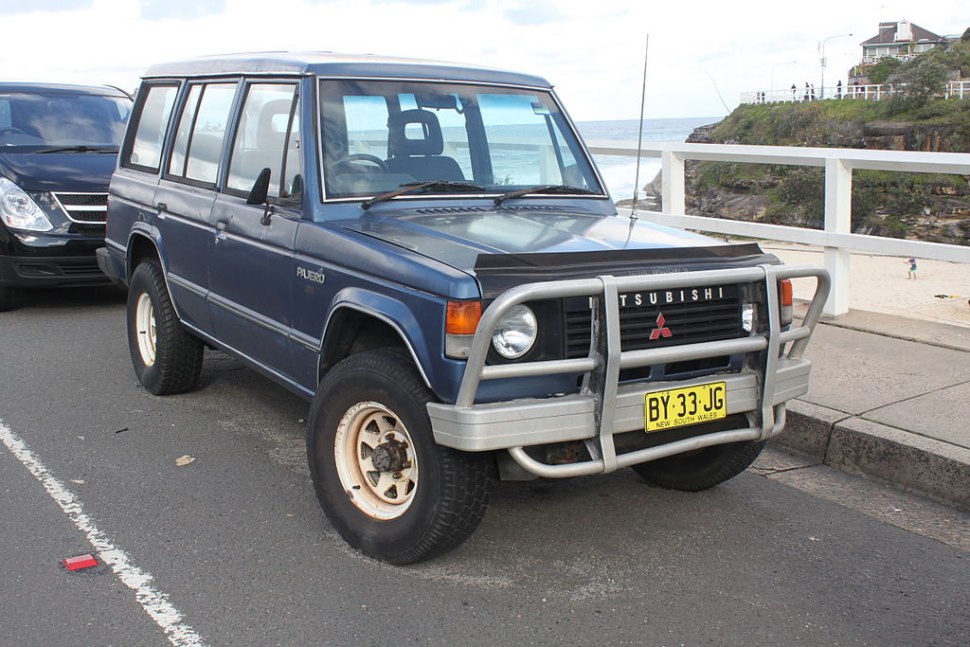
The Mitsubishi Pajero I, produced between 1988 and 1990, represents the first generation of Mitsubishi’s highly successful Pajero (Montero in some markets) SUV. This vehicle marked Mitsubishi’s serious entry into the burgeoning four-wheel-drive market, aiming to compete with established players like the Toyota Land Cruiser and Nissan Patrol. While not initially sold in significant numbers in the United States – the Montero would arrive later – the Pajero I was a pivotal model for Mitsubishi, particularly in Australia, Asia, and Europe, establishing the brand’s reputation for robust, capable off-road vehicles. The first-generation Pajero distinguished itself with a combination of comfort features and genuine off-road ability, a relatively uncommon pairing at the time. It laid the foundation for the Pajero’s enduring legacy as a versatile and reliable SUV.
Mitsubishi Pajero I: A First Generation Overview
The Pajero I (chassis codes L04_G and L14_G) was a significant departure for Mitsubishi, moving beyond traditional, utilitarian off-roaders towards a more refined and comfortable SUV experience. It was offered in both short-wheelbase (L04_G) and long-wheelbase (L14_G) configurations, with the latter providing increased passenger and cargo space. The vehicle’s design incorporated a body-on-frame construction, a hallmark of traditional SUVs, ensuring durability and off-road capability. The Pajero I was designed to appeal to a broader audience than previous Mitsubishi off-road vehicles, offering a blend of practicality, comfort, and off-road prowess. Its introduction coincided with a growing demand for SUVs capable of handling both daily commutes and weekend adventures.
Engine & Performance
The 3.0-liter V6 engine, designated as the L141G and L146G, was a key component of the Pajero I’s appeal. This naturally aspirated engine produced 141 horsepower, providing adequate power for both on-road driving and moderate off-road excursions. While not a high-performance engine by modern standards, it delivered a respectable level of torque, crucial for tackling challenging terrain. The engine was paired with either a 5-speed manual or a 4-speed automatic transmission, depending on the specific model and market. The Pajero I featured a part-time four-wheel-drive system, allowing drivers to switch between two-wheel drive for fuel efficiency and four-wheel drive for enhanced traction. A low-range gear selector further enhanced its off-road capabilities, enabling it to navigate steep inclines and difficult obstacles. The suspension system, consisting of coil springs and shock absorbers, was designed to provide a comfortable ride on paved roads while maintaining sufficient articulation for off-road use. The combination of the V6 engine, robust drivetrain, and capable suspension made the Pajero I a versatile vehicle capable of handling a wide range of driving conditions.
Design & Features
The Mitsubishi Pajero I’s design was a product of its time, reflecting the boxy, utilitarian aesthetic common in SUVs of the late 1980s. However, it incorporated several design elements that set it apart from its competitors. The vehicle featured a relatively aerodynamic shape for an SUV, contributing to improved fuel efficiency. Large windows and a spacious interior provided excellent visibility and a comfortable cabin environment. The interior appointments varied depending on the trim level, but generally included comfortable seating, basic instrumentation, and a functional dashboard layout. Safety features were relatively limited by the standards of the era, typically including seatbelts and a collapsible steering column. However, the Pajero I’s robust construction and solid build quality provided a degree of inherent safety. The long-wheelbase models offered increased cargo capacity, making them suitable for families and those requiring additional space for luggage or equipment. The Pajero I’s design prioritized functionality and durability, resulting in a vehicle that was both practical and capable.
The Pajero I’s success stemmed from its ability to bridge the gap between rugged off-road capability and everyday usability. It wasn’t simply a workhorse; it was a vehicle that could comfortably transport passengers and their belongings while still being capable of tackling challenging terrain. This versatility appealed to a growing segment of the market seeking a vehicle that could do it all.
Technical Specifications
| Brand | Mitsubishi |
| Model | Pajero I |
| Generation | Pajero I (L04_G, L14_G) |
| Type (Engine) | 3.0 V6 (L141G, L146G) (141 Hp) |
| Start of production | 1988 |
| End of production | 1990 |
| Powertrain Architecture | Internal Combustion engine |
| Body type | SUV |
| Fuel Type | Petrol (Gasoline) |
| Power | 141 Hp |
| Engine aspiration | Naturally aspirated engine |
The Pajero I, despite its relatively short production run, established a strong foundation for the Pajero lineage. It demonstrated Mitsubishi’s commitment to building capable and versatile SUVs, paving the way for subsequent generations that would further refine the formula and achieve even greater success in global markets. While the first-generation Pajero may not be as well-known in the United States as later models, its significance in the development of Mitsubishi’s SUV offerings cannot be overstated. It remains a sought-after vehicle among enthusiasts and collectors, appreciated for its rugged charm, reliable mechanics, and pioneering spirit.