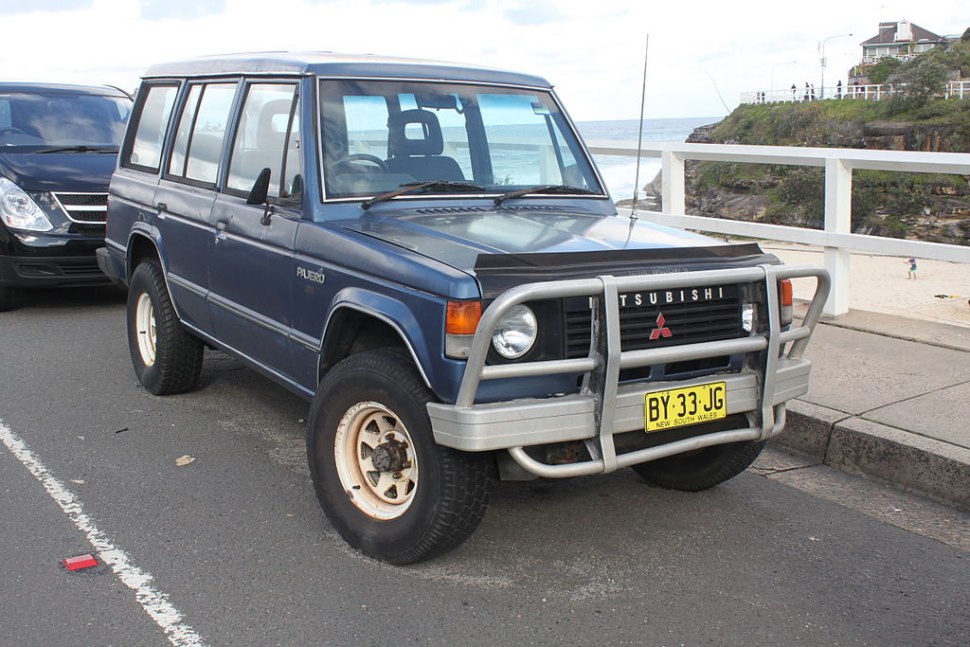
The Mitsubishi Pajero II Metal Top (V2_W, V4_W) 2.8 TD GLS, produced between 1994 and 2000, represents a significant evolution in Mitsubishi’s renowned off-road vehicle lineage. This iteration of the Pajero, primarily marketed outside of North America, solidified the model’s reputation for robust construction, capable four-wheel drive systems, and a blend of on-road comfort and off-road prowess. While not officially sold in the United States, the Pajero II found considerable success in markets like Europe, Australia, and Asia, where demand for versatile SUVs was high. The “Metal Top” designation refers to the removable hardtop, offering open-air driving experiences alongside the security of a fully enclosed cabin. This model, specifically the 2.8 TD GLS variant, was equipped with a turbocharged diesel engine, offering a balance of fuel efficiency and torque suitable for both daily driving and challenging terrain.
Mitsubishi Pajero II Metal Top: A Detailed Overview
The Pajero II, launched in 1994, built upon the success of the original Pajero, addressing criticisms and incorporating advancements in technology and design. It was a crucial model for Mitsubishi, demonstrating their engineering capabilities in the competitive SUV segment. The V2_W and V4_W chassis codes denote variations within the second-generation Pajero, often relating to engine options and specific equipment levels. The GLS trim level, as featured in this 2.8 TD model, typically included enhanced interior appointments and additional features compared to base models. The Pajero II was designed to appeal to a broad audience, from families seeking a spacious and reliable vehicle to adventurers requiring a capable off-road machine.
Engine & Performance
The heart of the Pajero II Metal Top 2.8 TD GLS is a 2.8-liter inline-four cylinder diesel engine. This engine, producing 125 horsepower at 4000 rpm and 292 Nm (215.37 lb.-ft.) of torque at 2000 rpm, was a workhorse designed for durability and low-end grunt. The turbocharger significantly enhances performance, providing increased power and responsiveness compared to naturally aspirated diesel engines of the time. The engine utilizes a precombustion chamber injection system, a common technology in diesel engines of this era, to improve combustion efficiency and reduce emissions. Power per liter is rated at 44.1 Hp/l. The engine’s longitudinal front-mounted layout contributes to a balanced weight distribution, enhancing handling characteristics. The Pajero II 2.8 TD GLS achieves a maximum speed of 155 km/h (96.31 mph). The weight-to-power ratio of 15.3 kg/Hp and weight-to-torque ratio of 6.5 kg/Nm demonstrate the engine’s ability to move the vehicle effectively, despite its substantial weight. Fuel consumption is rated at 11.7 l/100 km (20.1 US mpg, 24.1 UK mpg, 8.5 km/l).
Design & Features
The Pajero II Metal Top is a three-door SUV with seating for five passengers. Its body-on-frame construction provides exceptional strength and durability, essential for off-road driving. The removable metal hardtop is a defining feature, allowing for open-air motoring when desired. The exterior design is characterized by its boxy, utilitarian shape, reflecting the vehicle’s focus on functionality. Inside, the GLS trim level offers a relatively comfortable and well-equipped cabin, although it’s important to remember this vehicle dates back to the mid-1990s. Features typically included comfortable seating, basic instrumentation, and a functional dashboard layout. Safety features, while limited by the standards of the time, included an Anti-lock Braking System (ABS) to enhance braking performance. The Pajero II’s spacious interior and generous trunk space – ranging from 330 liters (11.65 cu. ft.) with the rear seats up to 1100 liters (38.85 cu. ft.) with them folded down – make it a practical vehicle for families and those needing to transport cargo. The vehicle boasts a 75-liter (19.81 US gal, 16.5 UK gal) fuel tank, providing a substantial driving range.
Technical Specifications
| Brand | Mitsubishi |
| Model | Pajero |
| Generation | Pajero II Metal Top (V2_W, V4_W) |
| Type (Engine) | 2.8 TD GLS (125 Hp) |
| Start of production | 1994 |
| End of production | 2000 |
| Powertrain Architecture | Internal Combustion engine |
| Body type | SUV |
| Seats | 5 |
| Doors | 3 |
| Fuel consumption (combined) | 11.7 l/100 km (20.1 US mpg, 24.1 UK mpg, 8.5 km/l) |
| Fuel Type | Diesel |
| Maximum speed | 155 km/h (96.31 mph) |
| Weight-to-power ratio | 15.3 kg/Hp |
| Weight-to-torque ratio | 6.5 kg/Nm |
| Power | 125 Hp @ 4000 rpm |
| Power per litre | 44.1 Hp/l |
| Torque | 292 Nm @ 2000 rpm (215.37 lb.-ft. @ 2000 rpm) |
| Engine layout | Front, Longitudinal |
| Engine displacement | 2835 cm3 (173 cu. in.) |
| Number of cylinders | 4 |
| Engine configuration | Inline |
| Cylinder Bore | 95 mm (3.74 in.) |
| Piston Stroke | 100 mm (3.94 in.) |
| Compression ratio | 21:1 |
| Number of valves per cylinder | 2 |
| Fuel injection system | Precombustion chamber injection |
| Engine aspiration | Turbocharger |
| Valvetrain | OHC |
| Kerb Weight | 1910 kg (4210.83 lbs.) |
| Max. weight | 2510 kg (5533.6 lbs.) |
| Max load | 600 kg (1322.77 lbs.) |
| Trunk (boot) space – minimum | 330 l (11.65 cu. ft.) |
| Trunk (boot) space – maximum | 1100 l (38.85 cu. ft.) |
| Fuel tank capacity | 75 l (19.81 US gal, 16.5 UK gal) |
| Length | 4145 mm (163.19 in.) |
| Width | 1785 mm (70.28 in.) |
| Height | 1845 mm (72.64 in.) |
| Wheelbase | 2420 mm (95.28 in.) |
| Front track | 1465 mm (57.68 in.) |
| Rear (Back) track | 1480 mm (58.27 in.) |
| Drive wheel | All wheel drive (4×4) |
| Number of gears and type of gearbox | 5 gears, manual transmission |
| Front suspension | Double wishbone |
| Rear suspension | Coil spring |
| Front brakes | Ventilated discs |
| Rear brakes | Disc |
| Assisting systems | ABS (Anti-lock braking system) |
| Steering type | Steering rack and pinion |
| Power steering | Hydraulic Steering |
| Tires size | 265/70 R15 R |
The Mitsubishi Pajero II Metal Top 2.8 TD GLS remains a popular choice among enthusiasts and collectors, appreciated for its ruggedness, reliability, and off-road capabilities. Its blend of practicality, durability, and a unique removable top design continues to make it a distinctive vehicle in the SUV landscape.