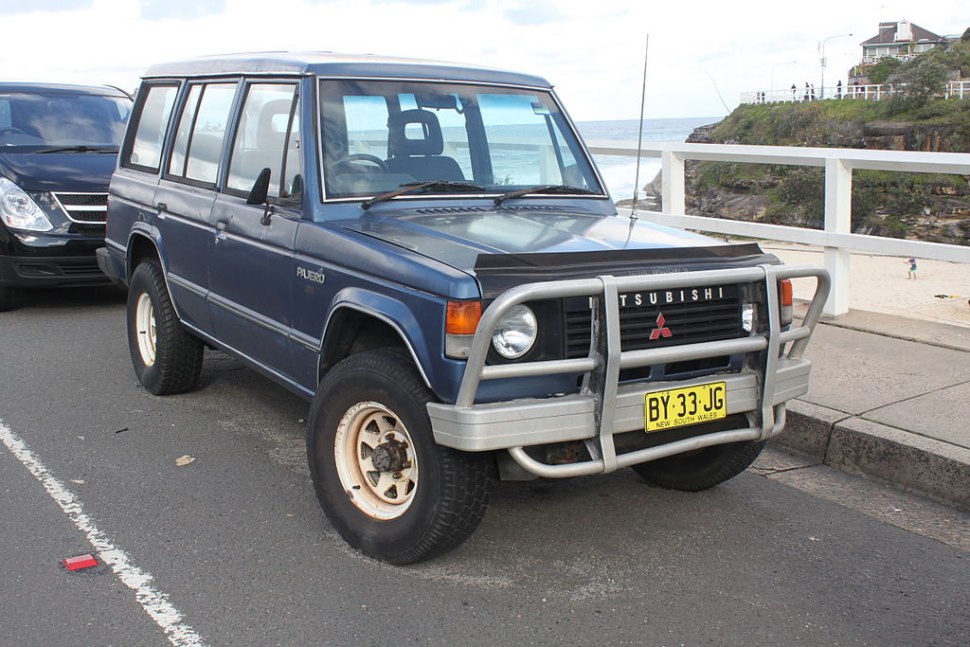
The Mitsubishi Pajero II Metal Top (V2_W, V4_W) 3.0 i V6 24V GLS (177 Hp) represents a significant iteration in Mitsubishi’s long-running Pajero (Montero in some markets) series. Produced between 1996 and 2000, this second-generation Pajero was primarily aimed at the European and Asian markets, where demand for robust, capable, and relatively luxurious SUVs was high. While not widely sold in the United States, the Pajero II gained a reputation for its off-road prowess, comfortable ride, and durable construction. It occupied a segment between smaller, more utilitarian 4x4s and larger, more expensive luxury SUVs.
Mitsubishi Pajero II Metal Top: A Detailed Overview
The Pajero II Metal Top distinguished itself from earlier models with a more refined design and improved mechanical components. The “Metal Top” designation refers to the removable hardtop, offering a degree of open-air enjoyment not commonly found in its competitors. This model, specifically the 3.0 i V6 24V GLS variant, featured a 3.0-liter V6 engine, offering a balance of power and fuel efficiency for its time. It was designed to appeal to buyers seeking a vehicle capable of both daily commuting and adventurous off-road excursions.
Engine & Performance
At the heart of the Pajero II Metal Top 3.0 i V6 GLS lies a naturally aspirated 3.0-liter V6 engine, producing 177 horsepower at 5000 rpm and 255 Nm (188.08 lb.-ft.) of torque at 4500 rpm. This engine, with its 24 valves and multi-port fuel injection, provided smooth and responsive performance. The engine’s longitudinal front-engine layout contributed to a balanced weight distribution, enhancing handling both on and off-road. Acceleration from 0 to 100 km/h (0-62 mph) took approximately 11.1 seconds, while 0-60 mph was achieved in around 10.5 seconds. The vehicle boasted a maximum speed of 175 km/h (108.74 mph). The power-to-weight ratio of 10 kg/Hp and torque-to-weight ratio of 6.9 kg/Nm further highlight the engine’s capability in moving the relatively heavy SUV.
Design & Features
The Pajero II Metal Top is a three-door SUV with seating for five passengers. Its body-on-frame construction provided exceptional durability and off-road capability. The removable metal hardtop was a key feature, allowing for an open-air driving experience. The vehicle’s design was a blend of rugged functionality and contemporary styling for the late 1990s. Inside, the GLS trim level offered a relatively well-appointed interior with comfortable seating and basic amenities. Safety features, while limited by the standards of today, included an Anti-lock Braking System (ABS) and hydraulic power steering. The Pajero II’s suspension system, featuring double wishbones at the front and coil springs at the rear, was designed to provide a comfortable ride on paved roads while maintaining excellent articulation for off-road driving. The vehicle’s 265/70 R15 tires provided adequate grip for various terrains.
Technical Specifications
| Brand | Mitsubishi |
| Model | Pajero |
| Generation | Pajero II Metal Top (V2_W, V4_W) |
| Type (Engine) | 3.0 i V6 24V GLS (177 Hp) |
| Start of production | 1996 |
| End of production | 2000 |
| Powertrain Architecture | Internal Combustion engine |
| Body type | SUV |
| Seats | 5 |
| Doors | 3 |
| Fuel consumption (urban) | 17.2 l/100 km (13.7 US mpg / 16.4 UK mpg) |
| Fuel consumption (extra urban) | 10.8 l/100 km (21.8 US mpg / 26.2 UK mpg) |
| Fuel Type | Petrol (Gasoline) |
| Acceleration 0 – 100 km/h | 11.1 sec |
| Acceleration 0 – 62 mph | 11.1 sec |
| Acceleration 0 – 60 mph | 10.5 sec |
| Maximum speed | 175 km/h (108.74 mph) |
| Weight-to-power ratio | 10 kg/Hp |
| Weight-to-torque ratio | 6.9 kg/Nm |
| Power | 177 Hp @ 5000 rpm |
| Torque | 255 Nm @ 4500 rpm (188.08 lb.-ft. @ 4500 rpm) |
| Engine layout | Front, Longitudinal |
| Engine displacement | 2972 cm3 (181.36 cu. in.) |
| Number of cylinders | 6 |
| Engine configuration | V-engine |
| Cylinder Bore | 91.1 mm (3.59 in.) |
| Piston Stroke | 76 mm (2.99 in.) |
| Compression ratio | 9:1 |
| Number of valves per cylinder | 4 |
| Fuel injection system | Multi-port manifold injection |
| Engine aspiration | Naturally aspirated engine |
| Kerb Weight | 1765 kg (3891.16 lbs.) |
| Max. weight | 2510 kg (5533.6 lbs.) |
| Max load | 745 kg (1642.44 lbs.) |
| Trunk (boot) space – minimum | 330 l (11.65 cu. ft.) |
| Trunk (boot) space – maximum | 1100 l (38.85 cu. ft.) |
| Fuel tank capacity | 75 l (19.81 US gal | 16.5 UK gal) |
| Length | 4145 mm (163.19 in.) |
| Width | 1785 mm (70.28 in.) |
| Height | 1845 mm (72.64 in.) |
| Wheelbase | 2420 mm (95.28 in.) |
| Front track | 1465 mm (57.68 in.) |
| Rear (Back) track | 1480 mm (58.27 in.) |
| Drive wheel | All wheel drive (4×4) |
| Number of gears and type of gearbox | 5 gears, manual transmission |
| Front suspension | Double wishbone |
| Rear suspension | Coil spring |
| Front brakes | Ventilated discs |
| Rear brakes | Disc |
| Assisting systems | ABS (Anti-lock braking system), Hydraulic Steering |
| Tires size | 265/70 R15 |
The Mitsubishi Pajero II Metal Top 3.0 i V6 24V GLS, while not a common sight on American roads, remains a respected and capable SUV, particularly valued for its off-road abilities and durable construction. It represents a pivotal point in the Pajero’s evolution, bridging the gap between rugged utility and modern comfort.