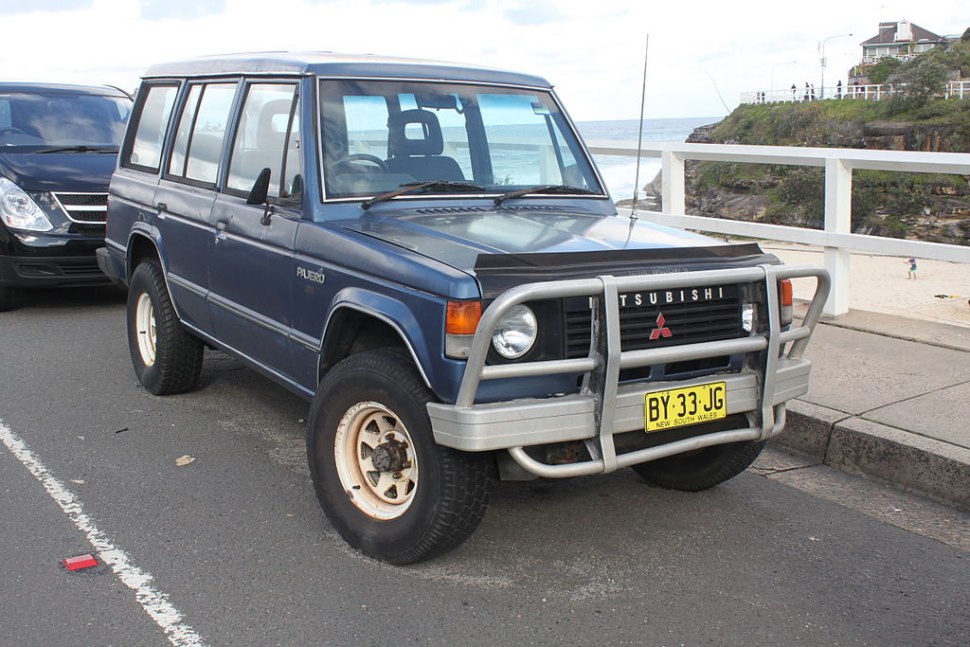
The Mitsubishi Pajero II Metal Top (V2_W, V4_W) 3.5 i V6 24V GDI, produced between 1998 and 2000, represents a significant iteration of Mitsubishi’s renowned Pajero series. This model, while not widely sold in the United States, was a highly popular and capable Sport Utility Vehicle (SUV) in markets like Europe, Australia, and Asia. The Pajero II, in general, built upon the success of the first generation, offering increased refinement, improved off-road capability, and a more powerful engine lineup. The “Metal Top” designation refers to the removable hardtop, providing open-air driving enjoyment alongside the security and weather protection of a closed vehicle. This particular variant, equipped with the 3.5-liter V6 GDI engine, was positioned as a premium offering within the Pajero II range.
Mitsubishi Pajero II Metal Top: A Detailed Overview
The Pajero II, launched in 1997, was a substantial upgrade over its predecessor. It retained the body-on-frame construction favored for its robustness and off-road prowess, but incorporated significant improvements in chassis design, suspension technology, and interior comfort. The V2_W and V4_W chassis codes denote variations in suspension setup and minor feature differences, primarily related to market-specific requirements. The 3.5 i V6 24V GDI model was aimed at buyers seeking a blend of performance, luxury, and off-road capability. The GDI (Gasoline Direct Injection) technology was a key feature, enhancing fuel efficiency and power output compared to traditional port fuel injection systems.
Engine & Performance
The heart of the Pajero II Metal Top 3.5 i V6 24V GDI is its 3.5-liter V6 engine. This naturally aspirated powerplant produces 245 horsepower at 5500 rpm and 343 Nm (252.98 lb.-ft.) of torque at 2500 rpm. The GDI system directly injects fuel into the combustion chamber, allowing for more precise fuel control and a higher compression ratio of 10.4:1. This results in improved thermal efficiency and increased power. The engine’s configuration – a 60-degree V-engine with a cylinder bore of 93 mm and a piston stroke of 85.8 mm – contributes to its smooth operation and balanced power delivery. Acceleration from 0 to 100 km/h (0-62 mph) takes approximately 10 seconds, while the 0-60 mph sprint is achieved in around 9.5 seconds. The vehicle boasts a maximum speed of 190 km/h (118.06 mph). The weight-to-power ratio of 7.8 kg/Hp and a weight-to-torque ratio of 5.5 kg/Nm demonstrate a respectable power-to-weight balance for an SUV of its size and capability. The engine is longitudinally mounted at the front of the vehicle, driving all four wheels through a four-speed automatic transmission.
Design & Features
The Pajero II Metal Top is a three-door SUV with seating for five passengers. Its body-on-frame construction provides a robust platform for both on-road comfort and off-road adventures. The removable metal hardtop is a defining feature, offering the versatility of an open-top vehicle when desired. The exterior design is characterized by its boxy, utilitarian shape, typical of SUVs from the late 1990s. The vehicle’s dimensions are 4145 mm (163.19 in) in length, 1785 mm (70.28 in) in width, and 1845 mm (72.64 in) in height, with a wheelbase of 2420 mm (95.28 in). Inside, the Pajero II Metal Top offers a functional and relatively spacious cabin. While not overtly luxurious, it provides comfortable seating and essential amenities. Safety features for the era included ABS (Anti-lock Braking System) and hydraulic power steering. The suspension system, featuring double wishbones at the front and coil springs at the rear, is designed to provide a comfortable ride on paved roads while maintaining excellent off-road articulation. Trunk space ranges from 330 liters (11.65 cu. ft.) with the rear seats up to 1100 liters (38.85 cu. ft.) with the seats folded down.
Technical Specifications
| Brand | Mitsubishi |
| Model | Pajero |
| Generation | Pajero II Metal Top (V2_W, V4_W) |
| Type (Engine) | 3.5 i V6 24V GDI (245 Hp) |
| Start of production | 1998 |
| End of production | 2000 |
| Powertrain Architecture | Internal Combustion engine |
| Body type | SUV |
| Seats | 5 |
| Doors | 3 |
| Fuel consumption (urban) | 18 l/100 km (13.1 US mpg / 15.7 UK mpg / 5.6 km/l) |
| Fuel consumption (extra urban) | 10 l/100 km (23.5 US mpg / 28.2 UK mpg / 10 km/l) |
| Fuel Type | Petrol (Gasoline) |
| Acceleration 0 – 100 km/h | 10 sec |
| Acceleration 0 – 62 mph | 10 sec |
| Acceleration 0 – 60 mph | 9.5 sec |
| Maximum speed | 190 km/h (118.06 mph) |
| Weight-to-power ratio | 7.8 kg/Hp |
| Weight-to-torque ratio | 5.5 kg/Nm |
| Power | 245 Hp @ 5500 rpm |
| Power per litre | 70.1 Hp/l |
| Torque | 343 Nm @ 2500 rpm (252.98 lb.-ft. @ 2500 rpm) |
| Engine layout | Front, Longitudinal |
| Engine displacement | 3497 cm3 (213.4 cu. in.) |
| Number of cylinders | 6 |
| Engine configuration | V-engine |
| Cylinder Bore | 93 mm (3.66 in.) |
| Piston Stroke | 85.8 mm (3.38 in.) |
| Compression ratio | 10.4:1 |
| Number of valves per cylinder | 4 |
| Fuel injection system | Direct injection |
| Engine aspiration | Naturally aspirated engine |
| Valvetrain | DOHC |
| Kerb Weight | 1900 kg (4188.78 lbs.) |
| Trunk (boot) space – minimum | 330 l (11.65 cu. ft.) |
| Trunk (boot) space – maximum | 1100 l (38.85 cu. ft.) |
| Fuel tank capacity | 75 l (19.81 US gal | 16.5 UK gal) |
| Length | 4145 mm (163.19 in.) |
| Width | 1785 mm (70.28 in.) |
| Height | 1845 mm (72.64 in.) |
| Wheelbase | 2420 mm (95.28 in.) |
| Front track | 1465 mm (57.68 in.) |
| Rear (Back) track | 1480 mm (58.27 in.) |
| Drive wheel | All wheel drive (4×4) |
| Number of gears and type of gearbox | 4 gears, automatic transmission |
| Front suspension | Double wishbone |
| Rear suspension | Coil spring |
| Front brakes | Ventilated discs |
| Rear brakes | Disc |
| Assisting systems | ABS (Anti-lock braking system) |
| Power steering | Hydraulic Steering |
| Tires size | 265/70 R16 |
The Mitsubishi Pajero II Metal Top 3.5 i V6 24V GDI remains a respected vehicle among enthusiasts, particularly for its blend of off-road capability, relatively refined on-road manners, and the unique appeal of its removable hardtop. While not officially available in the US market, its reputation for durability and performance has ensured its continued presence in various global markets.