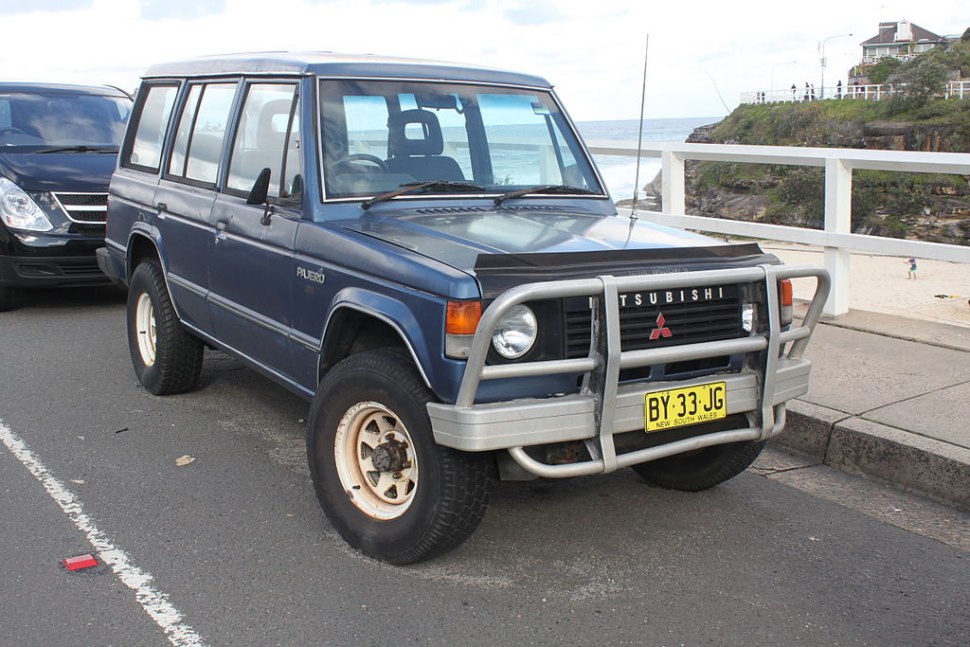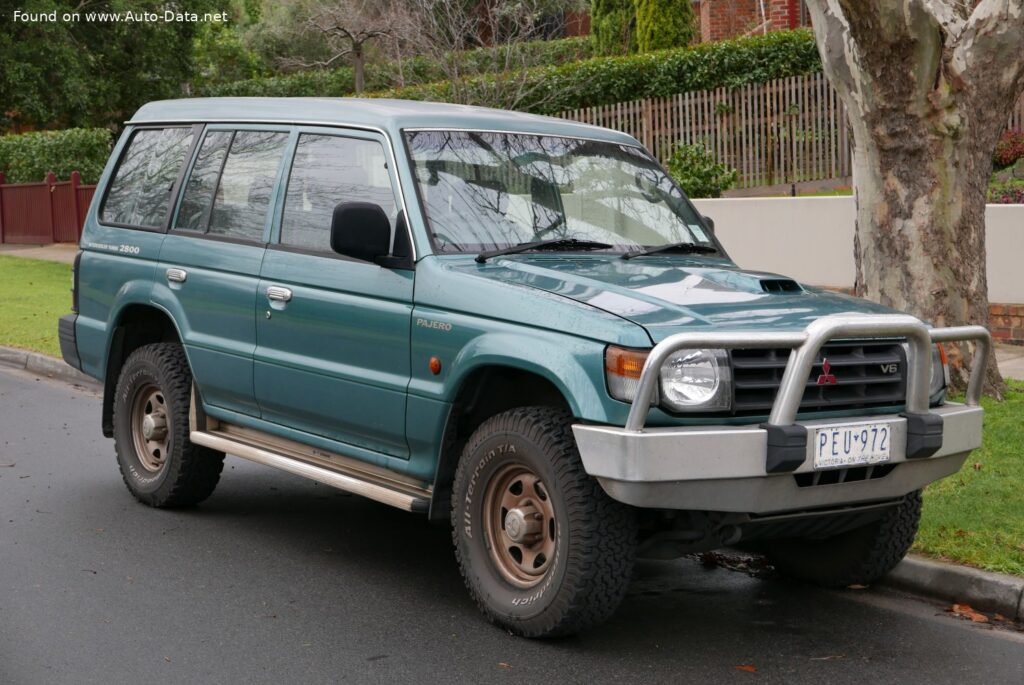
The Mitsubishi Pajero II (V2_W, V4_W) is a mid-size SUV produced by Mitsubishi Motors from 1991 to 1999. Representing the second generation of the Pajero lineage, it built upon the success of its predecessor, offering increased refinement, capability, and a wider range of engine options. While not initially a major player in the North American market – Mitsubishi focused on smaller crossovers and trucks during this period – the Pajero II was highly regarded in Europe, Australia, South America, and Asia as a robust and capable off-road vehicle. The 2.5 TD GL model, equipped with a 99 horsepower turbocharged diesel engine, was a popular choice for those prioritizing fuel efficiency and durability, particularly in regions where diesel fuel was readily available and cost-effective.
Mitsubishi Pajero II: A Global Off-Roader
The Pajero II marked a significant step forward for Mitsubishi’s SUV offerings. It retained the body-on-frame construction of the original Pajero, ensuring excellent durability and off-road prowess, but incorporated improvements in suspension design, interior comfort, and safety features. The V2_W and V4_W designations refer to short and long wheelbase versions respectively, with the latter offering more space for passengers and cargo. The 2.5 TD GL trim level represented a balance between affordability and functionality, appealing to buyers seeking a practical and reliable SUV for both on and off-road use.
Engine & Performance
The heart of the Pajero II 2.5 TD GL is a 2.5-liter inline-four cylinder diesel engine. This engine, producing 99 horsepower at 4200 rpm and 240 Nm (177.01 lb.-ft.) of torque at 2000 rpm, utilized a precombustion chamber injection system and a turbocharger to enhance power and efficiency. While not exceptionally powerful by modern standards, the engine’s torque output provided ample pulling power for off-road adventures and towing. The engine’s longitudinal front-engine layout contributed to a balanced weight distribution. Acceleration from 0 to 100 km/h (0-62 mph) took approximately 21.5 seconds, and it achieved a maximum speed of 145 km/h (90.1 mph). Fuel economy figures were respectable for a vehicle of its size and capability, averaging 11.4 l/100 km (20.6 US mpg) combined, with 8.6 l/100 km (27.4 US mpg) on the extra urban cycle and 13 l/100 km (18.1 US mpg) in urban conditions. The weight-to-power ratio of 18.9 kg/Hp and weight-to-torque ratio of 7.8 kg/Nm highlight the engine’s focus on usable power rather than outright speed.
Design & Features
The Mitsubishi Pajero II is a classic body-on-frame SUV, characterized by its rugged appearance and practical design. The 5-door configuration and 7-seat layout provided ample space for passengers and cargo. The exterior design, while functional, was relatively conservative, reflecting the vehicle’s focus on durability and reliability. Key features included a robust suspension system – torsion bars at the front and coil springs at the rear – designed to handle challenging terrain. Ventilated disc brakes on the front and disc brakes on the rear provided adequate stopping power, enhanced by an Anti-lock Braking System (ABS). Hydraulic power steering made maneuvering easier, particularly in off-road situations. The Pajero II offered a trunk (boot) space ranging from 1080 liters (38.14 cu. ft.) with the rear seats up to 2050 liters (72.4 cu. ft.) with the seats folded down. A 75-liter (19.81 US gal) fuel tank provided a reasonable driving range.
Technical Specifications
| Brand | Mitsubishi |
| Model | Pajero |
| Generation | Pajero II (V2_W, V4_W) |
| Type (Engine) | 2.5 TD GL (99 Hp) |
| Start of production | 1991 |
| End of production | 1999 |
| Powertrain Architecture | Internal Combustion engine |
| Body type | SUV |
| Seats | 7 |
| Doors | 5 |
| Fuel consumption (urban) | 13 l/100 km (18.1 US mpg, 21.7 UK mpg, 7.7 km/l) |
| Fuel consumption (extra urban) | 8.6 l/100 km (27.4 US mpg, 32.8 UK mpg, 11.6 km/l) |
| Fuel consumption (combined) | 11.4 l/100 km (20.6 US mpg, 24.8 UK mpg, 8.8 km/l) |
| Fuel Type | Diesel |
| Acceleration 0 – 100 km/h | 21.5 sec |
| Acceleration 0 – 62 mph | 21.5 sec |
| Acceleration 0 – 60 mph | 20.4 sec |
| Maximum speed | 145 km/h (90.1 mph) |
| Weight-to-power ratio | 18.9 kg/Hp |
| Weight-to-torque ratio | 7.8 kg/Nm |
| Power | 99 Hp @ 4200 rpm |
| Torque | 240 Nm @ 2000 rpm (177.01 lb.-ft. @ 2000 rpm) |
| Engine layout | Front, Longitudinal |
| Engine displacement | 2477 cm3 (151.16 cu. in.) |
| Number of cylinders | 4 |
| Engine configuration | Inline |
| Cylinder Bore | 91.1 mm (3.59 in.) |
| Piston Stroke | 95 mm (3.74 in.) |
| Compression ratio | 21:1 |
| Number of valves per cylinder | 2 |
| Fuel injection system | Precombustion chamber injection |
| Engine aspiration | Turbocharger |
| Valvetrain | OHC |
| Kerb Weight | 1875 kg (4133.67 lbs.) |
| Max. weight | 2650 kg (5842.25 lbs.) |
| Max load | 775 kg (1708.58 lbs.) |
| Trunk (boot) space – minimum | 1080 l (38.14 cu. ft.) |
| Trunk (boot) space – maximum | 2050 l (72.4 cu. ft.) |
| Fuel tank capacity | 75 l (19.81 US gal | 16.5 UK gal) |
| Length | 4655 mm (183.27 in.) |
| Width | 1695 mm (66.73 in.) |
| Height | 1855 mm (73.03 in.) |
| Wheelbase | 2725 mm (107.28 in.) |
| Front track | 1420 mm (55.91 in.) |
| Rear (Back) track | 1435 mm (56.5 in.) |
| Drive wheel | All wheel drive (4×4) |
| Number of gears and type of gearbox | 5 gears, manual transmission |
| Front suspension | Torsion |
| Rear suspension | Coil spring |
| Front brakes | Ventilated discs |
| Rear brakes | Disc |
| Assisting systems | ABS (Anti-lock braking system) |
| Power steering | Hydraulic Steering |
| Tires size | 235/75 R15 |
The Mitsubishi Pajero II 2.5 TD GL, while not a common sight on American roads, remains a respected and capable SUV, particularly valued for its durability, off-road performance, and fuel efficiency. It represents a significant chapter in Mitsubishi’s SUV history and a testament to the enduring appeal of body-on-frame vehicles.