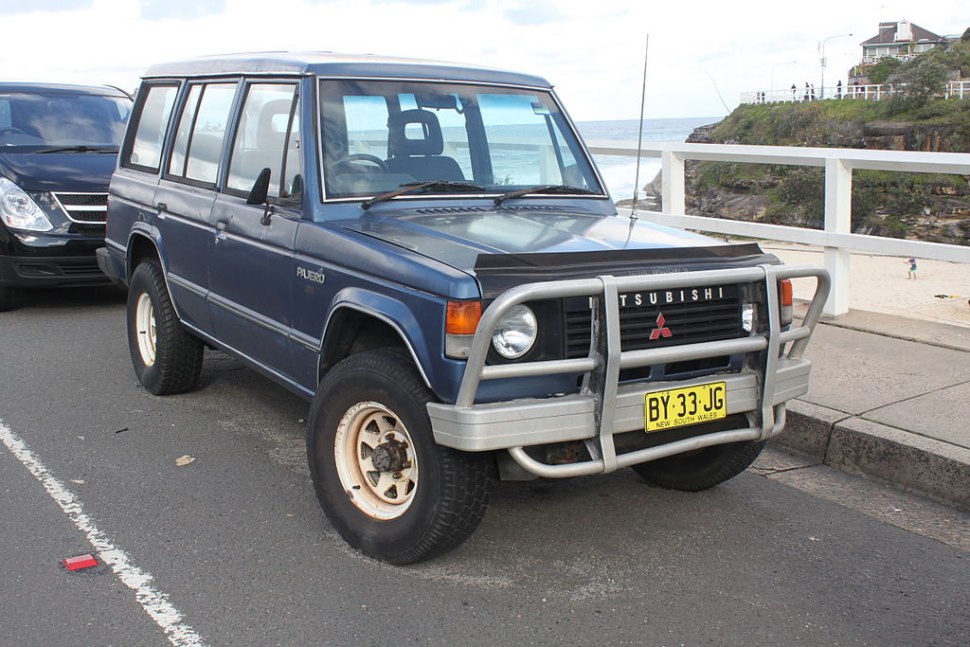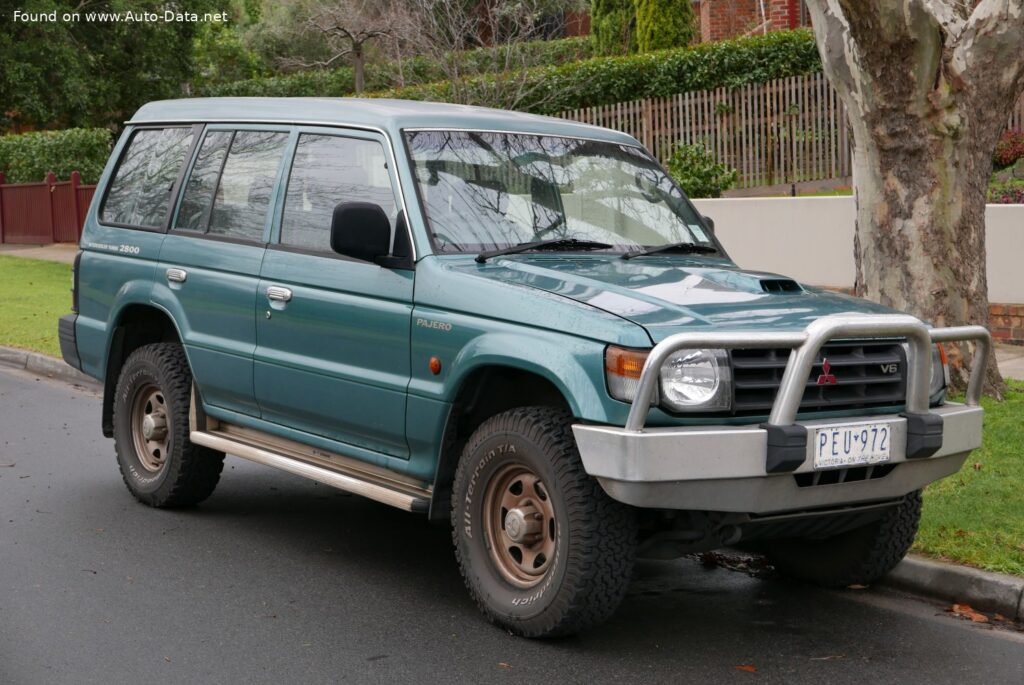
The Mitsubishi Pajero II (V2_W, V4_W) is a mid-size SUV produced by Mitsubishi Motors from 1994 to 2000. Representing the second generation of the Pajero lineage, it built upon the success of its predecessor, offering increased refinement, capability, and a wider range of engine options. While not initially a major player in the North American market – Mitsubishi focused on smaller crossovers and pickups in the US during this period – the Pajero II was highly regarded in Europe, Australia, South America, and Asia as a robust and capable off-road vehicle. The 2.8 TD GLX Automatic variant, detailed here, was a popular choice for those seeking a blend of diesel efficiency and four-wheel-drive performance.
Mitsubishi Pajero II: A Legacy of Off-Road Capability
The Pajero nameplate has a long history of success in rally-raid events like the Dakar Rally, and the Pajero II continued this tradition. It was designed to be a versatile vehicle, equally at home navigating challenging terrain as it was providing comfortable transportation for families. The second-generation Pajero saw significant improvements in ride quality and interior appointments compared to the original, making it a more appealing daily driver. The V2_W and V4_W designations refer to differences in body styles and chassis configurations, with the V4_W typically denoting a longer wheelbase version.
Engine & Performance
The 2.8 TD GLX model is powered by a 2.8-liter inline-four cylinder diesel engine, producing 125 horsepower at 4000 rpm and 292 Nm (215.37 lb.-ft.) of torque at 2000 rpm. This engine utilizes a precombustion chamber injection system and is turbocharged, providing a good balance of power and fuel efficiency. While not a performance-oriented vehicle, the Pajero II 2.8 TD offers adequate power for both on-road driving and moderate off-road excursions. The automatic transmission, featuring four gears, provides convenient operation, although it does impact acceleration times. Acceleration from 0 to 100 km/h (0-62 mph) takes approximately 17.3 seconds, and 0 to 60 mph is achieved in around 16.4 seconds. The vehicle has a top speed of 150 km/h (93.21 mph). The engine’s 44.1 horsepower per liter demonstrates a reasonable level of output for a naturally aspirated diesel of this era. The weight-to-power ratio of 17 kg/Hp and weight-to-torque ratio of 7.3 kg/Nm further illustrate the vehicle’s characteristics.
Design & Features
The Mitsubishi Pajero II is a five-door, five-seat SUV with a traditional body-on-frame construction. This robust design contributes to its off-road durability. The exterior styling is functional and utilitarian, reflecting its intended purpose. Key features of the 2.8 TD GLX model include all-wheel drive (4×4) with selectable drive modes, hydraulic power steering, and an anti-lock braking system (ABS). The interior offers a practical layout with comfortable seating and a reasonable amount of cargo space. The trunk provides a minimum of 1080 liters (38.14 cu. ft.) of space, expanding to 2050 liters (72.4 cu. ft.) with the rear seats folded down. Safety features, while limited by the standards of the 1990s, included ABS to enhance braking performance. The Pajero II’s design prioritized practicality and durability over outright luxury, making it a reliable and capable vehicle for a wide range of applications.
Technical Specifications
| Brand | Mitsubishi |
| Model | Pajero |
| Generation | Pajero II (V2_W, V4_W) |
| Type (Engine) | 2.8 TD GLX (125 Hp) Automatic |
| Start of production | 1994 |
| End of production | 2000 |
| Powertrain Architecture | Internal Combustion engine |
| Body type | SUV |
| Seats | 5 |
| Doors | 5 |
| Fuel consumption (urban) | 15.2 l/100 km (15.5 US mpg, 18.6 UK mpg, 6.6 km/l) |
| Fuel consumption (extra urban) | 9.7 l/100 km (24.2 US mpg, 29.1 UK mpg, 10.3 km/l) |
| Fuel consumption (combined) | 12.3 l/100 km (19.1 US mpg, 23 UK mpg, 8.1 km/l) |
| Fuel Type | Diesel |
| Acceleration 0 – 100 km/h | 17.3 sec |
| Acceleration 0 – 62 mph | 17.3 sec |
| Acceleration 0 – 60 mph | 16.4 sec |
| Maximum speed | 150 km/h (93.21 mph) |
| Weight-to-power ratio | 17 kg/Hp |
| Weight-to-torque ratio | 7.3 kg/Nm |
| Power | 125 Hp @ 4000 rpm |
| Power per litre | 44.1 Hp/l |
| Torque | 292 Nm @ 2000 rpm (215.37 lb.-ft. @ 2000 rpm) |
| Engine layout | Front, Longitudinal |
| Engine displacement | 2835 cm3 (173 cu. in.) |
| Number of cylinders | 4 |
| Engine configuration | Inline |
| Cylinder Bore | 95 mm (3.74 in.) |
| Piston Stroke | 100 mm (3.94 in.) |
| Compression ratio | 21:1 |
| Number of valves per cylinder | 2 |
| Fuel injection system | Precombustion chamber injection |
| Engine aspiration | Turbocharger |
| Valvetrain | OHC |
| Kerb Weight | 2129 kg (4693.64 lbs.) |
| Max. weight | 2720 kg (5996.57 lbs.) |
| Max load | 591 kg (1302.93 lbs.) |
| Trunk (boot) space – minimum | 1080 l (38.14 cu. ft.) |
| Trunk (boot) space – maximum | 2050 l (72.4 cu. ft.) |
| Fuel tank capacity | 92 l (24.3 US gal, 20.24 UK gal) |
| Length | 4700 mm (185.04 in.) |
| Width | 1695 mm (66.73 in.) |
| Height | 1855 mm (73.03 in.) |
| Wheelbase | 2725 mm (107.28 in.) |
| Front track | 1420 mm (55.91 in.) |
| Rear (Back) track | 1435 mm (56.5 in.) |
| Drive wheel | All wheel drive (4×4) |
| Number of gears and type of gearbox | 4 gears, automatic transmission |
| Front suspension | Torsion |
| Rear suspension | Coil spring |
| Front brakes | Ventilated discs |
| Rear brakes | Disc |
| Assisting systems | ABS (Anti-lock braking system), Hydraulic Steering |
| Tires size | 235/75 R15 R |
| Wheel rims size | 15 |
The Mitsubishi Pajero II 2.8 TD GLX Automatic represents a capable and reliable SUV from a period when durability and off-road performance were highly valued. While not a common sight in the United States, it remains a popular choice among enthusiasts in other parts of the world, appreciated for its robust construction, capable four-wheel-drive system, and practical design.