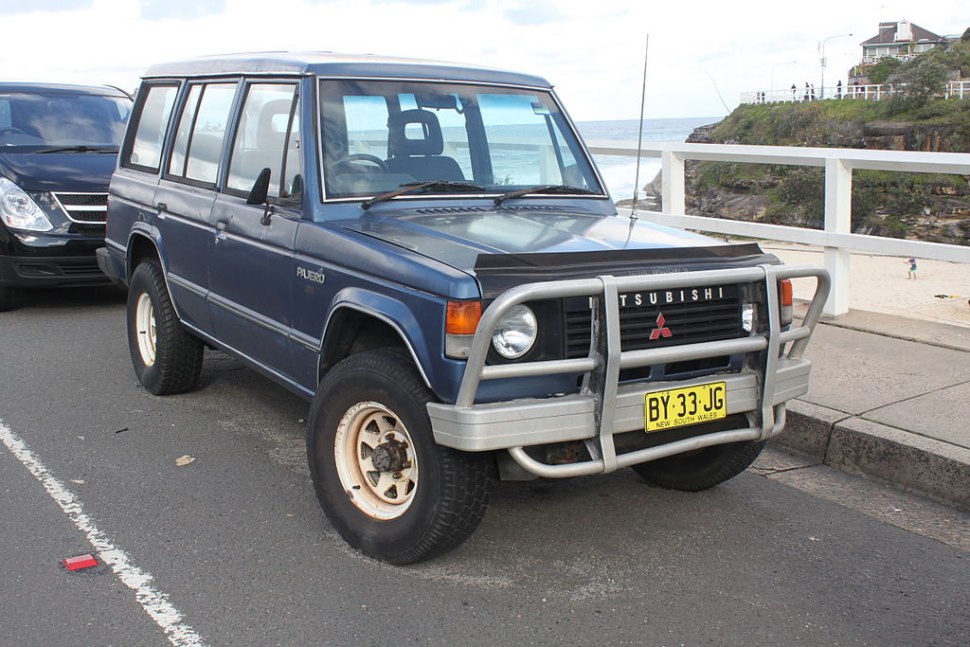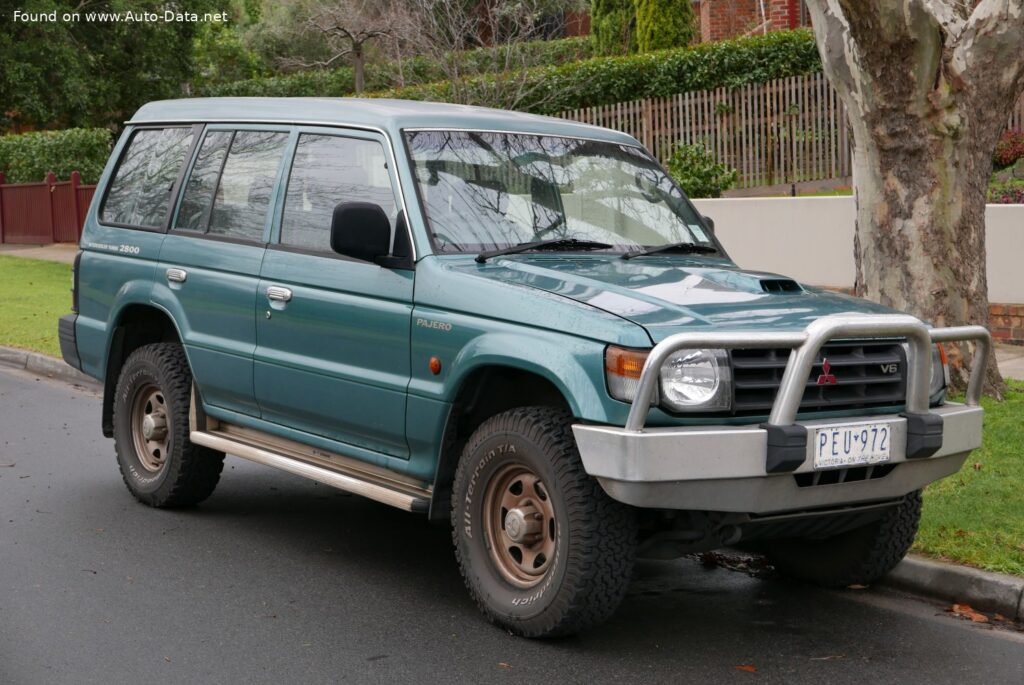
The Mitsubishi Pajero II (V2_W, V4_W) is a mid-size SUV produced by Mitsubishi Motors between 1996 and 2000. Representing the second generation of the Pajero lineage, this vehicle was primarily marketed in Europe, Asia, and Australia, where it gained a reputation for its robust off-road capability and comfortable on-road manners. While not officially sold in the United States under the Pajero name, it embodies the spirit of the SUVs that were gaining popularity in North America during this period. The Pajero II offered a compelling blend of practicality, space, and a relatively luxurious interior, making it a popular choice for families and adventurers alike.
Mitsubishi Pajero II: A Detailed Overview
The Pajero II built upon the success of its predecessor, offering improvements in refinement, safety, and technology. It continued to utilize a body-on-frame construction, a hallmark of traditional SUVs, providing exceptional durability and off-road prowess. The V2_W and V4_W designations refer to variations within the second generation, primarily relating to engine options and minor equipment differences. The model discussed here features a 3.0-liter V6 engine paired with an automatic transmission, a configuration designed to balance performance and ease of driving.
Engine & Performance
The heart of this Pajero II is a 2.972-liter (181.36 cubic inches) V6 gasoline engine, producing 181 horsepower at 5500 rpm and 255 Nm (188.08 lb-ft) of torque at 4500 rpm. This naturally aspirated engine utilizes a multi-port fuel injection system and a double overhead camshaft (DOHC) valvetrain with four valves per cylinder. The engine’s longitudinal front-engine layout contributes to a balanced weight distribution. While not exceptionally powerful by modern standards, the V6 provides adequate performance for both on-road cruising and moderate off-road excursions.
Acceleration from 0 to 100 km/h (0-62 mph) takes approximately 12.1 seconds, and 0 to 60 mph is achieved in around 11.5 seconds. The Pajero II has a top speed of 175 km/h (108.74 mph). The weight-to-power ratio of 11.3 kg/Hp and a weight-to-torque ratio of 8 kg/Nm indicate a vehicle that prioritizes usability and durability over outright speed. Fuel consumption is rated at 13.9 liters per 100 kilometers (16.9 US mpg), which is typical for a vehicle of this size and capability from the late 1990s.
Design & Features
The Mitsubishi Pajero II is a five-door SUV with seating for up to seven passengers. Its body-on-frame construction provides a robust foundation for tackling challenging terrain. The vehicle’s dimensions are substantial, measuring 4725 mm (186.02 inches) in length, 1785 mm (70.28 inches) in width, and 1895 mm (74.61 inches) in height. The wheelbase is 2725 mm (107.28 inches), contributing to a relatively comfortable ride.
Key features of the Pajero II include all-wheel drive (4×4) with selectable drive modes, hydraulic power steering, and an anti-lock braking system (ABS). The suspension system consists of torsion bars at the front and coil springs at the rear, providing a balance between ride comfort and off-road articulation. The vehicle rides on 15-inch wheels fitted with 265/70 R15 H tires. The interior is designed for practicality and comfort, with durable materials and ample space for passengers and cargo. A 92-liter (24.3 US gal) fuel tank provides a reasonable driving range.
Technical Specifications
| Brand | Mitsubishi |
| Model | Pajero |
| Generation | Pajero II (V2_W, V4_W) |
| Type (Engine) | 3.0 i V6 24V (181 Hp) Automatic |
| Start of production | 1996 |
| End of production | 2000 |
| Powertrain Architecture | Internal Combustion engine |
| Body type | SUV |
| Seats | 7 |
| Doors | 5 |
| Fuel consumption (combined) | 13.9 l/100 km |
| Fuel consumption (US mpg) | 16.9 US mpg |
| Fuel consumption (UK mpg) | 20.3 UK mpg |
| Fuel consumption (km/l) | 7.2 km/l |
| Fuel Type | Petrol (Gasoline) |
| Acceleration 0 – 100 km/h | 12.1 sec |
| Acceleration 0 – 62 mph | 12.1 sec |
| Acceleration 0 – 60 mph | 11.5 sec |
| Maximum speed | 175 km/h |
| Maximum speed (mph) | 108.74 mph |
| Weight-to-power ratio | 11.3 kg/Hp |
| Weight-to-torque ratio | 8 kg/Nm |
| Power | 181 Hp @ 5500 rpm |
| Power per litre | 60.9 Hp/l |
| Torque | 255 Nm @ 4500 rpm |
| Torque (lb.-ft.) | 188.08 lb.-ft. @ 4500 rpm |
| Engine layout | Front, Longitudinal |
| Engine displacement | 2972 cm3 |
| Engine displacement (cu. in.) | 181.36 cu. in. |
| Number of cylinders | 6 |
| Engine configuration | V-engine |
| Cylinder Bore | 91.1 mm |
| Cylinder Bore (in.) | 3.59 in. |
| Piston Stroke | 76 mm |
| Piston Stroke (in.) | 2.99 in. |
| Compression ratio | 9:1 |
| Number of valves per cylinder | 4 |
| Fuel injection system | Multi-port manifold injection |
| Engine aspiration | Naturally aspirated engine |
| Valvetrain | DOHC |
| Kerb Weight | 2040 kg |
| Kerb Weight (lbs.) | 4497.43 lbs. |
| Max. weight | 2650 kg |
| Max. weight (lbs.) | 5842.25 lbs. |
| Max load | 610 kg |
| Max load (lbs.) | 1344.82 lbs. |
| Fuel tank capacity | 92 l |
| Fuel tank capacity (US gal) | 24.3 US gal |
| Fuel tank capacity (UK gal) | 20.24 UK gal |
| Length | 4725 mm |
| Length (in.) | 186.02 in. |
| Width | 1785 mm |
| Width (in.) | 70.28 in. |
| Height | 1895 mm |
| Height (in.) | 74.61 in. |
| Wheelbase | 2725 mm |
| Wheelbase (in.) | 107.28 in. |
| Front track | 1465 mm |
| Front track (in.) | 57.68 in. |
| Rear track | 1480 mm |
| Rear track (in.) | 58.27 in. |
| Drive wheel | All wheel drive (4×4) |
| Number of gears | 4 |
| Type of gearbox | automatic transmission |
| Front suspension | Torsion |
| Rear suspension | Coil spring |
| Front brakes | Ventilated discs |
| Rear brakes | Disc |
| Assisting systems | ABS (Anti-lock braking system) |
| Power steering | Hydraulic Steering |
| Tires size | 265/70 R15 H |
| Wheel rims size | 15 |