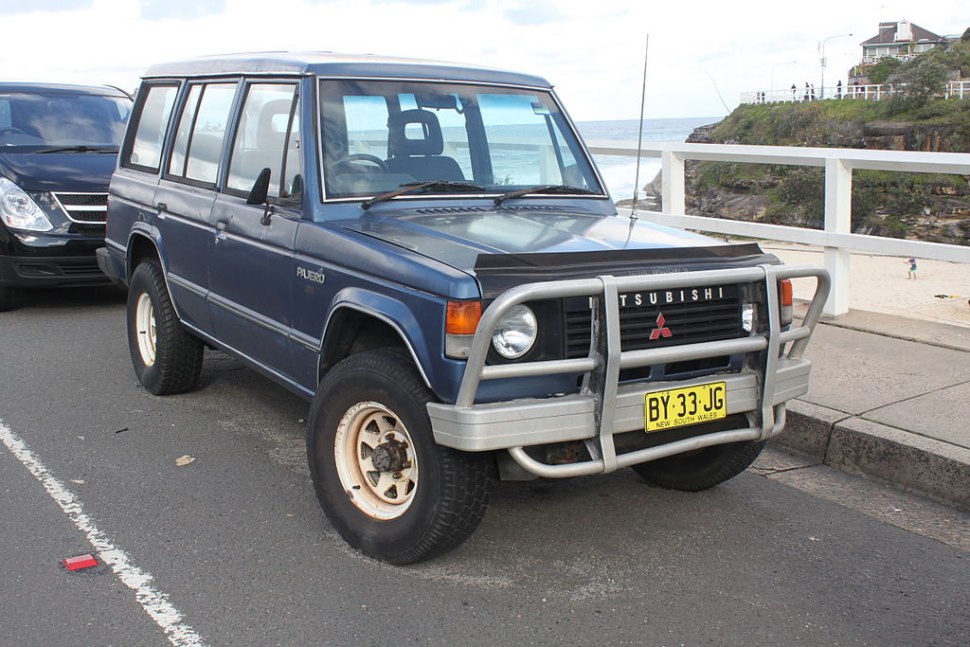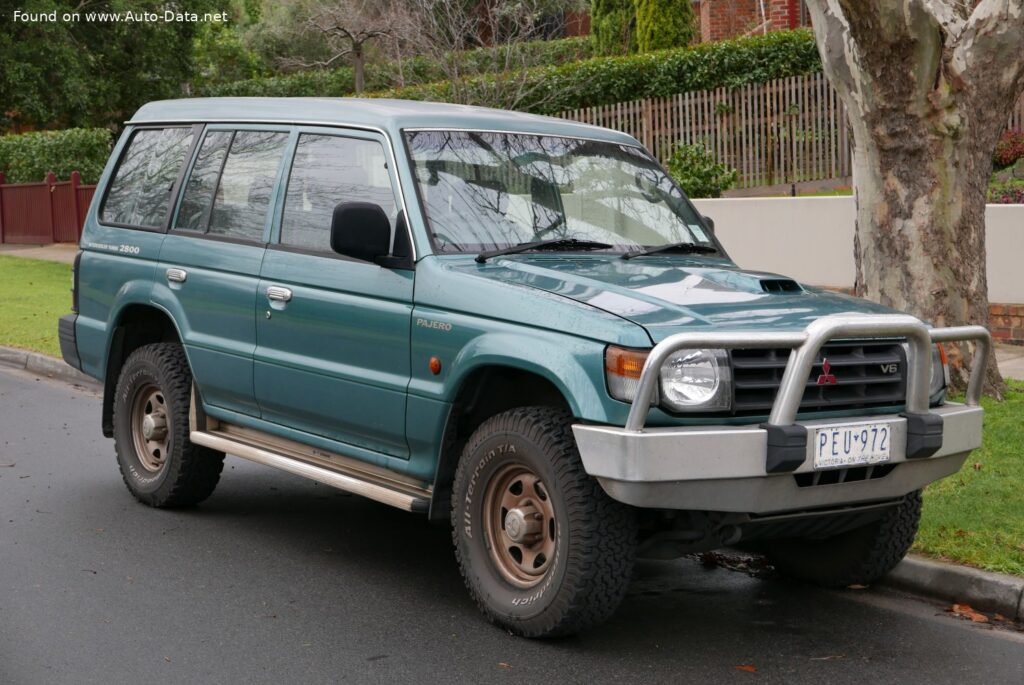
The Mitsubishi Pajero II (V2_W, V4_W) is a mid-size SUV produced by Mitsubishi Motors from 1990 to 1999. Representing the second generation of the Pajero lineage, it built upon the success of the original, offering increased refinement, capability, and a larger body. While not initially a major player in the North American market – Mitsubishi focused on smaller crossovers here – the Pajero II was highly regarded in Europe, Australia, and Asia as a robust and capable off-road vehicle, competing with models like the Toyota Land Cruiser Prado and Nissan Patrol. The “GLS” trim level, as detailed here with the 3.0-liter V6 engine, represented a well-equipped variant aimed at buyers seeking both on-road comfort and off-road prowess.
Mitsubishi Pajero II: A Detailed Overview
The Pajero II marked a significant step forward for Mitsubishi’s SUV offerings. It retained the body-on-frame construction of its predecessor, crucial for durability and off-road performance, but incorporated improvements in suspension design and interior comfort. The V2_W and V4_W designations refer to differences in body styles and available engines; the V4_W typically denotes the longer wheelbase version. The Pajero II was designed to appeal to a broad range of buyers, from those needing a practical family vehicle to adventurers seeking a capable off-road machine. Its seven-seat configuration, standard on many models, further enhanced its versatility.
Engine & Performance
The 3.0 i V6 GLS variant of the Pajero II is powered by a 2.972-liter (181.36 cubic inches) naturally aspirated V6 engine. This engine produces 150 horsepower at 5000 rpm and 236 Nm (174.06 lb-ft) of torque at 4000 rpm. While not exceptionally powerful by modern standards, the engine’s torque output provided adequate performance for both on-road driving and off-road crawling. The engine features a multi-port fuel injection system and an overhead camshaft (OHC) valvetrain. The engine’s longitudinal front-engine layout contributes to a balanced weight distribution. Acceleration from 0 to 100 km/h (0-62 mph) takes approximately 14 seconds, and 0 to 60 mph is achieved in around 13.3 seconds. The top speed is rated at 165 km/h (102.53 mph). Fuel economy is rated at 14 liters per 100 kilometers (16.8 US mpg), reflecting the vehicle’s size, weight, and non-hybrid powertrain.
Design & Features
The Mitsubishi Pajero II is a five-door SUV with a body-on-frame construction. Its design is characterized by a boxy, utilitarian aesthetic typical of SUVs from the early 1990s. The vehicle offers seating for up to seven passengers, with a spacious interior designed for practicality and durability. Key features of the GLS trim included power steering, ABS (Anti-lock Braking System), and a manual five-speed transmission. The Pajero II’s four-wheel-drive system, a defining characteristic, provides excellent traction in a variety of terrains. The suspension system, featuring torsion bars at the front and coil springs at the rear, is designed to provide a comfortable ride while maintaining off-road capability. Trunk space is generous, ranging from 1080 liters (38.14 cubic feet) with the rear seats up to 2050 liters (72.4 cubic feet) with the seats folded down. The Pajero II’s robust construction and ample ground clearance made it a popular choice for overlanding and off-road expeditions.
Technical Specifications
| Brand | Mitsubishi |
| Model | Pajero |
| Generation | Pajero II (V2_W, V4_W) |
| Type (Engine) | 3.0 i V6 GLS (150 Hp) |
| Start of production | 1990 |
| End of production | 1999 |
| Powertrain Architecture | Internal Combustion engine |
| Body type | SUV |
| Seats | 7 |
| Doors | 5 |
| Fuel consumption (combined) | 14 l/100 km |
| Fuel consumption (US mpg) | 16.8 US mpg |
| Fuel consumption (UK mpg) | 20.2 UK mpg |
| Fuel consumption (km/l) | 7.1 km/l |
| Fuel Type | Petrol (Gasoline) |
| Acceleration 0 – 100 km/h | 14 sec |
| Acceleration 0 – 62 mph | 14 sec |
| Acceleration 0 – 60 mph | 13.3 sec |
| Maximum speed | 165 km/h |
| Maximum speed (mph) | 102.53 mph |
| Weight-to-power ratio | 13.6 kg/Hp |
| Hp/tonne | 73.3 Hp/tonne |
| Weight-to-torque ratio | 8.7 kg/Nm |
| Nm/tonne | 115.4 Nm/tonne |
| Power | 150 Hp @ 5000 rpm |
| Power per litre | 50.5 Hp/l |
| Torque | 236 Nm @ 4000 rpm |
| Torque (lb.-ft.) | 174.06 lb.-ft. @ 4000 rpm |
| Engine layout | Front, Longitudinal |
| Engine displacement | 2972 cm3 |
| Engine displacement (cu. in.) | 181.36 cu. in. |
| Number of cylinders | 6 |
| Engine configuration | V-engine |
| Cylinder Bore | 91.1 mm |
| Cylinder Bore (in.) | 3.59 in. |
| Piston Stroke | 76 mm |
| Piston Stroke (in.) | 2.99 in. |
| Compression ratio | 8.9:1 |
| Number of valves per cylinder | 2 |
| Fuel injection system | Multi-port manifold injection |
| Engine aspiration | Naturally aspirated engine |
| Valvetrain | OHC |
| Kerb Weight | 2045 kg |
| Kerb Weight (lbs.) | 4508.45 lbs. |
| Max. weight | 2650 kg |
| Max. weight (lbs.) | 5842.25 lbs. |
| Max load | 605 kg |
| Max load (lbs.) | 1333.8 lbs. |
| Trunk (boot) space – minimum | 1080 l |
| Trunk (boot) space – minimum (cu. ft.) | 38.14 cu. ft. |
| Trunk (boot) space – maximum | 2050 l |
| Trunk (boot) space – maximum (cu. ft.) | 72.4 cu. ft. |
| Fuel tank capacity | 92 l |
| Fuel tank capacity (US gal) | 24.3 US gal |
| Fuel tank capacity (UK gal) | 20.24 UK gal |
| Length | 4725 mm |
| Length (in.) | 186.02 in. |
| Width | 1785 mm |
| Width (in.) | 70.28 in. |
| Height | 1865 mm |
| Height (in.) | 73.43 in. |
| Wheelbase | 2725 mm |
| Wheelbase (in.) | 107.28 in. |
| Front track | 1465 mm |
| Front track (in.) | 57.68 in. |
| Rear (Back) track | 1480 mm |
| Rear (Back) track (in.) | 58.27 in. |
| Drive wheel | All wheel drive (4×4) |
| Number of gears and type of gearbox | 5 gears, manual transmission |
| Front suspension | Torsion |
| Rear suspension | Coil spring |
| Front brakes | Ventilated discs |
| Rear brakes | Disc |
| Assisting systems | ABS (Anti-lock braking system) |
| Power steering | Hydraulic Steering |
| Tires size | 265/70 R15 |