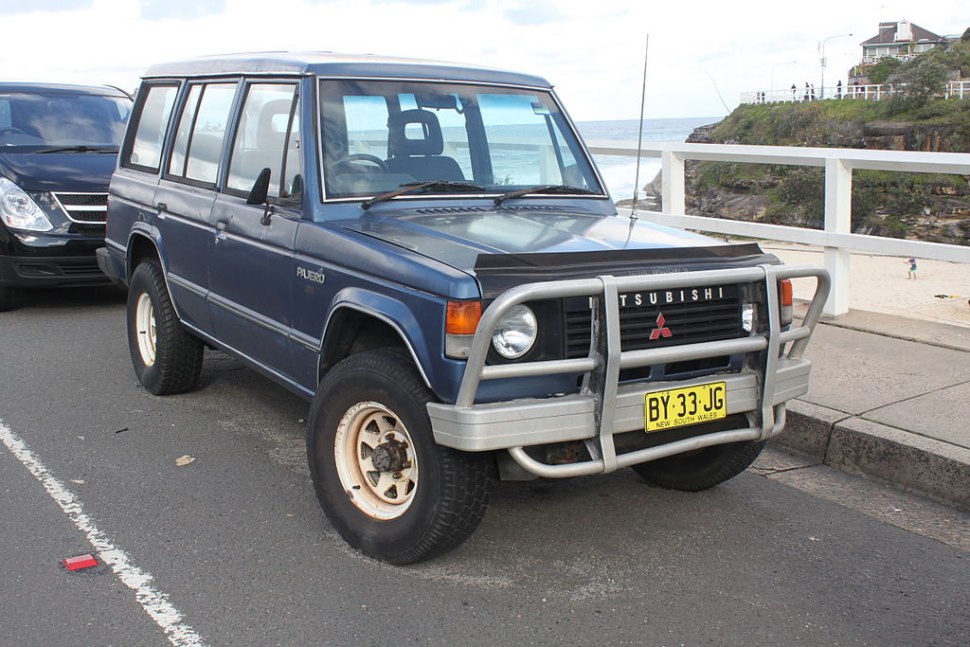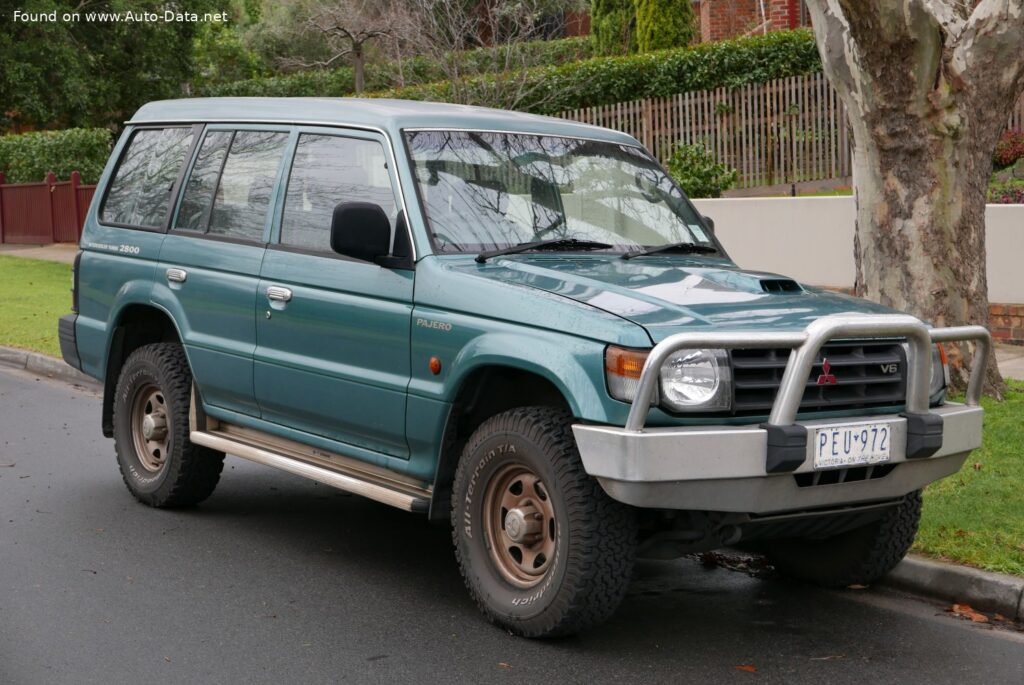
The Mitsubishi Pajero II (V2_W, V4_W) is a mid-size SUV produced by Mitsubishi Motors between 1999 and 2000. Representing the second generation of the Pajero lineage, this model was primarily aimed at the European and Asian markets, where it gained a reputation for its robust off-road capability and comfortable on-road manners. While not officially sold in the United States under the Pajero name, it’s a significant vehicle in the history of Japanese SUV development, showcasing advanced technology for its time. The 3.5 i V6 24V GDI variant, equipped with a 3.5-liter gasoline engine producing 245 horsepower, was a top-of-the-line offering within the Pajero II range.
Mitsubishi Pajero II: A Detailed Overview
The Pajero II built upon the success of the original Pajero, offering increased refinement, improved performance, and enhanced safety features. It was designed to compete with other popular SUVs of the era, such as the Toyota Land Cruiser Prado and the Nissan Patrol. The V2_W and V4_W designations refer to different chassis configurations, with the V4_W typically denoting a longer wheelbase version offering more interior space. The 3.5 i V6 GDI model was positioned as a premium offering, appealing to buyers seeking a blend of luxury and off-road prowess.
Engine & Performance
The heart of the Pajero II 3.5 i V6 24V GDI is a 3.5-liter V6 engine, producing 245 horsepower at 5500 rpm and 343 Nm (252.98 lb.-ft.) of torque at 2500 rpm. The “GDI” designation stands for Gasoline Direct Injection, a technology that improves fuel efficiency and power output by injecting fuel directly into the combustion chamber. This engine, with a compression ratio of 10.4:1, features a double overhead camshaft (DOHC) valvetrain and four valves per cylinder. The engine’s longitudinal front-engine layout contributes to a balanced weight distribution.
Power is delivered to all four wheels via a five-speed automatic transmission and an all-wheel-drive (4×4) system. This drivetrain configuration allows for excellent traction in a variety of conditions, making the Pajero II a capable off-road vehicle. Acceleration from 0 to 100 km/h (0-62 mph) takes approximately 10 seconds, while the 0-60 mph sprint is achieved in around 9.5 seconds. The vehicle boasts a maximum speed of 190 km/h (118.06 mph). The weight-to-power ratio of 8.9 kg/Hp and a weight-to-torque ratio of 6.3 kg/Nm further highlight the engine’s performance capabilities.
Design & Features
The Mitsubishi Pajero II is a five-door SUV with seating for up to seven passengers. Its body-on-frame construction provides a robust and durable platform, ideal for off-road driving. The vehicle’s exterior design is characterized by its boxy shape, large windows, and prominent wheel arches. The 3.5 i V6 GDI model often included features such as alloy wheels, fog lights, and a sunroof.
Inside, the Pajero II offers a comfortable and spacious cabin. The interior is typically equipped with features such as air conditioning, power windows, and a stereo system. Safety features include Anti-lock Braking System (ABS) and hydraulic power steering. The rear seats can be folded down to create a larger cargo area, with a minimum trunk capacity of 1350 liters (47.67 cu. ft.) and a maximum capacity of 2600 liters (91.82 cu. ft.). The Pajero II’s focus was on providing a practical and versatile vehicle suitable for both family transportation and adventurous excursions.
Technical Specifications
| Brand | Mitsubishi |
| Model | Pajero |
| Generation | Pajero II (V2_W, V4_W) |
| Type (Engine) | 3.5 i V6 24V GDI (245 Hp) |
| Start of production | 1998 |
| End of production | 2000 |
| Powertrain Architecture | Internal Combustion engine |
| Body type | SUV |
| Seats | 7 |
| Doors | 5 |
| Fuel consumption (urban) | 18 l/100 km (13.1 US mpg, 15.7 UK mpg, 5.6 km/l) |
| Fuel consumption (extra urban) | 10 l/100 km (23.5 US mpg, 28.2 UK mpg, 10 km/l) |
| Fuel Type | Petrol (Gasoline) |
| Acceleration 0 – 100 km/h | 10 sec |
| Acceleration 0 – 62 mph | 10 sec |
| Acceleration 0 – 60 mph | 9.5 sec |
| Maximum speed | 190 km/h (118.06 mph) |
| Weight-to-power ratio | 8.9 kg/Hp |
| Weight-to-torque ratio | 6.3 kg/Nm |
| Power | 245 Hp @ 5500 rpm |
| Power per litre | 70.1 Hp/l |
| Torque | 343 Nm @ 2500 rpm (252.98 lb.-ft. @ 2500 rpm) |
| Engine layout | Front, Longitudinal |
| Engine displacement | 3497 cm3 (213.4 cu. in.) |
| Number of cylinders | 6 |
| Engine configuration | V-engine |
| Cylinder Bore | 93 mm (3.66 in.) |
| Piston Stroke | 85.8 mm (3.38 in.) |
| Compression ratio | 10.4:1 |
| Number of valves per cylinder | 4 |
| Fuel injection system | Direct injection |
| Engine aspiration | Naturally aspirated engine |
| Valvetrain | DOHC |
| Kerb Weight | 2170 kg (4784.03 lbs.) |
| Trunk (boot) space – minimum | 1350 l (47.67 cu. ft.) |
| Trunk (boot) space – maximum | 2600 l (91.82 cu. ft.) |
| Fuel tank capacity | 92 l (24.3 US gal | 20.24 UK gal) |
| Length | 4725 mm (186.02 in.) |
| Width | 1775 mm (69.88 in.) |
| Height | 1900 mm (74.8 in.) |
| Wheelbase | 2725 mm (107.28 in.) |
| Front track | 1465 mm (57.68 in.) |
| Rear (Back) track | 1480 mm (58.27 in.) |
| Drive wheel | All wheel drive (4×4) |
| Number of gears and type of gearbox | 5 gears, automatic transmission |
| Front suspension | Torsion |
| Rear suspension | Coil spring |
| Front brakes | Ventilated discs |
| Rear brakes | Disc |
| Assisting systems | ABS (Anti-lock braking system), Hydraulic Steering |
| Tires size | 265/70 R16 |