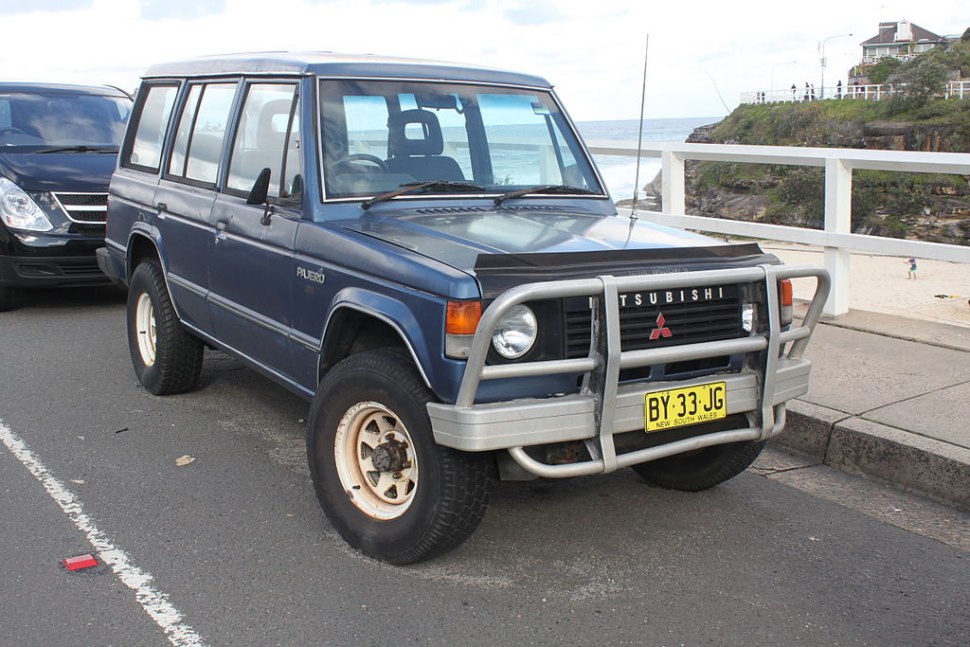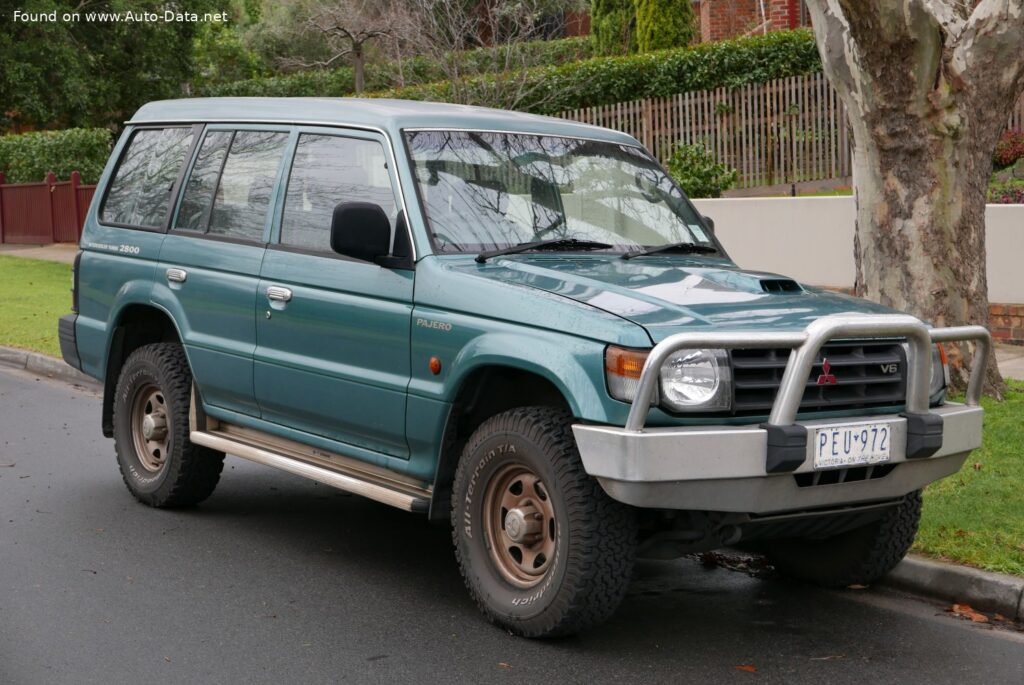
The Mitsubishi Pajero II (V2_W, V4_W) 3.5i MIVEC EVO, produced between 1998 and 1999, represents a high-performance iteration of the second-generation Pajero, a full-size SUV renowned for its off-road capability and robust construction. While not widely sold in the United States, the Pajero held a significant position in markets like Australia, Europe, and Asia as a competitor to vehicles like the Toyota Land Cruiser and Nissan Patrol. The “EVO” designation signified a performance-oriented version, boasting a more powerful engine and subtle enhancements aimed at improving both on-road handling and off-road prowess. This model catered to drivers seeking a blend of luxury, practicality, and genuine four-wheel-drive capability.
Mitsubishi Pajero II (V2_W, V4_W) 3.5i MIVEC EVO: An Overview
The Pajero II, launched in 1997, was a substantial upgrade over its predecessor. It featured a more refined chassis, improved suspension, and a wider range of engine options. The 3.5i MIVEC EVO stood out as the flagship model, offering the most potent engine available in the range. Its appeal lay in its ability to comfortably transport seven passengers while tackling challenging terrain. The Pajero’s reputation for reliability and durability cemented its status as a popular choice for families and adventurers alike, particularly in regions where robust off-road vehicles were essential.
Engine & Performance
At the heart of the Pajero II 3.5i MIVEC EVO lies a naturally aspirated 3.5-liter V6 engine, producing 288 horsepower. This engine, designated as the 6G74, utilizes Mitsubishi’s MIVEC (Mitsubishi Innovative Valve timing and lift Electronic Control) technology. MIVEC optimizes valve timing for improved performance across the rev range, delivering increased power and torque while maintaining reasonable fuel efficiency. The engine’s longitudinal front-engine layout contributes to a balanced weight distribution, enhancing handling characteristics. The power output translates to a weight-to-power ratio of 7.5 kg/Hp and 132.7 Hp/tonne, providing brisk acceleration for a vehicle of its size and class. Power is delivered through a five-speed automatic transmission to an all-wheel-drive system, ensuring optimal traction in various conditions. The engine’s 3497 cm3 displacement (213.4 cu. in.) and 4 valves per cylinder contribute to its strong performance.
Design & Features
The Pajero II 3.5i MIVEC EVO is a classic body-on-frame SUV, characterized by its rugged aesthetics and practical design. Its five-door configuration and seven-seat layout provide ample space for passengers and cargo. The vehicle’s dimensions – 4725 mm (186.02 in.) in length, 1775 mm (69.88 in.) in width, and 1900 mm (74.8 in.) in height – reflect its full-size stature. A key feature is its versatile cargo area, offering a minimum of 1350 liters (47.67 cu. ft.) of space that expands to a substantial 2600 liters (91.82 cu. ft.) with the rear seats folded down.
Safety features, while not as advanced as those found in modern SUVs, included an Anti-lock Braking System (ABS) and hydraulic power steering. The suspension system, comprising torsion bars at the front and coil springs at the rear, provides a comfortable ride both on and off-road. The vehicle rides on 265/70 R16 tires, offering a good balance of grip and durability. The Pajero II’s design prioritized functionality and robustness, making it well-suited for both daily commuting and adventurous expeditions. The interior, while reflecting the late 1990s aesthetic, was designed for practicality and durability, with materials chosen to withstand the rigors of off-road use.
Technical Specifications
| Brand | Mitsubishi |
| Model | Pajero |
| Generation | Pajero II (V2_W, V4_W) |
| Type (Engine) | 3.5i MIVEC EVO (288 Hp) |
| Start of production | 1998 |
| End of production | 1999 |
| Powertrain Architecture | Internal Combustion engine |
| Body type | SUV |
| Seats | 7 |
| Doors | 5 |
| Fuel Type | Petrol (Gasoline) |
| Weight-to-power ratio | 7.5 kg/Hp |
| Hp/tonne | 132.7 Hp/tonne |
| Power | 288 Hp |
| Power per litre | 82.4 Hp/l |
| Engine layout | Front, Longitudinal |
| Engine displacement | 3497 cm3 |
| Engine displacement (cu. in.) | 213.4 cu. in. |
| Number of cylinders | 6 |
| Engine configuration | V-engine |
| Number of valves per cylinder | 4 |
| Fuel injection system | Multi-port manifold injection |
| Engine aspiration | Naturally aspirated engine |
| Kerb Weight | 2170 kg |
| Kerb Weight (lbs) | 4784.03 lbs. |
| Trunk (boot) space – minimum | 1350 l |
| Trunk (boot) space – minimum (cu. ft.) | 47.67 cu. ft. |
| Trunk (boot) space – maximum | 2600 l |
| Trunk (boot) space – maximum (cu. ft.) | 91.82 cu. ft. |
| Fuel tank capacity | 92 l |
| Fuel tank capacity (US gal) | 24.3 US gal |
| Fuel tank capacity (UK gal) | 20.24 UK gal |
| Length | 4725 mm |
| Length (in.) | 186.02 in. |
| Width | 1775 mm |
| Width (in.) | 69.88 in. |
| Height | 1900 mm |
| Height (in.) | 74.8 in. |
| Wheelbase | 2725 mm |
| Wheelbase (in.) | 107.28 in. |
| Front track | 1465 mm |
| Front track (in.) | 57.68 in. |
| Rear (Back) track | 1480 mm |
| Rear (Back) track (in.) | 58.27 in. |
| Drive wheel | All wheel drive (4×4) |
| Number of gears | 5 |
| Type of gearbox | automatic transmission |
| Front suspension | Torsion |
| Rear suspension | Coil spring |
| Front brakes | Ventilated discs |
| Rear brakes | Disc |
| Assisting systems | ABS (Anti-lock braking system) |
| Power steering | Hydraulic Steering |
| Tires size | 265/70 R16 |
The Mitsubishi Pajero II 3.5i MIVEC EVO remains a sought-after vehicle among enthusiasts, appreciated for its blend of performance, capability, and reliability. While it never achieved widespread popularity in the US market, its legacy as a robust and versatile SUV endures, particularly in regions where its off-road prowess was highly valued.