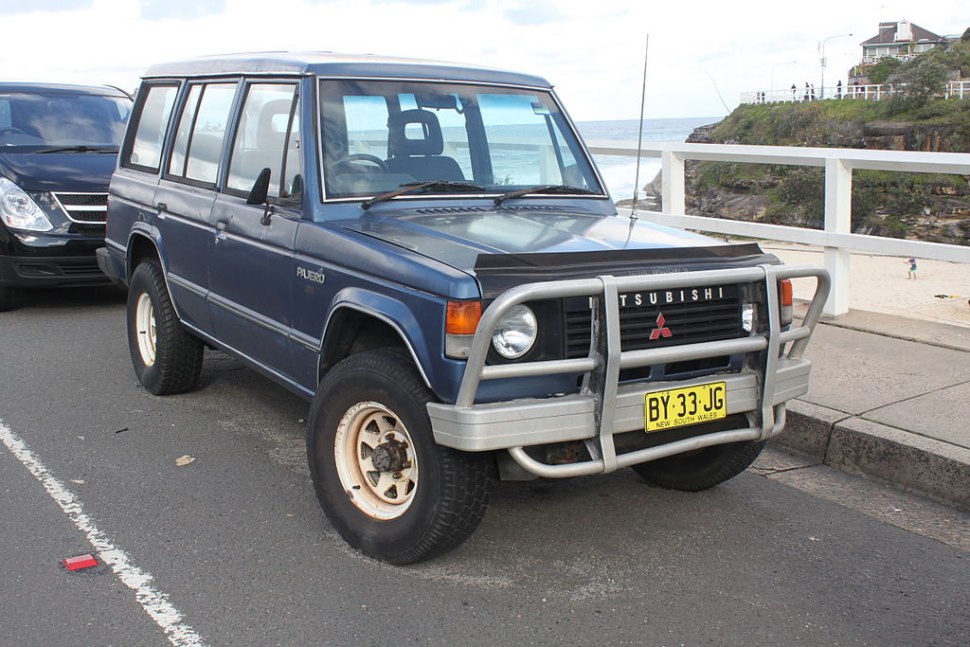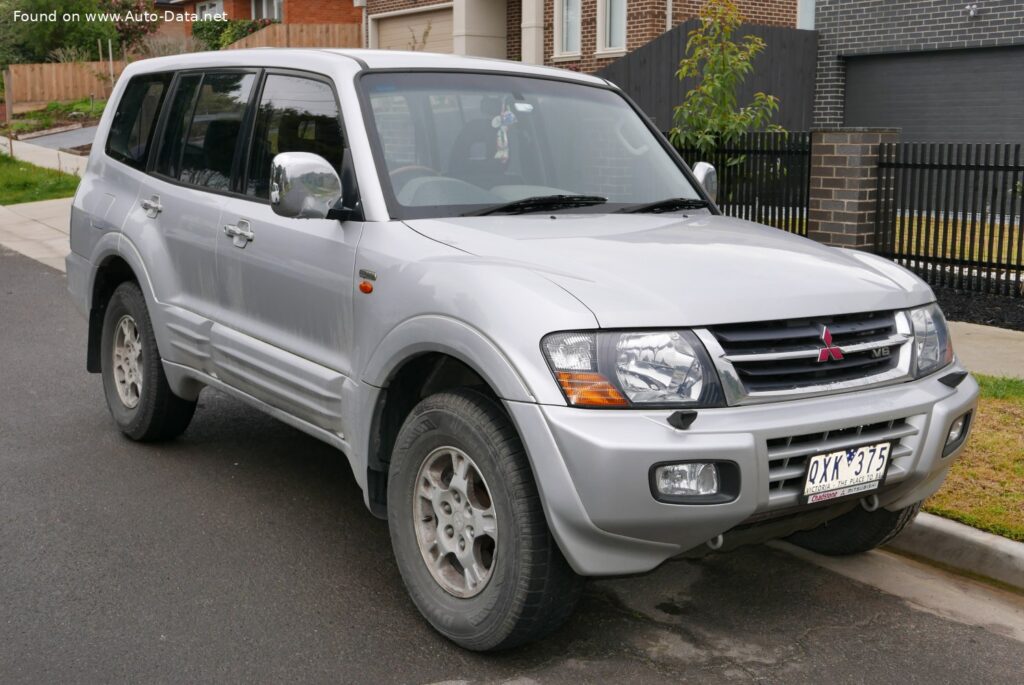
The Mitsubishi Pajero III 2.5 TD (5 dr) represents a significant evolution in Mitsubishi’s long-running Pajero (Montero in some markets) lineage. Produced from 2000 to 2006, this third-generation Pajero was primarily aimed at the European and Asian markets, where robust, capable SUVs were highly sought after. While not officially sold in the United States, the Pajero III offered a compelling blend of off-road prowess, passenger comfort, and diesel efficiency, establishing itself as a popular choice for those needing a versatile and durable vehicle. This model bridged the gap between traditional, body-on-frame construction and the increasing demands for on-road refinement.
Mitsubishi Pajero III: A Detailed Overview
The Pajero III marked a substantial departure from its predecessors, incorporating a more modern design and a host of technological improvements. It continued the Pajero’s tradition of being a highly capable off-roader, but with a greater emphasis on everyday usability. The 2.5 TD variant, powered by a turbocharged diesel engine, was a common configuration, offering a balance of power and fuel economy. The Pajero’s reputation for reliability and durability contributed to its success in regions where challenging terrain and long distances were commonplace.
Engine & Performance
The heart of the Pajero III 2.5 TD is a 2.5-liter, inline-four cylinder diesel engine, designated the 4D56. This engine produces 115 horsepower at 4000 rpm and 240 Nm (177.01 lb.-ft.) of torque at 2000 rpm. While not a powerhouse in terms of outright speed, the engine’s torque output provides ample pulling power for off-road adventures and towing. The engine utilizes a diesel commonrail fuel injection system and a turbocharger to enhance efficiency and performance. Acceleration from 0 to 100 km/h (0-62 mph) takes approximately 18.2 seconds, and 0 to 60 mph is achieved in around 17.3 seconds. The Pajero III 2.5 TD has a maximum speed of 150 km/h (93.21 mph). The engine’s longitudinal front-mounted layout contributes to a balanced weight distribution, enhancing handling characteristics. The power-to-weight ratio is 55.6 HP per tonne, and the torque-to-weight ratio is 115.9 Nm per tonne.
Design & Features
The Pajero III is a five-door SUV with seating for five passengers. Its body-on-frame construction provides exceptional strength and durability, making it well-suited for off-road use. The exterior design is characterized by a relatively boxy shape, typical of SUVs from that era, but with smoother lines and a more integrated appearance compared to earlier Pajero models. Key features include a robust four-wheel-drive system, ventilated disc brakes on all four wheels, and an anti-lock braking system (ABS) for enhanced safety. The interior offers a practical and functional layout, with durable materials and ample space for passengers and cargo. The trunk space is highly versatile, ranging from a minimum of 215 liters (7.59 cu. ft.) to a maximum of 1700 liters (60.03 cu. ft.) with the rear seats folded down. The Pajero III’s suspension system, featuring double wishbones at the front and coil springs at the rear, provides a comfortable ride both on and off-road. Hydraulic power steering ensures easy maneuverability.
Technical Specifications
| Brand | Mitsubishi |
| Model | Pajero |
| Generation | Pajero III |
| Type (Engine) | 2.5 TD (5 dr) (115 Hp) |
| Start of production | 2000 year |
| End of production | 2006 year |
| Powertrain Architecture | Internal Combustion engine |
| Body type | SUV |
| Seats | 5 |
| Doors | 5 |
| Fuel consumption (urban) | 13.2 l/100 km (17.8 US mpg, 21.4 UK mpg, 7.6 km/l) |
| Fuel consumption (extra urban) | 9.1 l/100 km (25.8 US mpg, 31 UK mpg, 11 km/l) |
| Fuel Type | Diesel |
| Acceleration 0 – 100 km/h | 18.2 sec |
| Acceleration 0 – 62 mph | 18.2 sec |
| Acceleration 0 – 60 mph | 17.3 sec |
| Maximum speed | 150 km/h (93.21 mph) |
| Weight-to-power ratio | 18 kg/Hp |
| Weight-to-torque ratio | 8.6 kg/Nm |
| Power | 115 Hp @ 4000 rpm |
| Torque | 240 Nm @ 2000 rpm (177.01 lb.-ft. @ 2000 rpm) |
| Engine layout | Front, Longitudinal |
| Engine Model/Code | 4D56 |
| Engine displacement | 2477 cm3 (151.16 cu. in.) |
| Number of cylinders | 4 |
| Engine configuration | Inline |
| Cylinder Bore | 91.1 mm (3.59 in.) |
| Piston Stroke | 95 mm (3.74 in.) |
| Compression ratio | 21:1 |
| Number of valves per cylinder | 4 |
| Fuel injection system | Diesel Commonrail |
| Engine aspiration | Turbocharger |
| Valvetrain | OHC |
| Engine oil capacity | 6.5 l (6.87 US qt | 5.72 UK qt) |
| Coolant | 9 l (9.51 US qt | 7.92 UK qt) |
| Kerb Weight | 2070 kg (4563.57 lbs.) |
| Max. weight | 2760 kg (6084.76 lbs.) |
| Max load | 690 kg (1521.19 lbs.) |
| Trunk (boot) space – minimum | 215 l (7.59 cu. ft.) |
| Trunk (boot) space – maximum | 1700 l (60.03 cu. ft.) |
| Fuel tank capacity | 90 l (23.78 US gal | 19.8 UK gal) |
| Length | 4620 mm (181.89 in.) |
| Width | 1885 mm (74.21 in.) |
| Height | 1850 mm (72.83 in.) |
| Wheelbase | 2780 mm (109.45 in.) |
| Front track | 1560 mm (61.42 in.) |
| Rear (Back) track | 1560 mm (61.42 in.) |
| Drive wheel | All wheel drive (4×4) |
| Number of gears and type of gearbox | 5 gears, manual transmission |
| Front suspension | Double wishbone |
| Rear suspension | Coil spring |
| Front brakes | Ventilated discs |
| Rear brakes | Ventilated discs |
| Assisting systems | ABS (Anti-lock braking system) |
| Steering type | Steering rack and pinion |
| Power steering | Hydraulic Steering |
| Tires size | 235/80 R16 S |