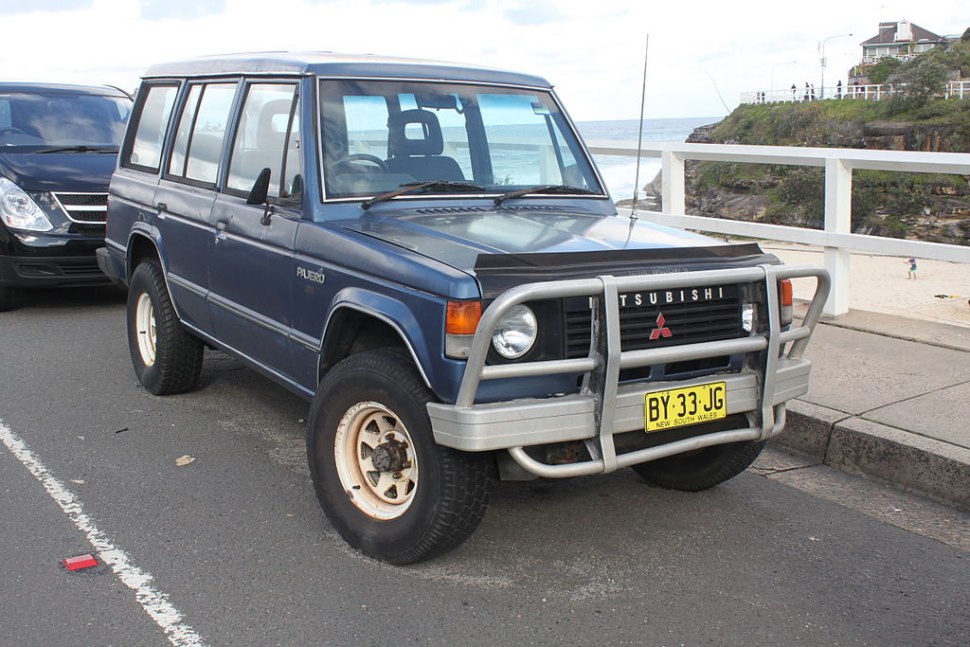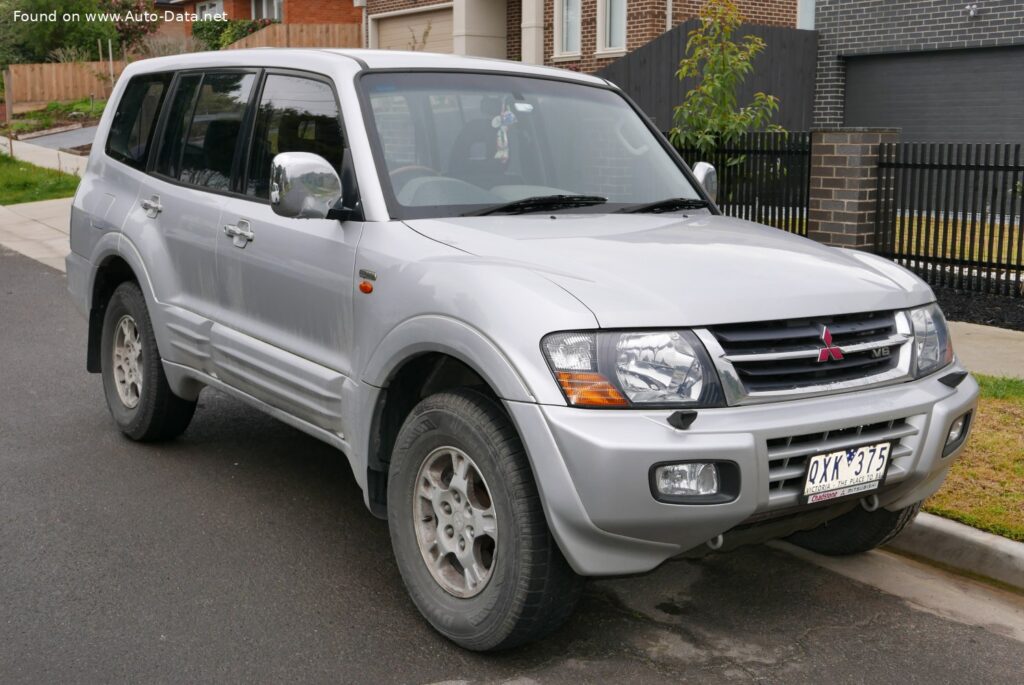
The Mitsubishi Pajero III, produced from 2000 to 2006, represents the third generation of Mitsubishi’s renowned Pajero SUV. While not widely sold in the United States, the Pajero held a significant position in the European, Asian, and Australian markets as a capable and comfortable off-road vehicle. This generation marked a substantial evolution in refinement and technology compared to its predecessors, aiming to blend robust four-wheel-drive capability with a more luxurious and user-friendly experience. The 3.5 V6 GDI model, equipped with a 202 horsepower engine and a five-seat configuration, was a popular variant, offering a balance of performance and practicality.
Mitsubishi Pajero III: An Overview
The Pajero III was designed to appeal to buyers seeking a versatile SUV capable of handling both on-road commutes and challenging off-road terrain. It competed with vehicles like the Toyota Land Cruiser Prado, Nissan Patrol, and Land Rover Discovery. The “III” designation signifies its place as the third iteration in a lineage that began in 1982, establishing the Pajero as a pioneering force in the SUV segment. The model’s focus was on providing a comfortable ride, improved handling, and enhanced safety features, while retaining the ruggedness expected of a Mitsubishi off-roader.
Engine & Performance
The heart of the Pajero III 3.5 V6 GDI is a 3.5-liter V6 engine, designated the 6G74. This naturally aspirated engine produces 202 horsepower at 5000 rpm and 318 Nm (234.54 lb.-ft.) of torque at 4000 rpm. The GDI (Gasoline Direct Injection) technology was a key feature, improving fuel efficiency and power output compared to traditional port fuel injection systems. Power is delivered to all four wheels via a five-speed manual transmission, providing the driver with precise control. Acceleration from 0 to 100 km/h (0-62 mph) takes approximately 10 seconds, while the 0-60 mph sprint is achieved in around 9.5 seconds. The Pajero III boasts a top speed of 190 km/h (118.06 mph). The weight-to-power ratio of 9.9 kg/Hp and a weight-to-torque ratio of 6.3 kg/Nm contribute to its responsive driving experience. Fuel economy is rated at 12.8 l/100 km (18.4 US mpg) combined, with figures of 16.9 l/100 km (13.9 US mpg) in urban settings and 10.5 l/100 km (22.4 US mpg) on the open road.
Design & Features
The Pajero III features a traditional SUV body style with three doors and seating for five passengers. Its design emphasizes a blend of ruggedness and sophistication. The exterior styling incorporates rounded edges and a relatively high ground clearance, indicative of its off-road capabilities. Inside, the cabin is designed for practicality and comfort, with durable materials and a functional layout. Key features include a double wishbone front suspension and a coil spring rear suspension, providing a comfortable ride both on and off-road. Ventilated disc brakes on all four wheels, coupled with an Anti-lock Braking System (ABS), ensure confident stopping power. Hydraulic power steering provides responsive handling. The Pajero III’s trunk space is versatile, offering 415 liters (14.66 cu. ft.) with the rear seats up and expanding to 1253 liters (44.25 cu. ft.) when folded down. The vehicle rides on 265/70 R16 H tires.
Technical Specifications
| Brand | Mitsubishi |
| Model | Pajero |
| Generation | Pajero III |
| Type (Engine) | 3.5 V6 GDI (202 Hp) 5 Seat |
| Start of production | 2000 year |
| End of production | 2006 year |
| Powertrain Architecture | Internal Combustion engine |
| Body type | SUV |
| Seats | 5 |
| Doors | 3 |
| Fuel consumption (urban) | 16.9 l/100 km (13.9 US mpg) |
| Fuel consumption (extra urban) | 10.5 l/100 km (22.4 US mpg) |
| Fuel consumption (combined) | 12.8 l/100 km (18.4 US mpg) |
| Fuel Type | Petrol (Gasoline) |
| Acceleration 0 – 100 km/h | 10 sec |
| Acceleration 0 – 62 mph | 10 sec |
| Acceleration 0 – 60 mph | 9.5 sec |
| Maximum speed | 190 km/h (118.06 mph) |
| Weight-to-power ratio | 9.9 kg/Hp |
| Weight-to-torque ratio | 6.3 kg/Nm |
| Power | 202 Hp @ 5000 rpm |
| Torque | 318 Nm @ 4000 rpm (234.54 lb.-ft. @ 4000 rpm) |
| Engine layout | Front, Longitudinal |
| Engine Model/Code | 6G74 |
| Engine displacement | 3497 cm3 (213.4 cu. in.) |
| Number of cylinders | 6 |
| Engine configuration | V-engine |
| Cylinder Bore | 93 mm (3.66 in.) |
| Piston Stroke | 85.8 mm (3.38 in.) |
| Compression ratio | 10.4:1 |
| Number of valves per cylinder | 4 |
| Fuel injection system | Direct injection |
| Engine aspiration | Naturally aspirated engine |
| Valvetrain | DOHC |
| Engine oil capacity | 4.6 l (4.86 US qt | 4.05 UK qt) |
| Coolant | 9 l (9.51 US qt | 7.92 UK qt) |
| Kerb Weight | 1990 kg (4387.2 lbs.) |
| Max. weight | 2510 kg (5533.6 lbs.) |
| Max load | 520 kg (1146.4 lbs.) |
| Trunk (boot) space – minimum | 415 l (14.66 cu. ft.) |
| Trunk (boot) space – maximum | 1253 l (44.25 cu. ft.) |
| Fuel tank capacity | 71 l (18.76 US gal | 15.62 UK gal) |
| Length | 4280 mm (168.5 in.) |
| Width | 1875 mm (73.82 in.) |
| Height | 1845 mm (72.64 in.) |
| Wheelbase | 2545 mm (100.2 in.) |
| Front track | 1560 mm (61.42 in.) |
| Rear (Back) track | 1560 mm (61.42 in.) |
| Drive wheel | All wheel drive (4×4) |
| Number of gears and type of gearbox | 5 gears, manual transmission |
| Front suspension | Double wishbone |
| Rear suspension | Coil spring |
| Front brakes | Ventilated discs |
| Rear brakes | Ventilated discs |
| Assisting systems | ABS (Anti-lock braking system) |
| Steering type | Steering rack and pinion |
| Power steering | Hydraulic Steering |
| Tires size | 265/70 R16 H |