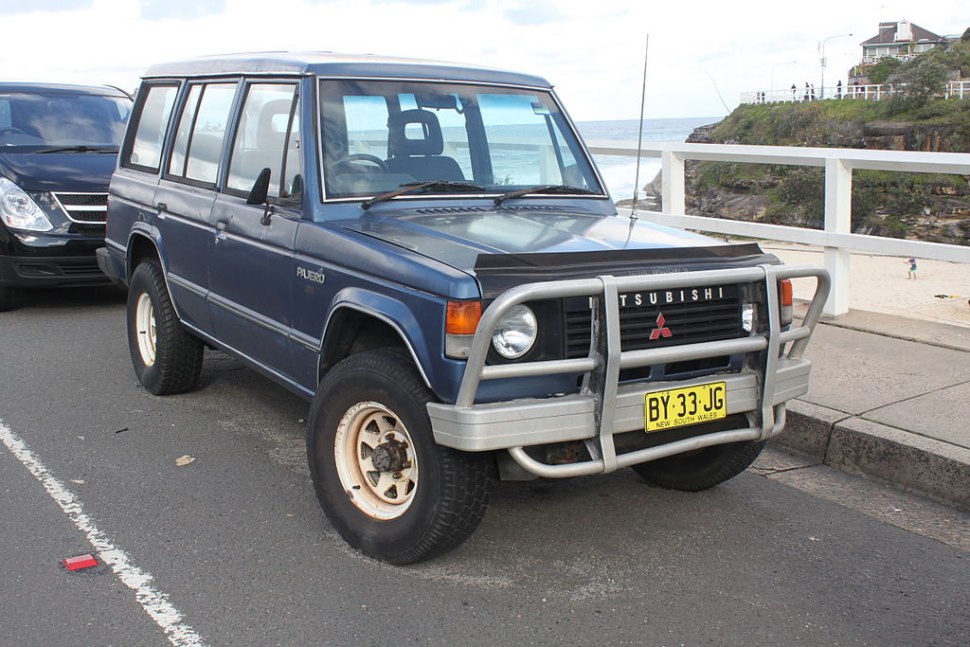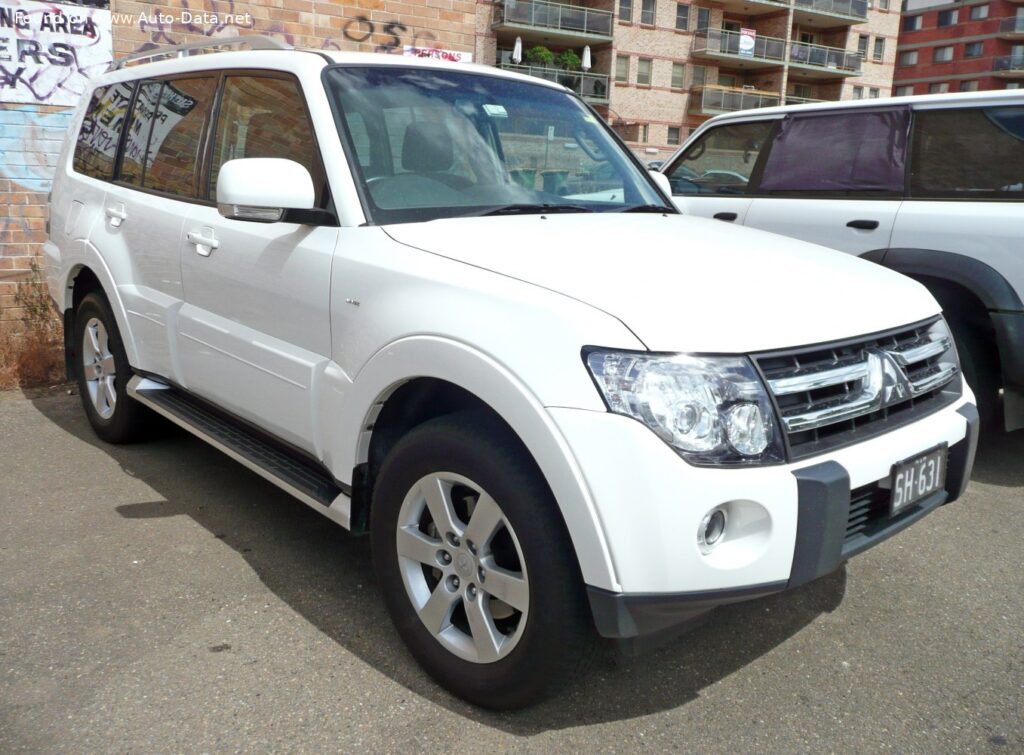
The Mitsubishi Pajero IV 3.2 Di-DC is a mid-size SUV produced by Mitsubishi Motors between 2006 and 2016. While not widely sold in the United States, the Pajero has a long and respected history as a capable off-road vehicle, particularly in markets like Australia, Europe, and Asia. The fourth generation, produced from 2006-2016, represented a significant evolution of the Pajero lineage, offering improved refinement, technology, and on-road comfort alongside its renowned off-road prowess. This specific variant, the 3.2 Di-DC with an automatic transmission and five doors, was available from October 2008 to September 2010. It catered to buyers seeking a versatile SUV with seven-passenger capacity and a robust diesel engine.
Mitsubishi Pajero IV: An Overview
The Pajero IV aimed to bridge the gap between a rugged off-roader and a comfortable family vehicle. It competed with vehicles like the Toyota Land Cruiser Prado, Nissan Patrol, and Land Rover Discovery, offering a compelling combination of features and capabilities. The 3.2 Di-DC model, equipped with a 165 horsepower diesel engine and a five-speed automatic transmission, was designed to provide a balance of performance and fuel efficiency. The Pajero IV was known for its independent suspension, providing a more comfortable ride compared to earlier, more utilitarian Pajero models. Its body-on-frame construction ensured durability and off-road capability, while features like available leather interiors and advanced audio systems enhanced the overall driving experience.
Engine & Performance
The heart of the Pajero IV 3.2 Di-DC is a 3.2-liter, inline-four cylinder diesel engine, designated the 4M41. This engine produces 165 horsepower at 3500 rpm and 381 Nm (281.01 lb.-ft.) of torque at 2000 rpm. The engine utilizes a common rail direct injection system and a turbocharger with an intercooler to optimize power and efficiency. While the 165 horsepower output might seem modest by modern standards, the engine’s torque delivery provides ample pulling power for both on-road driving and off-road adventures. The five-speed automatic transmission delivers smooth gear changes and contributes to the vehicle’s overall usability. Acceleration from 0 to 100 km/h (0-62 mph) takes 13.2 seconds, while 0 to 60 mph is achieved in approximately 12.5 seconds. The Pajero IV 3.2 Di-DC has a maximum speed of 177 km/h (109.98 mph). The weight-to-power ratio is 14 kg/Hp, and the weight-to-torque ratio is 6.1 kg/Nm, indicating a reasonable balance between weight and performance.
Design & Features
The Mitsubishi Pajero IV is a classic body-on-frame SUV, offering a robust and durable construction. The five-door configuration provides easy access to the spacious interior, which can accommodate up to seven passengers. The interior design prioritizes functionality and comfort, with available features like leather upholstery, climate control, and a premium audio system. The Pajero IV’s independent suspension system – double wishbones at the front and a transverse stabilizer at the rear – contributes to a more comfortable ride quality, especially on paved roads. Safety features include ABS (Anti-lock Braking System) and ventilated disc brakes on all four wheels. The Pajero IV’s exterior design is characterized by its muscular lines and prominent wheel arches, reflecting its off-road capabilities. Trunk space is highly versatile, ranging from a minimum of 215 liters (7.59 cu. ft.) with all seats in use to a maximum of 1790 liters (63.21 cu. ft.) with the rear seats folded down.
Technical Specifications
| Brand | Mitsubishi |
| Model | Pajero |
| Generation | Pajero IV |
| Type | 3.2 Di-DC (165 Hp) Automatic 5-doors |
| Start of production | October, 2008 |
| End of production | September, 2010 |
| Powertrain Architecture | Internal Combustion engine |
| Body type | SUV |
| Seats | 7 |
| Doors | 5 |
| Fuel consumption (urban) | 13.1 l/100 km (18 US mpg, 21.6 UK mpg, 7.6 km/l) |
| Fuel consumption (extra urban) | 9 l/100 km (26.1 US mpg, 31.4 UK mpg, 11.1 km/l) |
| Fuel consumption (combined) | 11.7 l/100 km (20.1 US mpg, 24.1 UK mpg, 8.5 km/l) |
| Fuel Type | Diesel |
| Acceleration 0 – 100 km/h | 13.2 sec |
| Acceleration 0 – 62 mph | 13.2 sec |
| Acceleration 0 – 60 mph | 12.5 sec |
| Maximum speed | 177 km/h (109.98 mph) |
| Weight-to-power ratio | 14 kg/Hp |
| Weight-to-torque ratio | 6.1 kg/Nm |
| Power | 165 Hp @ 3500 rpm |
| Torque | 381 Nm @ 2000 rpm (281.01 lb.-ft. @ 2000 rpm) |
| Engine layout | Front, Longitudinal |
| Engine Model/Code | 4M41 |
| Engine displacement | 3200 cm3 (195.28 cu. in.) |
| Number of cylinders | 4 |
| Engine configuration | Inline |
| Cylinder Bore | 98.5 mm (3.88 in.) |
| Piston Stroke | 105 mm (4.13 in.) |
| Compression ratio | 17:1 |
| Number of valves per cylinder | 4 |
| Fuel injection system | Diesel Commonrail |
| Engine aspiration | Turbocharger, Intercooler |
| Engine oil capacity | 9.8 l (10.36 US qt | 8.62 UK qt) |
| Coolant capacity | 9 l (9.51 US qt | 7.92 UK qt) |
| Kerb Weight | 2310 kg (5092.68 lbs.) |
| Max. weight | 3030 kg (6680.01 lbs.) |
| Max load | 720 kg (1587.33 lbs.) |
| Trunk (boot) space – minimum | 215 l (7.59 cu. ft.) |
| Trunk (boot) space – maximum | 1790 l (63.21 cu. ft.) |
| Fuel tank capacity | 88 l (23.25 US gal | 19.36 UK gal) |
| Length | 4900 mm (192.91 in.) |
| Width | 1875 mm (73.82 in.) |
| Height | 1870 mm (73.62 in.) |
| Wheelbase | 2780 mm (109.45 in.) |
| Front overhang | 765 mm (30.12 in.) |
| Rear overhang | 1355 mm (53.35 in.) |
| Drive wheel | All wheel drive (4×4) |
| Number of gears | 5 |
| Gearbox type | Automatic transmission |
| Front suspension | Double wishbone |
| Rear suspension | Transverse stabilizer |
| Front brakes | Ventilated discs |
| Rear brakes | Ventilated discs |
| Assisting systems | ABS (Anti-lock braking system) |
| Steering type | Steering rack and pinion |
| Tires size | 265/65 R17 |
| Wheel rims size | 7.5J X 17 |
The Mitsubishi Pajero IV 3.2 Di-DC represented a significant step forward for the Pajero line, offering a compelling blend of off-road capability, on-road comfort, and practicality. While not officially sold in the US market, it remains a popular and respected SUV in many parts of the world.