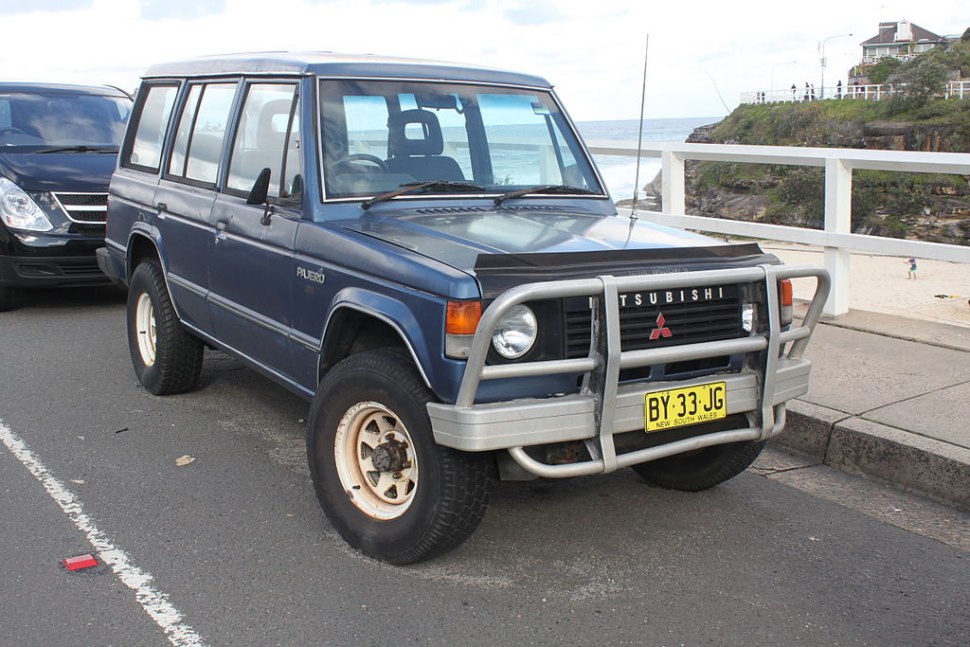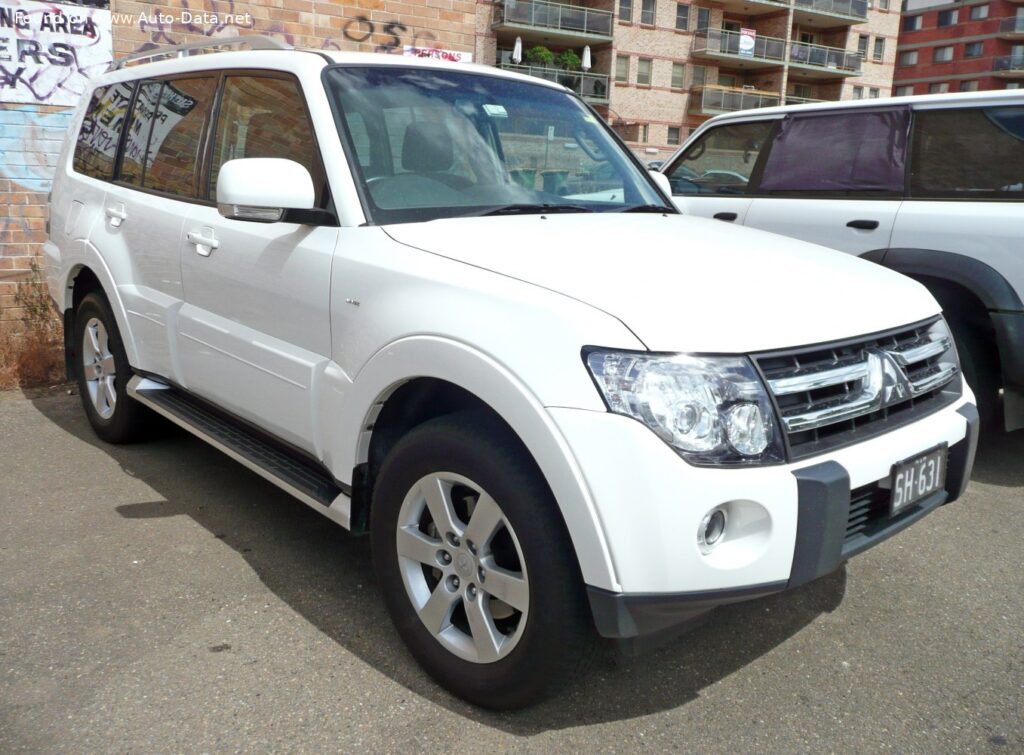
The Mitsubishi Pajero IV 3.8 i V6 24V MIVEC (250 Hp) 3-doors, produced between 2007 and 2011, represents the fourth generation of Mitsubishi’s well-regarded Pajero SUV. While not widely sold in the United States, the Pajero held a significant position in the European, Asian, and Australian markets as a robust and capable off-road vehicle, competing with models like the Land Rover Discovery and Toyota Land Cruiser Prado. This iteration of the Pajero aimed to blend off-road prowess with improved on-road comfort and refinement, offering a seven-seat configuration in a traditionally styled SUV body. The three-door variant, while less common, catered to buyers prioritizing maneuverability and a more compact footprint.
Mitsubishi Pajero IV: A Detailed Overview
The Pajero IV marked a substantial evolution for the Pajero line. Mitsubishi focused on enhancing the vehicle’s overall build quality, interior appointments, and technological features. The fourth generation retained the body-on-frame construction that characterized previous Pajeros, ensuring durability and off-road capability. However, it incorporated improvements to the suspension and chassis to deliver a more comfortable ride on paved roads. The 3-door model offered a unique proposition, appealing to those seeking a versatile vehicle that could handle both challenging terrain and everyday driving duties, while being easier to navigate in urban environments.
Engine & Performance
At the heart of the Pajero IV 3.8 i V6 24V MIVEC is a 3.8-liter V6 gasoline engine, designated the 6G75. This naturally aspirated engine produces 250 horsepower at 6000 rpm and 329 Nm (242.66 lb.-ft.) of torque at 2750 rpm. The MIVEC (Mitsubishi Innovative Valve timing Electronic Control) technology optimizes valve timing for improved performance and fuel efficiency across the engine’s operating range. Power is delivered to all four wheels via a five-speed automatic transmission and a sophisticated all-wheel-drive system. Acceleration from 0 to 100 km/h (0-62 mph) takes 10.8 seconds, while 0 to 60 mph is achieved in approximately 10.3 seconds. The Pajero IV boasts a maximum speed of 200 km/h (124.27 mph). The engine’s power-to-weight ratio is 8.1 kg/Hp, and the torque-to-weight ratio is 6.2 kg/Nm, contributing to its respectable performance.
Design & Features
The Pajero IV 3.8 i V6 24V MIVEC 3-doors is a classic SUV in its design, featuring a body-on-frame construction. Its three-door configuration provides a more compact profile compared to the five-door model, enhancing maneuverability. The vehicle offers seating for up to seven passengers, although space in the third row is best suited for children or shorter adults. Key features include a robust suspension system designed for both on- and off-road driving, ventilated disc brakes on all four wheels, and an Anti-lock Braking System (ABS) for enhanced safety. The interior is equipped with standard amenities for the era, including air conditioning, power windows, and a basic audio system. The trunk space is variable, ranging from a minimum of 215 liters (7.59 cu. ft.) with all seats in use to a maximum of 1790 liters (63.21 cu. ft.) with the rear seats folded down. The Pajero IV prioritizes functionality and durability over outright luxury, offering a practical and reliable vehicle for a variety of driving conditions.
Technical Specifications
| Brand | Mitsubishi |
| Model | Pajero |
| Generation | Pajero IV |
| Type | 3.8 i V6 24V MIVEC (250 Hp) 3-doors |
| Start of production | February, 2007 |
| End of production | October, 2011 |
| Powertrain Architecture | Internal Combustion engine |
| Body type | SUV |
| Seats | 7 |
| Doors | 3 |
| Fuel consumption (urban) | 17.7 l/100 km (13.3 US mpg / 16 UK mpg / 5.6 km/l) |
| Fuel consumption (extra urban) | 11.2 l/100 km (21 US mpg / 25.2 UK mpg / 8.9 km/l) |
| Fuel consumption (combined) | 13.5 l/100 km (17.4 US mpg / 20.9 UK mpg / 7.4 km/l) |
| Fuel Type | Petrol (Gasoline) |
| Acceleration 0 – 100 km/h | 10.8 sec |
| Acceleration 0 – 62 mph | 10.8 sec |
| Acceleration 0 – 60 mph | 10.3 sec |
| Maximum speed | 200 km/h (124.27 mph) |
| Weight-to-power ratio | 8.1 kg/Hp |
| Weight-to-torque ratio | 6.2 kg/Nm |
| Power | 250 Hp @ 6000 rpm |
| Torque | 329 Nm @ 2750 rpm (242.66 lb.-ft. @ 2750 rpm) |
| Engine layout | Front, Longitudinal |
| Engine Model/Code | 6G75 |
| Engine displacement | 3828 cm3 (233.6 cu. in.) |
| Number of cylinders | 6 |
| Engine configuration | V-engine |
| Cylinder Bore | 95 mm (3.74 in.) |
| Piston Stroke | 90 mm (3.54 in.) |
| Compression ratio | 9.8:1 |
| Number of valves per cylinder | 4 |
| Fuel injection system | Multi-port manifold injection |
| Engine aspiration | Naturally aspirated engine |
| Valvetrain | OHC |
| Engine oil capacity | 4.9 l (5.18 US qt | 4.31 UK qt) |
| Coolant capacity | 9 l (9.51 US qt | 7.92 UK qt) |
| Kerb Weight | 2035 kg (4486.41 lbs.) |
| Max. weight | 2530 kg (5577.7 lbs.) |
| Max load | 495 kg (1091.29 lbs.) |
| Trunk (boot) space – minimum | 215 l (7.59 cu. ft.) |
| Trunk (boot) space – maximum | 1790 l (63.21 cu. ft.) |
| Fuel tank capacity | 88 l (23.25 US gal | 19.36 UK gal) |
| Length | 4385 mm (172.64 in.) |
| Width | 1875 mm (73.82 in.) |
| Height | 1870 mm (73.62 in.) |
| Wheelbase | 2545 mm (100.2 in.) |
| Front track | 1560 mm (61.42 in.) |
| Rear track | 1560 mm (61.42 in.) |
| Front overhang | 765 mm (30.12 in.) |
| Rear overhang | 1075 mm (42.32 in.) |
| Drive wheel | All wheel drive (4×4) |
| Number of gears | 5 |
| Gearbox type | automatic transmission |
| Front suspension | Double wishbone |
| Rear suspension | Transverse stabilizer |
| Front brakes | Ventilated discs |
| Rear brakes | Ventilated discs |
| Assisting systems | ABS (Anti-lock braking system) |
| Steering type | Steering rack and pinion |
| Tires size | 265/65 R17 |
| Wheel rims size | 7.5J X 17 |