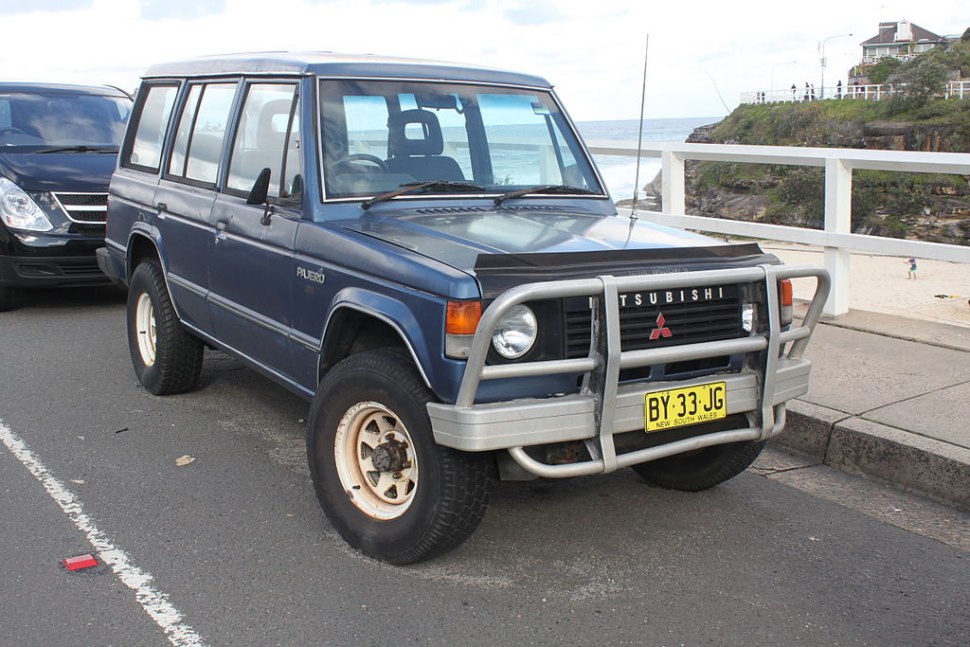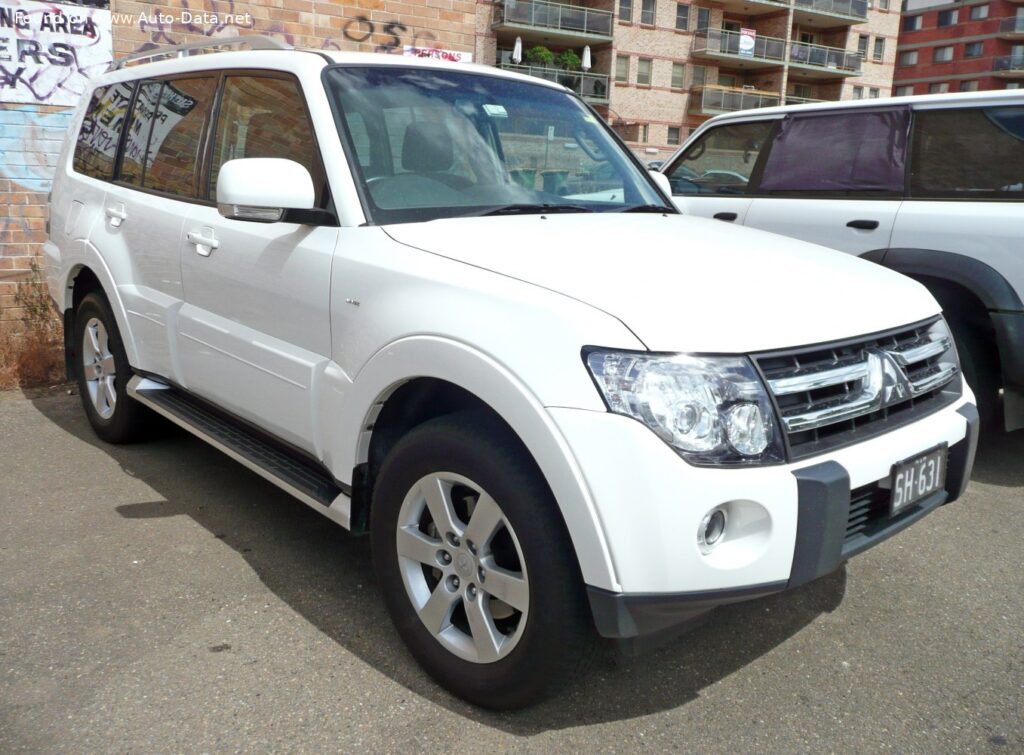
The Mitsubishi Pajero IV 3.8 i V6 24V MIVEC (250 Hp) is a five-door sport utility vehicle (SUV) produced by Mitsubishi Motors from 2006 to 2011. Representing the fourth generation of the Pajero, a vehicle with a long and storied history in the off-road and rally racing world, this iteration aimed to blend robust four-wheel-drive capability with increased refinement and on-road comfort. While not officially sold in the United States, the Pajero held a significant position in markets like Europe, Australia, and Asia as a capable and luxurious SUV, often competing with vehicles like the Toyota Land Cruiser and Nissan Patrol. The Pajero IV represented a substantial upgrade over its predecessor, featuring a more modern design, improved interior, and enhanced mechanical components.
Mitsubishi Pajero IV: An Overview
The Pajero IV was designed to appeal to a broader audience than previous generations. While retaining its off-road prowess, Mitsubishi focused on improving the vehicle’s on-road manners and providing a more comfortable and feature-rich experience for passengers. The 3.8-liter V6 engine option, detailed here, was a key component of this strategy, offering a balance of power and refinement. The Pajero IV’s body-on-frame construction continued to provide the durability needed for challenging terrain, while advancements in suspension technology aimed to reduce body roll and improve ride quality. The vehicle was offered with either five or seven seats, catering to families and those needing additional passenger capacity.
Engine & Performance
The heart of the Pajero IV 3.8 i V6 is a 3.8-liter V6 engine, designated the 6G75. This naturally aspirated engine produces 250 horsepower at 6000 rpm and 329 Nm (242.66 lb.-ft.) of torque at 2750 rpm. The engine features Mitsubishi’s MIVEC (Mitsubishi Innovative Valve timing and lift Electronic Control) technology, which optimizes valve timing for improved performance and fuel efficiency. Power is delivered to all four wheels via a five-speed automatic transmission and a sophisticated four-wheel-drive system. This system typically includes selectable drive modes, allowing the driver to choose between two-wheel drive, four-wheel drive high range, and four-wheel drive low range for optimal traction in various conditions. Acceleration from 0 to 100 km/h (0-62 mph) takes 10.8 seconds, while 0 to 60 mph is achieved in approximately 10.3 seconds. The vehicle has a maximum speed of 200 km/h (124.27 mph). The weight-to-power ratio of 8.9 kg/Hp and weight-to-torque ratio of 6.7 kg/Nm contribute to a responsive driving experience.
Design & Features
The Pajero IV boasts a traditional SUV body style, characterized by its boxy shape and high ground clearance. The five-door configuration provides easy access to both front and rear seats. The interior is designed with practicality and comfort in mind, offering seating for up to seven passengers depending on the configuration. Features typically included air conditioning, power windows and locks, and an audio system. Higher trim levels often added leather upholstery, sunroof, and advanced navigation systems. Safety features, crucial in a vehicle of this size, included ABS (Anti-lock Braking System) and multiple airbags. The Pajero IV’s spacious interior and large trunk capacity (215 liters minimum, expanding to 1790 liters with the rear seats folded) make it a versatile vehicle for both daily commuting and long-distance travel. The vehicle’s dimensions are 4900 mm (192.91 in) in length, 1875 mm (73.82 in) in width, and 1870 mm (73.62 in) in height, with a wheelbase of 2780 mm (109.45 in).
Technical Specifications
| Brand | Mitsubishi |
| Model | Pajero |
| Generation | Pajero IV |
| Type | 3.8 i V6 24V MIVEC (250 Hp) 5-doors |
| Start of production | October, 2006 |
| End of production | October, 2011 |
| Powertrain Architecture | Internal Combustion engine |
| Body type | SUV |
| Seats | 7 |
| Doors | 5 |
| Fuel consumption (urban) | 17.7 l/100 km (13.3 US mpg / 16 UK mpg / 5.6 km/l) |
| Fuel consumption (extra urban) | 11.2 l/100 km (21 US mpg / 25.2 UK mpg / 8.9 km/l) |
| Fuel consumption (combined) | 13.5 l/100 km (17.4 US mpg / 20.9 UK mpg / 7.4 km/l) |
| Fuel Type | Petrol (Gasoline) |
| Acceleration 0 – 100 km/h | 10.8 sec |
| Acceleration 0 – 62 mph | 10.8 sec |
| Acceleration 0 – 60 mph | 10.3 sec |
| Maximum speed | 200 km/h (124.27 mph) |
| Weight-to-power ratio | 8.9 kg/Hp |
| Weight-to-torque ratio | 6.7 kg/Nm |
| Power | 250 Hp @ 6000 rpm |
| Power per litre | 65.3 Hp/l |
| Torque | 329 Nm @ 2750 rpm (242.66 lb.-ft. @ 2750 rpm) |
| Engine layout | Front, Longitudinal |
| Engine Model/Code | 6G75 |
| Engine displacement | 3828 cm3 (233.6 cu. in.) |
| Number of cylinders | 6 |
| Engine configuration | V-engine |
| Cylinder Bore | 95 mm (3.74 in.) |
| Piston Stroke | 90 mm (3.54 in.) |
| Compression ratio | 9.8:1 |
| Number of valves per cylinder | 4 |
| Fuel injection system | Multi-port manifold injection |
| Engine aspiration | Naturally aspirated engine |
| Valvetrain | OHC |
| Engine oil capacity | 4.9 l (5.18 US qt | 4.31 UK qt) |
| Coolant | 9 l (9.51 US qt | 7.92 UK qt) |
| Kerb Weight | 2215 kg (4883.24 lbs.) |
| Max. weight | 2910 kg (6415.45 lbs.) |
| Max load | 695 kg (1532.21 lbs.) |
| Trunk (boot) space – minimum | 215 l (7.59 cu. ft.) |
| Trunk (boot) space – maximum | 1790 l (63.21 cu. ft.) |
| Fuel tank capacity | 88 l (23.25 US gal | 19.36 UK gal) |
| Length | 4900 mm (192.91 in.) |
| Width | 1875 mm (73.82 in.) |
| Height | 1870 mm (73.62 in.) |
| Wheelbase | 2780 mm (109.45 in.) |
| Front overhang | 765 mm (30.12 in.) |
| Rear overhang | 1355 mm (53.35 in.) |
| Drive wheel | All wheel drive (4×4) |
| Number of gears and type of gearbox | 5 gears, automatic transmission |
| Front suspension | Double wishbone |
| Rear suspension | Transverse stabilizer |
| Front brakes | Ventilated discs |
| Rear brakes | Ventilated discs |
| Assisting systems | ABS (Anti-lock braking system) |
| Steering type | Steering rack and pinion |
| Tires size | 265/65 R17 |
| Wheel rims size | 7.5J X 17 |