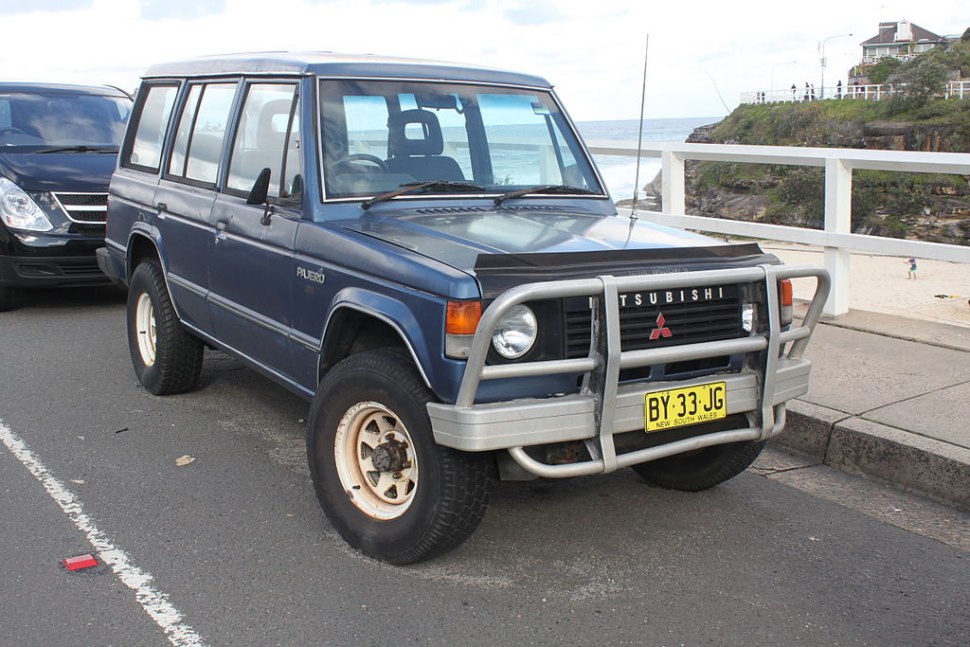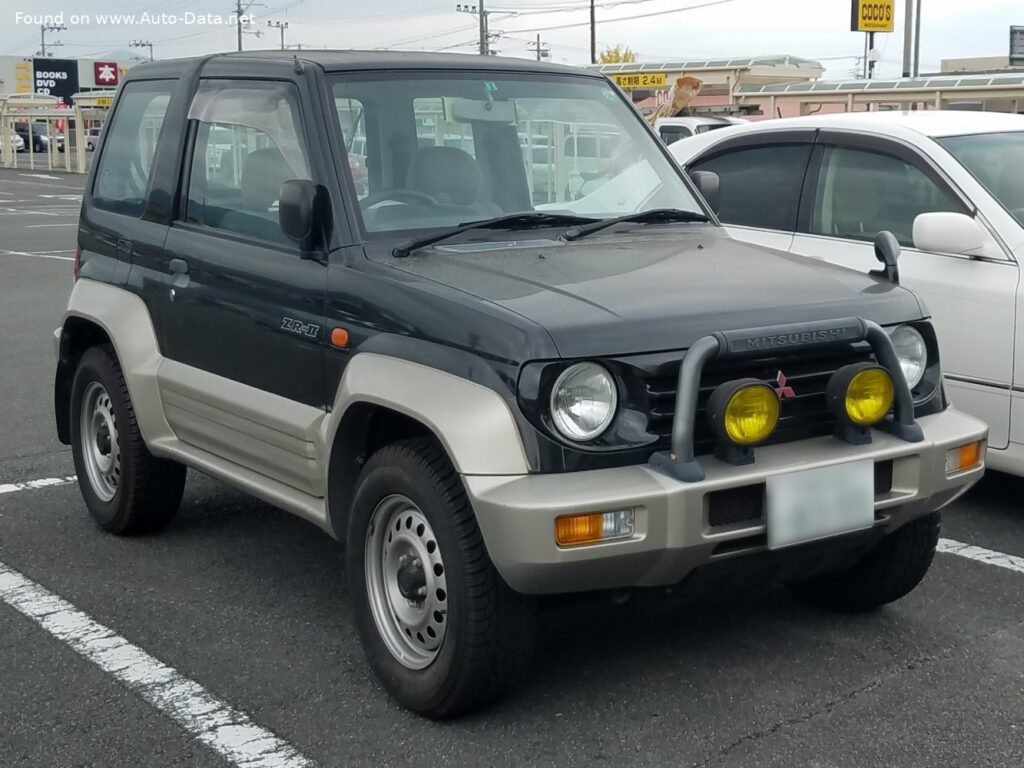
The Mitsubishi Pajero Junior 1.1, produced between 1995 and 1998, represents a unique offering within the broader Pajero lineage. While the Pajero nameplate is well-known for its capable, full-size SUVs, the Junior was a smaller, more affordable, and distinctly Japanese market vehicle. Designed to fit within Japan’s kei car regulations (though exceeding some dimensions, classifying it in a slightly higher tax bracket), it aimed to provide the rugged styling and all-wheel-drive capability of the larger Pajero in a more compact and economical package. It was never officially sold in the United States, but its design and features reflect the growing demand for small, versatile SUVs in the mid-1990s.
Mitsubishi Pajero Junior: A Compact Off-Roader
The Pajero Junior filled a niche in the Japanese automotive market for a small, capable SUV. Japan’s road conditions and limited parking spaces favored smaller vehicles, and the Junior offered a blend of practicality, off-road ability, and the iconic Pajero styling. It was positioned as a lifestyle vehicle, appealing to those seeking weekend adventure capability combined with everyday usability. The “Junior” designation clearly indicated its smaller stature compared to the full-size Pajero, but it retained many of the design cues that made the Pajero a recognizable and respected brand.
Engine & Performance
Powering the Pajero Junior 1.1 is a 1.1-liter (1094 cm3 or 66.76 cu. in.) inline four-cylinder gasoline engine. This engine produced 80 horsepower at 6500 rpm and 98 Nm (72.28 lb.-ft.) of torque at 4000 rpm. While not a powerhouse, the engine’s relatively high power-to-liter ratio (73.1 hp/l) provided adequate performance for its intended use. The engine featured a multi-port fuel injection system and a naturally aspirated configuration. The weight-to-power ratio of 12 kg/Hp and weight-to-torque ratio of 9.8 kg/Nm contributed to a reasonably responsive driving experience, especially considering its size and intended market. The Pajero Junior achieved a maximum speed of 135 km/h (83.89 mph). Fuel economy figures were respectable for the era, with combined consumption rated at 6 l/100 km (39.2 US mpg or 47.1 UK mpg).
Design & Features
The Pajero Junior is a three-door SUV with seating for five passengers. Its body-on-frame construction, a hallmark of traditional SUVs, provided a robust and durable platform. The exterior styling closely mirrored that of the larger Pajero, featuring squared-off lines, prominent wheel arches, and a generally rugged appearance. The relatively short wheelbase of 2200 mm (86.61 in.) and overall length of 3500 mm (137.8 in.) made it easy to maneuver in tight spaces.
Inside, the Pajero Junior offered a functional, if somewhat basic, interior. Features included hydraulic power steering and an anti-lock braking system (ABS), which were becoming increasingly common on vehicles of this type in the mid-1990s. The suspension system comprised double wishbones at the front and coil springs at the rear, providing a comfortable ride on and off-road. Brakes were disc type in the front and drum type in the rear. The vehicle rode on 205/70 R15 tires. The all-wheel-drive system, a key feature, provided enhanced traction in various conditions, making it suitable for light off-road adventures and challenging weather.
Technical Specifications
| Brand | Mitsubishi |
| Model | Pajero |
| Generation | Pajero Junior |
| Type (Engine) | 1.1 (80 Hp) |
| Start of production | November, 1995 |
| End of production | May, 1998 |
| Powertrain Architecture | Internal Combustion engine |
| Body type | SUV |
| Seats | 5 |
| Doors | 3 |
| Fuel consumption (urban) | 9 l/100 km (26.1 US mpg, 31.4 UK mpg, 11.1 km/l) |
| Fuel consumption (extra urban) | 5 l/100 km (47 US mpg, 56.5 UK mpg, 20 km/l) |
| Fuel consumption (combined) | 6 l/100 km (39.2 US mpg, 47.1 UK mpg, 16.7 km/l) |
| Fuel Type | Petrol (Gasoline) |
| Maximum speed | 135 km/h (83.89 mph) |
| Weight-to-power ratio | 12 kg/Hp |
| Weight-to-torque ratio | 9.8 kg/Nm |
| Power | 80 Hp @ 6500 rpm |
| Power per litre | 73.1 Hp/l |
| Torque | 98 Nm @ 4000 rpm (72.28 lb.-ft. @ 4000 rpm) |
| Engine layout | Front, Longitudinal |
| Engine displacement | 1094 cm3 (66.76 cu. in.) |
| Number of cylinders | 4 |
| Engine configuration | Inline |
| Cylinder Bore | 66 mm (2.6 in.) |
| Piston Stroke | 80 mm (3.15 in.) |
| Compression ratio | 9.5:1 |
| Number of valves per cylinder | 4 |
| Fuel injection system | Multi-port manifold injection |
| Engine aspiration | Naturally aspirated engine |
| Valvetrain | OHC |
| Kerb Weight | 960 kg (2116.44 lbs.) |
| Fuel tank capacity | 35 l (9.25 US gal | 7.7 UK gal) |
| Length | 3500 mm (137.8 in.) |
| Width | 1545 mm (60.83 in.) |
| Height | 1660 mm (65.35 in.) |
| Wheelbase | 2200 mm (86.61 in.) |
| Front track | 1310 mm (51.57 in.) |
| Rear track | 1320 mm (51.97 in.) |
| Minimum turning circle | 9.6 m (31.5 ft.) |
| Drive wheel | All wheel drive (4×4) |
| Number of gears | 5 gears, manual transmission |
| Front suspension | Double wishbone |
| Rear suspension | Coil spring |
| Front brakes | Disc |
| Rear brakes | Drum |
| Assisting systems | ABS (Anti-lock braking system) |
| Steering type | Steering rack and pinion |
| Power steering | Hydraulic Steering |
| Tires size | 205/70 R15 |
The Mitsubishi Pajero Junior 1.1, while not a mainstream vehicle in the United States, represents an interesting example of Japanese automotive engineering and design. It successfully combined the rugged appeal of the larger Pajero with a smaller, more practical footprint, catering to the specific needs of the Japanese market. Its blend of affordability, capability, and distinctive styling ensured its popularity during its production run.