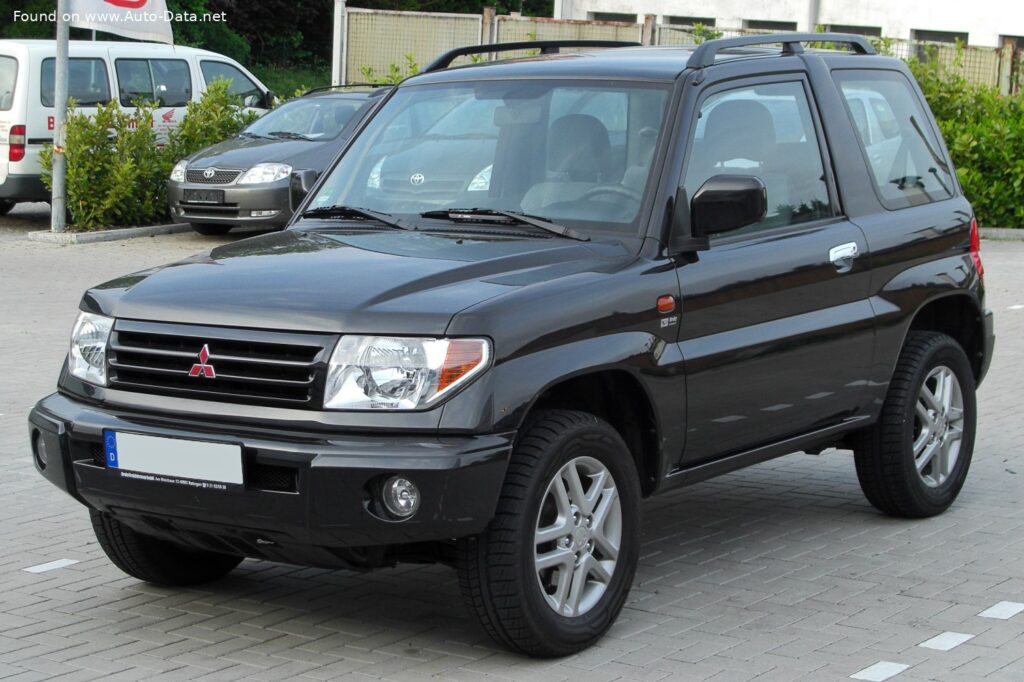
The Mitsubishi Pajero Pinin (H60) is a compact sport utility vehicle (SUV) produced by Mitsubishi Motors between 1999 and 2006. Positioned as a smaller, more affordable alternative to the full-size Pajero, the Pinin was primarily marketed in Europe, Asia, and Australia. It wasn’t officially sold in the United States. The Pinin aimed to capitalize on the growing popularity of compact SUVs, offering a blend of off-road capability, practicality, and a relatively accessible price point. It served as an entry point into the Pajero lineage, known for its robust four-wheel-drive systems and durability.
Mitsubishi Pajero Pinin (H60): An Overview
The Pajero Pinin, designated as the H60 series, represented Mitsubishi’s attempt to broaden the appeal of the Pajero nameplate. Unlike its larger sibling, the Pinin featured a monocoque chassis construction, contributing to a lighter weight and improved on-road handling. The vehicle was offered with a range of engine options depending on the market, but the 2.0-liter GDI (Gasoline Direct Injection) 16-valve engine, producing 129 horsepower, was a common configuration, particularly in European markets. The Pinin’s design emphasized a rounded, approachable aesthetic, differentiating it from the more rugged styling of the larger Pajero.
Engine & Performance
The heart of the Pajero Pinin H60 2.0 GDI is a 1,999 cc (121.99 cubic inches) inline-four cylinder gasoline engine. This engine utilizes Mitsubishi’s GDI technology, which involves direct fuel injection into the combustion chamber. This system improves fuel efficiency and power output compared to traditional port fuel injection. The engine develops 129 horsepower at 5,000 rpm and 190 Newton-meters (140.14 lb-ft) of torque at 3,500 rpm. Power is delivered to all four wheels via a four-speed automatic transmission and a sophisticated all-wheel-drive system. Acceleration from 0 to 100 km/h (0-62 mph) takes approximately 12 seconds, with a top speed of 165 km/h (102.53 mph). The weight-to-power ratio of 11.5 kg/Hp and a weight-to-torque ratio of 7.8 kg/Nm provide adequate performance for everyday driving and light off-road excursions. The engine’s naturally aspirated design and direct injection contribute to a power-to-litre ratio of 64.5 Hp/l.
Design & Features
The Mitsubishi Pajero Pinin H60 is a five-door SUV with seating for five passengers. Its body style is characterized by a relatively compact footprint, making it easier to maneuver in urban environments compared to larger SUVs. The vehicle’s design prioritizes practicality and functionality. Interior space is reasonably generous for its class, with a trunk offering 358 liters (12.64 cubic feet) of space with the rear seats up, expanding to 1,158 liters (40.89 cubic feet) when folded down. Standard features typically included air conditioning, power steering (hydraulic), and an anti-lock braking system (ABS). The Pinin’s suspension consists of a spring strut setup at the front and a coil spring arrangement at the rear, providing a comfortable ride on paved roads. The vehicle rides on 16-inch wheels fitted with 215/65 R16 S tires. Safety features, while basic by modern standards, were adequate for the period, with ABS being a key component. The Pinin’s design language was intended to be modern and appealing to a broad audience, with a focus on rounded edges and a relatively understated aesthetic.
Technical Specifications
| Brand | Mitsubishi |
| Model | Pajero |
| Generation | Pajero Pinin (H60) |
| Type | 2.0 GDI 16V (129 Hp) 5dr Automatic |
| Start of production | November, 1999 |
| End of production | 2006 |
| Powertrain Architecture | Internal Combustion engine |
| Body type | SUV |
| Seats | 5 |
| Doors | 5 |
| Fuel consumption (urban) | 12.6 l/100 km (18.7 US mpg, 22.4 UK mpg, 7.9 km/l) |
| Fuel consumption (extra urban) | 8.4 l/100 km (28 US mpg, 33.6 UK mpg, 11.9 km/l) |
| Fuel consumption (combined) | 9.9 l/100 km (23.8 US mpg, 28.5 UK mpg, 10.1 km/l) |
| Fuel Type | Petrol (Gasoline) |
| Acceleration 0 – 100 km/h | 12 sec |
| Acceleration 0 – 62 mph | 12 sec |
| Acceleration 0 – 60 mph | 11.4 sec |
| Maximum speed | 165 km/h (102.53 mph) |
| Weight-to-power ratio | 11.5 kg/Hp |
| Weight-to-torque ratio | 7.8 kg/Nm |
| Power | 129 Hp @ 5000 rpm |
| Power per litre | 64.5 Hp/l |
| Torque | 190 Nm @ 3500 rpm (140.14 lb.-ft. @ 3500 rpm) |
| Engine layout | Front, Longitudinal |
| Engine displacement | 1999 cm3 (121.99 cu. in.) |
| Number of cylinders | 4 |
| Engine configuration | Inline |
| Cylinder Bore | 81.5 mm (3.21 in.) |
| Piston Stroke | 95.8 mm (3.77 in.) |
| Compression ratio | 11:1 |
| Number of valves per cylinder | 4 |
| Fuel injection system | Direct injection |
| Engine aspiration | Naturally aspirated engine |
| Valvetrain | DOHC |
| Kerb Weight | 1481 kg (3265.05 lbs.) |
| Max. weight | 1890 kg (4166.74 lbs.) |
| Max load | 409 kg (901.69 lbs.) |
| Trunk (boot) space – minimum | 358 l (12.64 cu. ft.) |
| Trunk (boot) space – maximum | 1158 l (40.89 cu. ft.) |
| Fuel tank capacity | 53 l (14 US gal | 11.66 UK gal) |
| Length | 4035 mm (158.86 in.) |
| Width | 1695 mm (66.73 in.) |
| Height | 1735 mm (68.31 in.) |
| Wheelbase | 2450 mm (96.46 in.) |
| Front track | 1435 mm (56.5 in.) |
| Rear (Back) track | 1445 mm (56.89 in.) |
| Drive wheel | All wheel drive (4×4) |
| Number of gears and type of gearbox | 4 gears, automatic transmission |
| Front suspension | Spring Strut |
| Rear suspension | Coil spring |
| Front brakes | Ventilated discs |
| Rear brakes | Disc |
| Assisting systems | ABS (Anti-lock braking system) |
| Steering type | Steering rack and pinion |
| Power steering | Hydraulic Steering |
| Tires size | 215/65 R16 S |
| Wheel rims size | 16 |