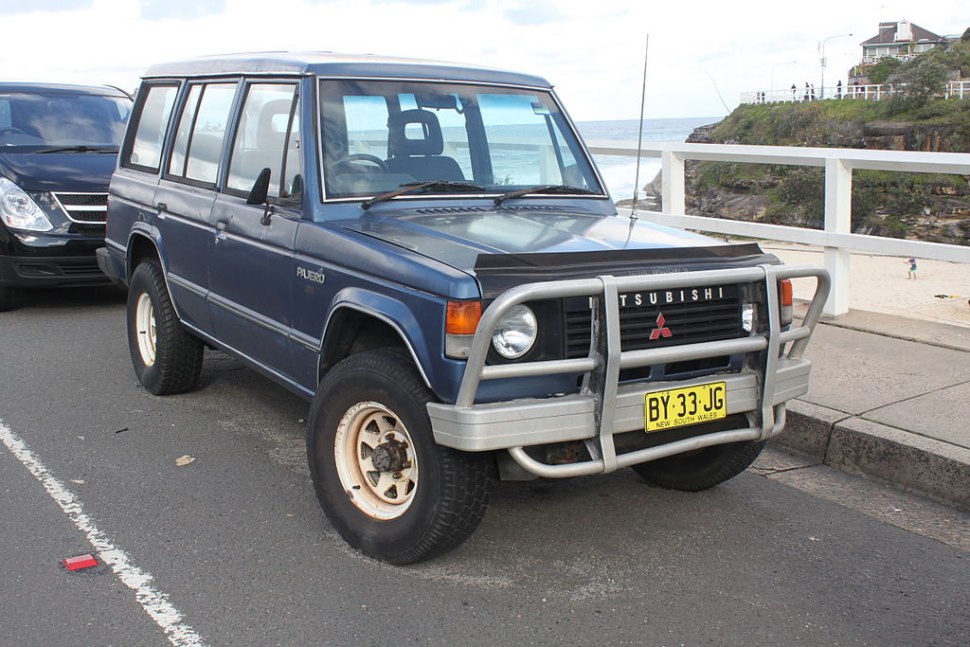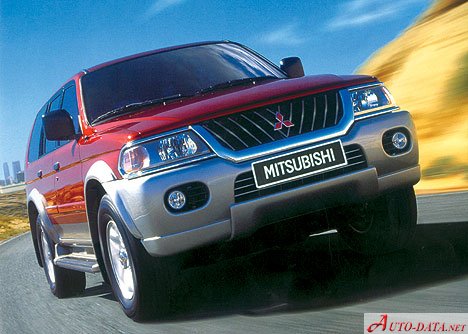
The Mitsubishi Pajero Sport I (K90), produced between 2004 and 2008, is a mid-size SUV built by Mitsubishi Motors. While not officially sold in the United States during its initial production run, the Pajero Sport represents a significant vehicle in the global SUV market, particularly in regions like Australia, South America, and parts of Asia. It was designed to offer a blend of off-road capability, family practicality, and affordability, slotting between the smaller Mitsubishi Outlander and the larger, more luxurious Pajero (Montero). The K90 generation established the Pajero Sport as a robust and reliable choice for those needing a versatile vehicle capable of handling both daily commutes and challenging terrain.
Mitsubishi Pajero Sport I (K90): An Overview
The Pajero Sport I (K90) was based on the Mitsubishi Triton (L200) pickup truck platform, sharing its ladder-frame chassis and many mechanical components. This foundation provided inherent strength and durability, making it well-suited for off-road adventures. The vehicle aimed to capitalize on the growing popularity of SUVs worldwide, offering a more affordable alternative to dedicated off-roaders while still providing respectable four-wheel-drive capabilities. The 2.5-liter turbodiesel engine was a key feature, offering a balance of power and fuel efficiency, particularly important in markets where diesel fuel was more prevalent and cost-effective.
Engine & Performance
The primary engine offered in the Pajero Sport I (K90) was a 2.5-liter inline-four cylinder turbodiesel engine. This engine produced 133 horsepower at 4000 rpm and 280 Nm (206.52 lb.-ft.) of torque at 2300 rpm. The turbocharger and intercooler significantly enhanced performance, providing improved throttle response and increased power output compared to naturally aspirated diesel engines. Power per liter was rated at 53.7 Hp/l. The engine utilized a precombustion chamber injection system, a common technology for diesel engines of that era, designed to improve combustion efficiency and reduce emissions.
Power was delivered to all four wheels through a five-speed manual transmission and a part-time four-wheel-drive system. Acceleration from 0 to 100 km/h (0-62 mph) took approximately 18 seconds, and 0 to 60 mph was achieved in around 17.1 seconds. The Pajero Sport I (K90) had a maximum speed of 151 km/h (93.83 mph). The weight-to-power ratio was 13.8 kg/Hp, and the weight-to-torque ratio was 6.5 kg/Nm, indicating a focus on usable torque for off-road driving and towing. Fuel economy was rated at 13.8 l/100 km (17 US mpg) in urban conditions and 8.8 l/100 km (26.7 US mpg) on the extra-urban cycle.
Design & Features
The Pajero Sport I (K90) featured a traditional SUV body style with five doors and seating for five passengers. Its design was functional and robust, prioritizing practicality over outright styling flair. The vehicle’s dimensions included a length of 4610 mm (181.5 in), a width of 1775 mm (69.88 in), and a height of 1735 mm (68.31 in). The wheelbase measured 2725 mm (107.28 in), contributing to a stable ride and decent interior space.
Key features included a spacious interior, a relatively large trunk with a minimum capacity of 500 liters (17.66 cu. ft.) expandable to 1720 liters (60.74 cu. ft.) with the rear seats folded down, and a robust four-wheel-drive system with selectable drive modes. Safety features, while not as comprehensive as modern SUVs, included an Anti-lock Braking System (ABS) and hydraulic power steering. The vehicle’s kerb weight was 1830 kg (4034.46 lbs), with a maximum permissible weight of 2510 kg (5533.6 lbs) and a maximum load capacity of 680 kg (1499.14 lbs). The Pajero Sport I (K90) rode on 235/70 R16 tires.
Technical Specifications
| Brand | Mitsubishi |
| Model | Pajero Sport |
| Generation | Pajero Sport I (K90) |
| Type (Engine) | 2.5 TD (133 Hp) |
| Start of production | 2004 |
| End of production | 2008 |
| Powertrain Architecture | Internal Combustion engine |
| Body type | Off-road vehicle |
| Seats | 5 |
| Doors | 5 |
| Fuel consumption (urban) | 13.8 l/100 km (17 US mpg) |
| Fuel consumption (extra urban) | 8.8 l/100 km (26.7 US mpg) |
| Fuel Type | Diesel |
| Acceleration 0 – 100 km/h | 18 sec |
| Acceleration 0 – 62 mph | 18 sec |
| Acceleration 0 – 60 mph | 17.1 sec |
| Maximum speed | 151 km/h (93.83 mph) |
| Weight-to-power ratio | 13.8 kg/Hp |
| Weight-to-torque ratio | 6.5 kg/Nm |
| Power | 133 Hp @ 4000 rpm |
| Torque | 280 Nm @ 2300 rpm (206.52 lb.-ft. @ 2300 rpm) |
| Engine layout | Front, Longitudinal |
| Engine displacement | 2477 cm3 (151.16 cu. in.) |
| Number of cylinders | 4 |
| Engine configuration | Inline |
| Cylinder Bore | 91.1 mm (3.59 in.) |
| Piston Stroke | 95 mm (3.74 in.) |
| Compression ratio | 21.1:1 |
| Number of valves per cylinder | 4 |
| Fuel injection system | Precombustion chamber injection |
| Engine aspiration | Turbocharger, Intercooler |
| Valvetrain | OHC |
| Kerb Weight | 1830 kg (4034.46 lbs.) |
| Max. weight | 2510 kg (5533.6 lbs.) |
| Max load | 680 kg (1499.14 lbs.) |
| Trunk (boot) space – minimum | 500 l (17.66 cu. ft.) |
| Trunk (boot) space – maximum | 1720 l (60.74 cu. ft.) |
| Fuel tank capacity | 74 l (19.55 US gal | 16.28 UK gal) |
| Length | 4610 mm (181.5 in.) |
| Width | 1775 mm (69.88 in.) |
| Height | 1735 mm (68.31 in.) |
| Wheelbase | 2725 mm (107.28 in.) |
| Front track | 1465 mm (57.68 in.) |
| Rear (Back) track | 1480 mm (58.27 in.) |
| Drive wheel | All wheel drive (4×4) |
| Number of gears and type of gearbox | 5 gears, manual transmission |
| Front suspension | Torsion |
| Rear suspension | Coil spring |
| Front brakes | Disc |
| Rear brakes | Disc |
| Assisting systems | ABS (Anti-lock braking system) |
| Power steering | Hydraulic Steering |
| Tires size | 235/70 R16 |
The Mitsubishi Pajero Sport I (K90) remains a popular choice in many parts of the world, appreciated for its durability, off-road capability, and relatively low running costs. While it never achieved widespread recognition in the US market, it stands as a testament to Mitsubishi’s engineering prowess and its ability to create versatile SUVs tailored to diverse global needs.