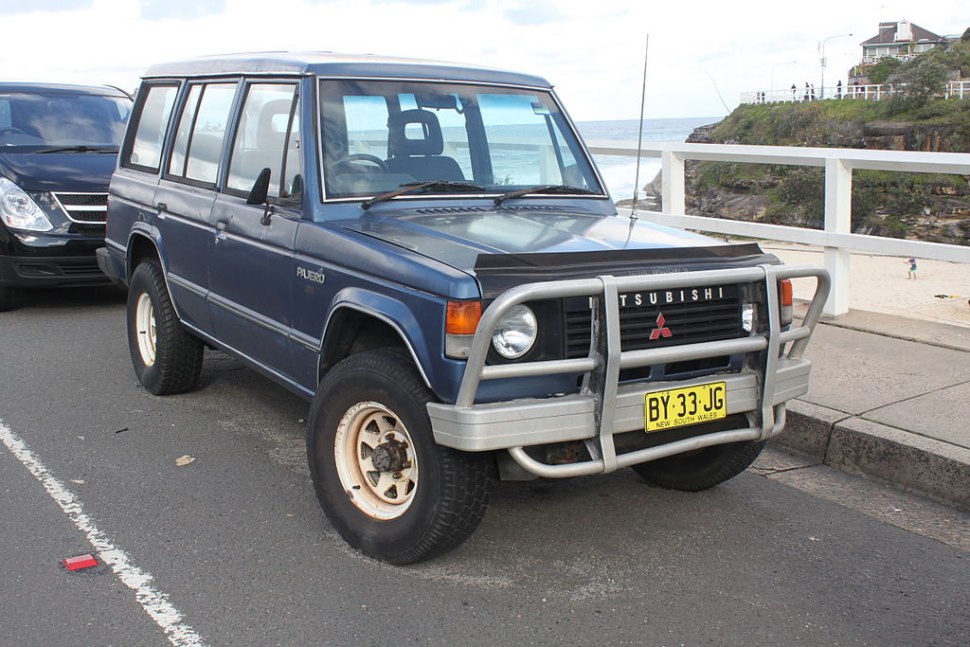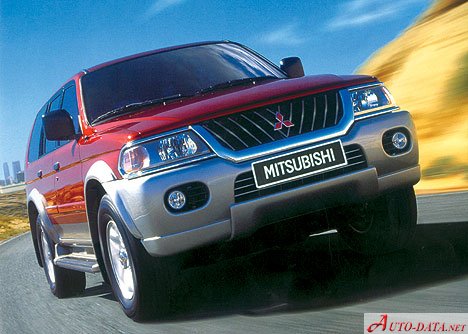
The Mitsubishi Pajero Sport I (K90), produced from 1998 to 2008, represents Mitsubishi’s entry into the increasingly popular mid-size SUV segment. While not officially sold in the United States during its initial production run, the Pajero Sport was a significant vehicle in markets like Australia, Latin America, and parts of Asia and Europe. It offered a compelling blend of off-road capability derived from the legendary Pajero (Montero) lineage, combined with the practicality of a family-oriented SUV. The K90 generation established the Pajero Sport as a robust and reliable vehicle, often favored for its durability and go-anywhere attitude.
Mitsubishi Pajero Sport I (K90): A Detailed Overview
The Pajero Sport I was designed to bridge the gap between a traditional, rugged off-roader and a comfortable, everyday SUV. It capitalized on the strong reputation of the Pajero nameplate, known for its Dakar Rally success, and translated that into a more accessible package for a wider audience. The K90’s appeal lay in its body-on-frame construction, providing a sturdy platform for tackling challenging terrain, while still offering a reasonable level of refinement for on-road driving. It served as a competitor to vehicles like the Toyota Hilux Surf (4Runner in the US) and Isuzu Trooper.
Engine & Performance
The most common engine offered in the Pajero Sport I (K90) was the 3.0-liter V6 gasoline engine, designated as the 6G72. This naturally aspirated engine produced 177 horsepower at 5000 rpm and 255 Nm (188.08 lb-ft) of torque at 4500 rpm. The engine featured a multi-port fuel injection system and a compression ratio of 9:1. While not exceptionally powerful by modern standards, the V6 provided adequate performance for both on-road cruising and off-road adventures. The engine’s longitudinal front-engine layout contributed to a balanced weight distribution. Acceleration from 0 to 100 km/h (0-62 mph) took approximately 14.4 seconds, and 0 to 60 mph was achieved in around 13.7 seconds. The Pajero Sport I had a maximum speed of 175 km/h (108.74 mph). The weight-to-power ratio of 11 kg/Hp and weight-to-torque ratio of 7.6 kg/Nm indicated a reasonable, though not sporty, power delivery.
Design & Features
The Pajero Sport I (K90) is a five-door, five-seat off-road vehicle. Its body-on-frame construction, utilizing a ladder chassis, was a key element of its durability and off-road prowess. The exterior design was functional and robust, reflecting its intended purpose. The vehicle’s dimensions – 4610 mm (181.5 in) in length, 1775 mm (69.88 in) in width, and 1735 mm (68.31 in) in height – provided ample interior space for passengers and cargo. A significant feature was the generous trunk space, ranging from a minimum of 500 liters (17.66 cu. ft.) to a maximum of 1720 liters (60.74 cu. ft.) with the rear seats folded down.
In terms of features, the Pajero Sport I offered a relatively basic level of equipment compared to modern SUVs, but included essential amenities for its time. Safety features included an Anti-lock Braking System (ABS) and hydraulic power steering. The suspension system comprised double wishbones at the front and coil springs at the rear, providing a comfortable ride on paved roads while maintaining off-road capability. The vehicle rode on 245/70 R16 Q tires. The Pajero Sport’s interior was designed for practicality and durability, with hard-wearing materials and a focus on functionality.
Technical Specifications
| Brand | Mitsubishi |
| Model | Pajero Sport |
| Generation | Pajero Sport I (K90) |
| Type (Engine) | 3.0 i V6 24V (177 Hp) |
| Start of production | 1998 |
| End of production | 2008 |
| Powertrain Architecture | Internal Combustion engine |
| Body type | Off-road vehicle |
| Seats | 5 |
| Doors | 5 |
| Fuel consumption (urban) | 16.3 l/100 km (14.4 US mpg / 17.3 UK mpg / 6.1 km/l) |
| Fuel consumption (extra urban) | 10.3 l/100 km (22.8 US mpg / 27.4 UK mpg / 9.7 km/l) |
| Fuel Type | Petrol (Gasoline) |
| Acceleration 0 – 100 km/h | 14.4 sec |
| Acceleration 0 – 62 mph | 14.4 sec |
| Acceleration 0 – 60 mph | 13.7 sec |
| Maximum speed | 175 km/h (108.74 mph) |
| Weight-to-power ratio | 11 kg/Hp |
| Weight-to-torque ratio | 7.6 kg/Nm |
| Power | 177 Hp @ 5000 rpm |
| Torque | 255 Nm @ 4500 rpm (188.08 lb.-ft. @ 4500 rpm) |
| Engine layout | Front, Longitudinal |
| Engine displacement | 2972 cm3 (181.36 cu. in.) |
| Number of cylinders | 6 |
| Engine configuration | V-engine |
| Cylinder Bore | 91.1 mm (3.59 in.) |
| Piston Stroke | 76 mm (2.99 in.) |
| Compression ratio | 9:1 |
| Number of valves per cylinder | 4 |
| Fuel injection system | Multi-port manifold injection |
| Engine aspiration | Naturally aspirated engine |
| Kerb Weight | 1940 kg (4276.97 lbs.) |
| Max. weight | 2510 kg (5533.6 lbs.) |
| Max load | 570 kg (1256.63 lbs.) |
| Trunk (boot) space – minimum | 500 l (17.66 cu. ft.) |
| Trunk (boot) space – maximum | 1720 l (60.74 cu. ft.) |
| Fuel tank capacity | 74 l (19.55 US gal | 16.28 UK gal) |
| Length | 4610 mm (181.5 in.) |
| Width | 1775 mm (69.88 in.) |
| Height | 1735 mm (68.31 in.) |
| Wheelbase | 2725 mm (107.28 in.) |
| Front track | 1465 mm (57.68 in.) |
| Rear (Back) track | 1480 mm (58.27 in.) |
| Drive wheel | All wheel drive (4×4) |
| Number of gears and type of gearbox | 5 gears, manual transmission |
| Front suspension | Double wishbone |
| Rear suspension | Coil spring |
| Front brakes | Ventilated discs |
| Rear brakes | Disc |
| Assisting systems | ABS (Anti-lock braking system) |
| Power steering | Hydraulic Steering |
| Tires size | 245/70 R16 Q |
The Mitsubishi Pajero Sport I (K90) remains a popular choice for those seeking a reliable and capable off-road vehicle. Its robust construction, combined with the proven durability of the Mitsubishi powertrain, ensures its continued presence on roads and trails around the world. While it may lack the advanced technology of modern SUVs, the K90 offers a unique blend of simplicity, ruggedness, and practicality that continues to appeal to a dedicated following.