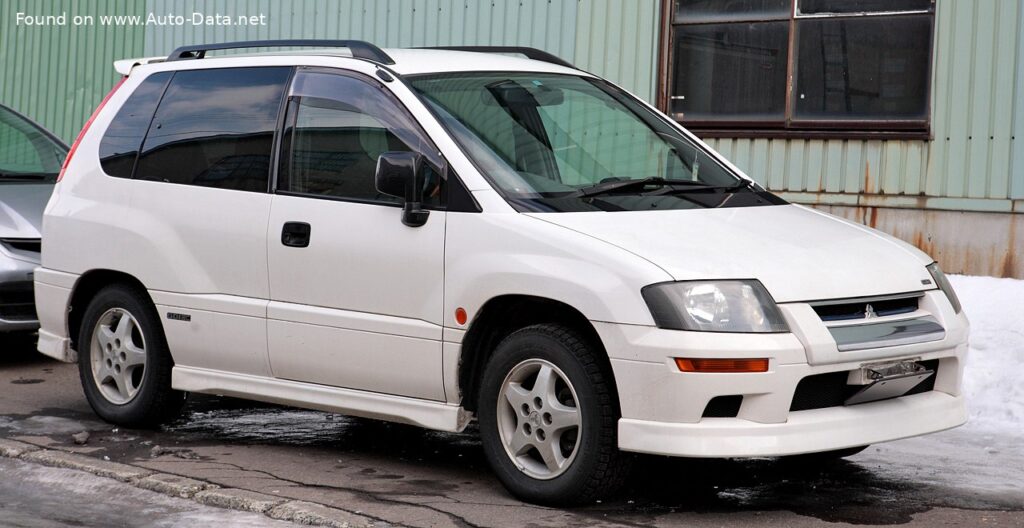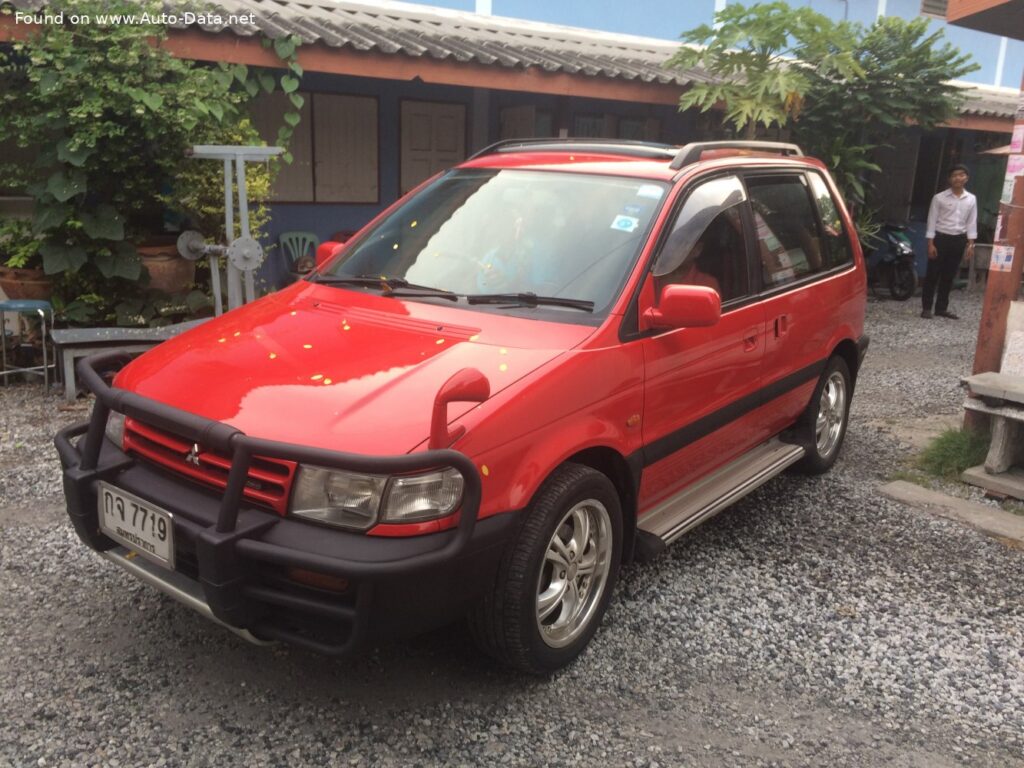
The Mitsubishi RVR (E-N23W) 2.0 i 16V 4WD R (160 Hp), produced from 1991 to 1997, represents a significant chapter in the evolution of compact multi-purpose vehicles (MPVs) and early crossovers. While not a mainstream offering in the United States, this generation of the RVR, known in some markets as the Mitsubishi Space Runner or Dodge/Plymouth Colt Vista, carved out a unique niche in its primary markets, particularly Japan and Europe. It was designed to blend the practicality of a minivan with the more engaging driving dynamics and all-weather capability of an all-wheel-drive system, a concept that was quite innovative for its time. The E-N23W chassis code specifically denotes this second generation, which brought with it a more refined design and enhanced mechanical prowess compared to its predecessors. This particular variant, the 2.0 i 16V 4WD R, stood out for its relatively powerful engine and advanced drivetrain, making it a versatile choice for families and adventure-seekers alike, long before the term “crossover SUV” became ubiquitous.
Engine and Performance of the Mitsubishi RVR (E-N23W) 2.0 i 16V 4WD R (160 Hp)
At the heart of the Mitsubishi RVR (E-N23W) 2.0 i 16V 4WD R was a robust and performance-oriented 2.0-liter (1997 cm3 or 121.86 cu. in.) naturally aspirated inline-four engine. This powertrain was a testament to Mitsubishi’s engineering capabilities in the early 1990s, featuring a Double Overhead Camshaft (DOHC) valvetrain with four valves per cylinder, totaling 16 valves. This advanced cylinder head design allowed for more efficient airflow into and out of the combustion chambers, contributing to higher power output and better throttle response. The engine delivered a respectable 160 horsepower at a relatively high 6500 rpm, indicating its sporting intent, especially for a vehicle in the MPV segment. Torque figures were equally impressive for a naturally aspirated unit of its size, producing 186 Nm (137.19 lb.-ft.) at 4750 rpm, ensuring ample pulling power across a broad rev range.
Power was delivered to all four wheels through a sophisticated all-wheel-drive system, paired with a precise 5-speed manual transmission. This combination provided excellent traction and stability, making the RVR a capable vehicle in various driving conditions, from slippery roads to light off-road excursions. The engine’s front, transverse layout was typical for compact vehicles, optimizing interior space. With a compression ratio of 10.4:1, the engine was designed for efficiency and responsiveness, utilizing a multi-port manifold injection system for precise fuel delivery. The power per liter stood at 80.1 HP/l, a strong indicator of its specific output. The vehicle’s curb weight of 2910.1 lbs (1320 kg) resulted in a favorable weight-to-power ratio of 8.3 kg/Hp (121.2 Hp/tonne) and a weight-to-torque ratio of 7.1 kg/Nm (140.9 Nm/tonne), suggesting a lively performance feel for its class. Fuel economy, while not the primary focus of this performance-oriented variant, was still commendable for an AWD vehicle of its era, with an extra-urban consumption rated at 38.1 US mpg (6.17 l/100 km), demonstrating a balance between power and efficiency.
Design and Features of the Mitsubishi RVR (E-N23W)
The Mitsubishi RVR (E-N23W) adopted a practical yet distinctive minivan body type, characterized by its compact dimensions and versatile interior. Measuring 171.65 inches (4360 mm) in length, 66.73 inches (1695 mm) in width, and 64.57 inches (1640 mm) in height, the RVR struck a balance between maneuverability in urban environments and sufficient interior volume. Its 99.21-inch (2520 mm) wheelbase contributed to a stable ride and maximized cabin space for its footprint. The vehicle featured four doors, with the rear passenger door often being a sliding type in many RVR variants, enhancing accessibility in tight parking spaces – a highly valued feature in its home market of Japan.
Despite its minivan classification, the RVR’s styling conveyed a more dynamic and less utilitarian image than traditional people carriers of the era, hinting at its recreational vehicle aspirations. The interior was configured for four occupants, offering comfortable seating and a highly adaptable cargo area. The minimum trunk space of 23.87 cu. ft. (676 liters) could be expanded significantly to a maximum of 57.56 cu. ft. (1630 liters) by folding the rear seats, providing ample room for luggage, sports equipment, or larger items. This flexibility underscored its appeal as a practical family vehicle capable of supporting active lifestyles.
Underneath, the RVR (E-N23W) was engineered for a compliant ride and confident handling. It utilized a spring strut front suspension and a coil spring rear suspension, a common and effective setup for balancing comfort and stability. Braking performance was handled by ventilated discs at the front and disc brakes at the rear, a modern configuration for the early 1990s, especially for a compact MPV. Furthermore, the inclusion of an Anti-lock Braking System (ABS) as an assisting system was a significant safety feature for its time, enhancing control during emergency braking maneuvers. Steering was managed by a responsive rack and pinion system, complemented by hydraulic power steering, ensuring ease of maneuverability at low speeds and good feedback at higher velocities. The vehicle rode on 185/70 R14 tires, a sensible choice that provided a good balance of grip, comfort, and durability for its intended use. Overall, the RVR (E-N23W) was a well-appointed and mechanically advanced vehicle that offered a compelling blend of utility, performance, and safety features for its era.
Technical Specifications
| Brand | Mitsubishi |
| Model | RVR |
| Generation | RVR (E-N23W) |
| Engine Type | 2.0 i 16V 4WD R (160 Hp) |
| Production Start | 1991 year |
| Production End | 1997 year |
| Powertrain Architecture | Internal Combustion engine |
| Body Type | Minivan |
| Seats | 4 |
| Doors | 4 |
| Fuel Consumption (Extra Urban) | 38.1 US mpg (6.17 l/100 km) |
| Fuel Type | Petrol (Gasoline) |
| Weight-to-Power Ratio | 8.3 kg/Hp (121.2 Hp/tonne) |
| Weight-to-Torque Ratio | 7.1 kg/Nm (140.9 Nm/tonne) |
| Power | 160 Hp @ 6500 rpm |
| Power per Liter | 80.1 Hp/l |
| Torque | 137.19 lb.-ft. @ 4750 rpm (186 Nm) |
| Engine Layout | Front, Transverse |
| Engine Displacement | 121.86 cu. in. (1997 cm3) |
| Number of Cylinders | 4 |
| Engine Configuration | Inline |
| Cylinder Bore | 3.35 in. (85 mm) |
| Piston Stroke | 3.46 in. (88 mm) |
| Compression Ratio | 10.4:1 |
| Valves per Cylinder | 4 |
| Fuel Injection System | Multi-port manifold injection |
| Engine Aspiration | Naturally aspirated engine |
| Valvetrain | DOHC |
| Kerb Weight | 2910.1 lbs (1320 kg) |
| Trunk Space (Minimum) | 23.87 cu. ft. (676 l) |
| Trunk Space (Maximum) | 57.56 cu. ft. (1630 l) |
| Fuel Tank Capacity | 14.53 US gal (55 l) |
| Length | 171.65 in. (4360 mm) |
| Width | 66.73 in. (1695 mm) |
| Height | 64.57 in. (1640 mm) |
| Wheelbase | 99.21 in. (2520 mm) |
| Front Track | 57.28 in. (1455 mm) |
| Rear Track | 57.48 in. (1460 mm) |
| Drive Wheel | All wheel drive (4×4) |
| Gearbox Type | 5 gears, manual transmission |
| Front Suspension | Spring Strut |
| Rear Suspension | Coil spring |
| Front Brakes | Ventilated discs |
| Rear Brakes | Disc |
| Assisting Systems | ABS (Anti-lock braking system) |
| Steering Type | Steering rack and pinion |
| Power Steering | Hydraulic Steering |
| Tires Size | 185/70 R14 |