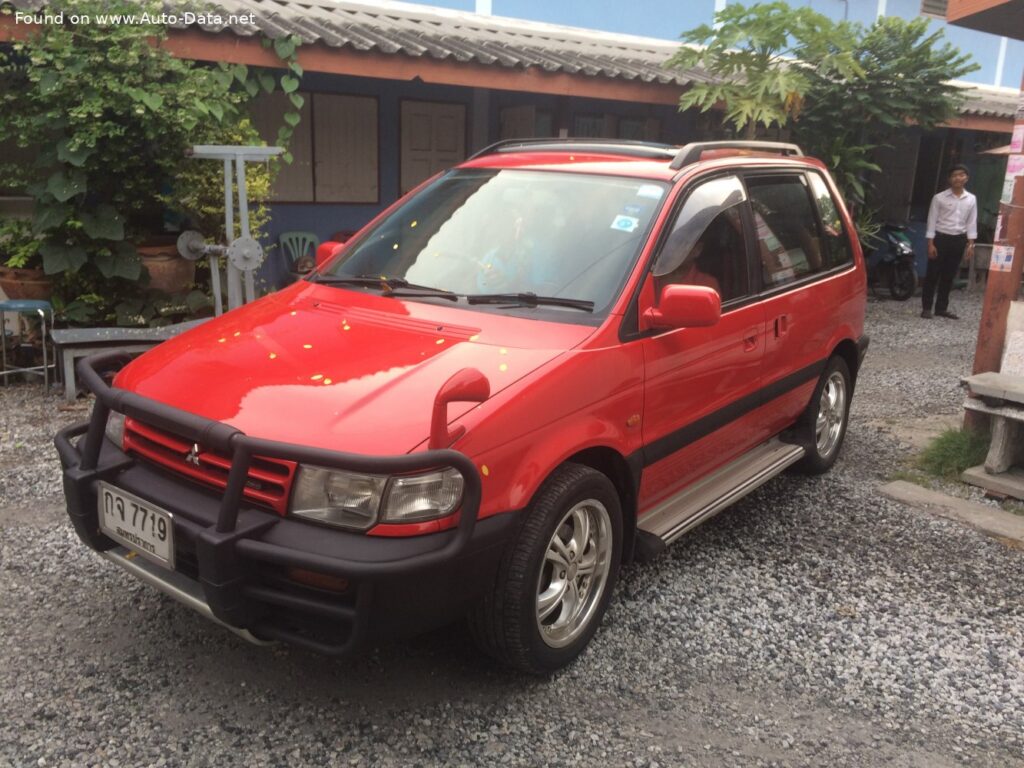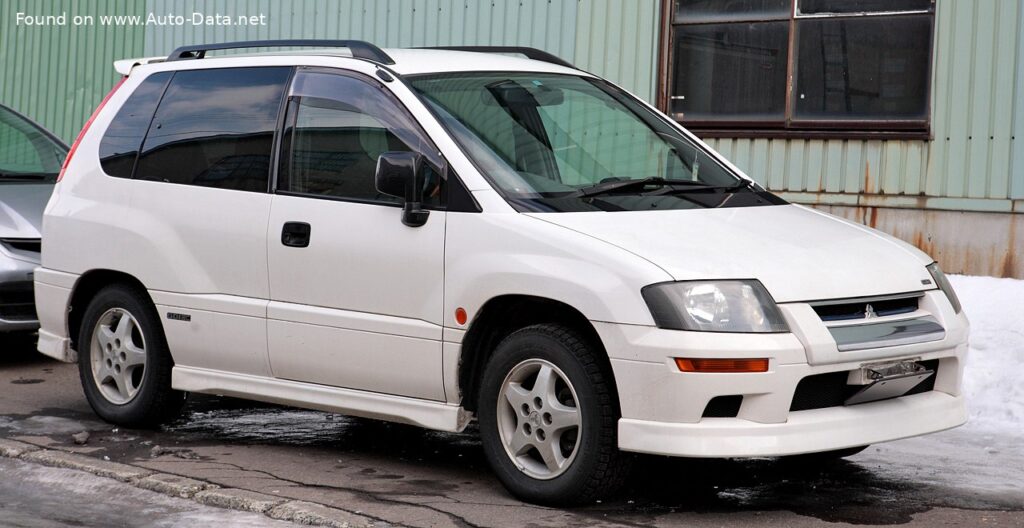
The Mitsubishi RVR (N61W), known as the Mitsubishi Space Runner in some markets, is a compact minivan produced by Mitsubishi Motors between 1997 and 2002. Positioned as a versatile and practical vehicle, the RVR aimed to bridge the gap between traditional hatchbacks and larger MPVs. While not officially sold in the United States, the RVR was a significant model for Mitsubishi in Europe, Australia, and Asia, offering a blend of affordability, space, and fuel efficiency. The N61W generation represented the second iteration of the RVR, building upon the success of the original model with refinements to its design, engine technology, and overall practicality.
Mitsubishi RVR (N61W): A Detailed Overview
The RVR’s appeal lay in its compact dimensions combined with a surprisingly spacious interior. It was designed to cater to families and individuals seeking a vehicle that could handle both daily commutes and weekend adventures. The N61W generation introduced the GDI (Gasoline Direct Injection) engine, a key technological advancement that improved fuel economy and performance. This model competed with vehicles like the Renault Scenic, Opel Zafira, and Toyota Yaris Verso in the European market, offering a compelling alternative with its unique styling and Mitsubishi’s reputation for reliability.
Engine & Performance
The heart of the Mitsubishi RVR (N61W) 1.8 i 16V GDI is an inline-four cylinder, 1.8-liter gasoline engine. This engine produces 150 horsepower at 5500 rpm and 179 Nm (132.02 lb.-ft.) of torque at 5000 rpm. The GDI technology, a significant feature for its time, directly injects fuel into the combustion chamber, resulting in more efficient combustion and improved power delivery. This translates to a power-to-weight ratio of 108.7 horsepower per tonne and a torque-to-weight ratio of 129.7 Nm per tonne. The engine is transversely mounted at the front of the vehicle, driving the front wheels through a four-speed automatic transmission. While not a performance-oriented vehicle, the RVR offered adequate acceleration and responsiveness for everyday driving. The engine’s 81.8 hp per liter output demonstrates the efficiency gains achieved through GDI technology.
Design & Features
The Mitsubishi RVR (N61W) boasts a distinctive minivan body style, characterized by its tall roofline and compact footprint. It features five doors and provides seating for five passengers. The interior is designed with practicality in mind, offering a flexible seating arrangement and ample cargo space. The rear seats can be folded down to create a larger cargo area, expanding from a minimum of 430 liters (15.19 cu. ft.) to a maximum of 1800 liters (63.57 cu. ft.). Safety features for the era included ABS (Anti-lock Braking System) as standard equipment, enhancing braking performance and stability. The RVR also incorporates hydraulic power steering for ease of maneuverability. The exterior design, while functional, was considered relatively modern for its time, with a rounded shape and large windows providing good visibility. The vehicle’s dimensions – 4280 mm (168.5 in) in length, 1695 mm (66.73 in) in width, and 1650 mm (64.96 in) in height – contribute to its maneuverability in urban environments.
Technical Specifications
| Brand | Mitsubishi |
| Model | RVR |
| Generation | RVR (N61W) |
| Type (Engine) | 1.8 i 16V GDI (150 Hp) |
| Start of production | 1997 |
| End of production | 2002 |
| Powertrain Architecture | Internal Combustion engine |
| Body type | Minivan |
| Seats | 5 |
| Doors | 5 |
| Fuel Type | Petrol (Gasoline) |
| Weight-to-power ratio | 9.2 kg/Hp |
| Weight-to-torque ratio | 7.7 kg/Nm |
| Power | 150 Hp @ 5500 rpm |
| Power per litre | 81.8 Hp/l |
| Torque | 179 Nm @ 5000 rpm / 132.02 lb.-ft. @ 5000 rpm |
| Engine layout | Front, Transverse |
| Engine displacement | 1834 cm3 / 111.92 cu. in. |
| Number of cylinders | 4 |
| Engine configuration | Inline |
| Cylinder Bore | 81 mm / 3.19 in. |
| Piston Stroke | 89 mm / 3.5 in. |
| Compression ratio | 12:1 |
| Number of valves per cylinder | 4 |
| Fuel injection system | Direct injection |
| Engine aspiration | Naturally aspirated engine |
| Kerb Weight | 1380 kg / 3042.38 lbs |
| Trunk (boot) space – minimum | 430 l / 15.19 cu. ft. |
| Trunk (boot) space – maximum | 1800 l / 63.57 cu. ft. |
| Fuel tank capacity | 63 l / 16.64 US gal | 13.86 UK gal |
| Length | 4280 mm / 168.5 in. |
| Width | 1695 mm / 66.73 in. |
| Height | 1650 mm / 64.96 in. |
| Wheelbase | 2550 mm / 100.39 in. |
| Front track | 1460 mm / 57.48 in. |
| Rear (Back) track | 1460 mm / 57.48 in. |
| Drivetrain Architecture | The Internal combustion engine (ICE) drives the front wheels of the vehicle. |
| Drive wheel | Front wheel drive |
| Number of gears and type of gearbox | 4 gears, automatic transmission |
| Front suspension | Coil spring |
| Rear suspension | Coil spring |
| Front brakes | Ventilated discs |
| Rear brakes | Disc |
| Assisting systems | ABS (Anti-lock braking system) |
| Steering type | Steering rack and pinion |
| Power steering | Hydraulic Steering |
| Tires size | 205/55 R15 |
The Mitsubishi RVR (N61W) represented a practical and versatile option in the compact minivan segment. Its combination of a fuel-efficient GDI engine, spacious interior, and reasonable price point made it a popular choice for families and individuals seeking a functional and reliable vehicle. While not a high-performance machine, the RVR offered a comfortable driving experience and a level of practicality that appealed to a wide range of buyers in its target markets.