
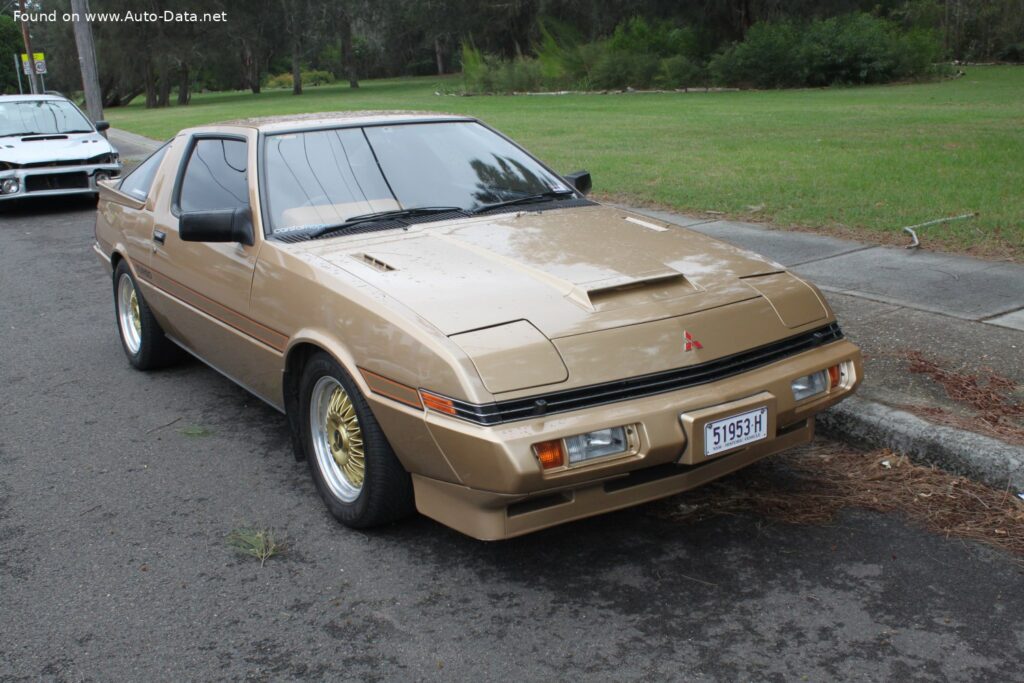
The Mitsubishi Starion, known internally as the A18_A, was a rear-wheel-drive sports coupe produced by Mitsubishi Motors between 1982 and 1989. While never a mainstream success in the United States, the Starion gained a dedicated following for its performance potential, distinctive styling, and relative affordability. The model presented here, the 2.0 Turbo ECi (A183A) producing 180 horsepower, represents a mid-cycle update to the original Starion, manufactured between 1985 and 1987. It aimed to compete with established sports coupes like the Toyota Supra, Nissan Z series, and Mazda RX-7, offering a turbocharged engine and a focus on driver engagement.
The Mitsubishi Starion: A Japanese Sports Coupe
The Starion was a significant vehicle for Mitsubishi, representing a deliberate attempt to enter the competitive sports car market. It was initially conceived as a replacement for the Mitsubishi Lancer EX 2000 Turbo, a limited-production model that had demonstrated the potential of turbocharged engines. The Starion was designed to be a more polished and globally marketable product. In Japan, it was sold under the name Mitsubishi Sirius, reflecting a different marketing strategy for the domestic market. The Starion’s design was heavily influenced by the Lamborghini Silhouette, a vehicle Mitsubishi had access to through its partnership with Chrysler. The styling, while not a direct copy, shared a similar wedge shape and overall aesthetic. The A183A variant, with its 180 horsepower output, was positioned as a performance-oriented version within the Starion lineup, offering a noticeable upgrade over the naturally aspirated models.
Engine & Performance
The heart of the 1985-1987 Mitsubishi Starion 2.0 Turbo ECi (A183A) is its 1997cc (2.0-liter) inline-four cylinder engine, designated the A183A. This engine utilizes a single overhead camshaft (SOHC) design and is equipped with a turbocharger and an electronic fuel injection (ECi) system. The turbocharger significantly boosts power output, delivering 180 horsepower. While torque figures were not always prominently advertised, the turbocharged engine provided a substantial increase in torque compared to naturally aspirated versions, enhancing acceleration and providing strong mid-range performance. The engine is mated to a five-speed manual transmission as standard, offering drivers full control over the vehicle’s power delivery. An optional four-speed automatic transmission was also available, though it was less favored by enthusiasts due to its impact on performance. The rear-wheel-drive configuration contributes to the Starion’s sporty handling characteristics, providing a balanced driving experience. The suspension system consists of independent front suspension with MacPherson struts and a live axle with trailing arms at the rear. This setup, while relatively conventional for the era, provided a good balance between ride comfort and handling precision.
Design & Features
The Mitsubishi Starion A18_A is a two-door coupe characterized by its angular, wedge-shaped design. The body features a long hood, a sloping roofline, and a short rear deck. Pop-up headlights were a defining styling element, contributing to the car’s futuristic appearance. The interior of the Starion was designed with a focus on functionality and driver comfort. The dashboard layout is relatively straightforward, with clearly marked gauges and controls. Seats were typically upholstered in cloth or vinyl, with optional leather available on higher trim levels. Features included power windows, power steering, and an AM/FM stereo. Air conditioning was also a common option. Safety features for the mid-1980s were relatively basic, consisting primarily of seatbelts and a collapsible steering column. Anti-lock brakes (ABS) were not widely available on the Starion, even as an option. The Starion’s design, while visually striking, also prioritized aerodynamics, contributing to its relatively good fuel efficiency for a turbocharged sports coupe. The car’s relatively lightweight construction further enhanced its performance and handling. The Starion’s appeal lay in its combination of sporty styling, turbocharged performance, and relative affordability, making it an attractive alternative to more expensive sports cars of the era.
Technical Specifications
| Brand | Mitsubishi |
| Model | Starion |
| Generation | Starion (A18_A) |
| Type (Engine) | 2.0 Turbo ECi (A183A) (180 Hp) |
| Start of production | 1985 |
| End of production | 1987 |
| Powertrain Architecture | Internal Combustion engine |
| Body type | Coupe |
| Fuel Type | Petrol (Gasoline) |
| Engine Power | 180 Hp |
| Engine Aspiration | Turbocharger |
The Starion’s production ended in 1989, with the introduction of the 3000GT/GTO as its successor. While the Starion never achieved the sales success of its Japanese rivals, it remains a fondly remembered sports coupe, particularly among enthusiasts who appreciate its turbocharged performance and distinctive styling. Its legacy lies in demonstrating Mitsubishi’s ability to produce a competitive sports car and paving the way for future performance models. Today, well-maintained examples of the Starion are becoming increasingly collectible, representing a unique and affordable entry point into the world of classic Japanese sports cars. The A183A variant, with its 180 horsepower engine, is particularly sought after by those looking for a balance of performance and reliability.
