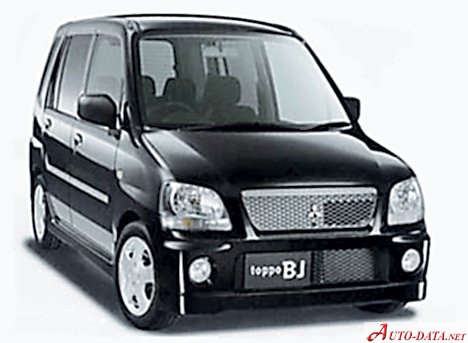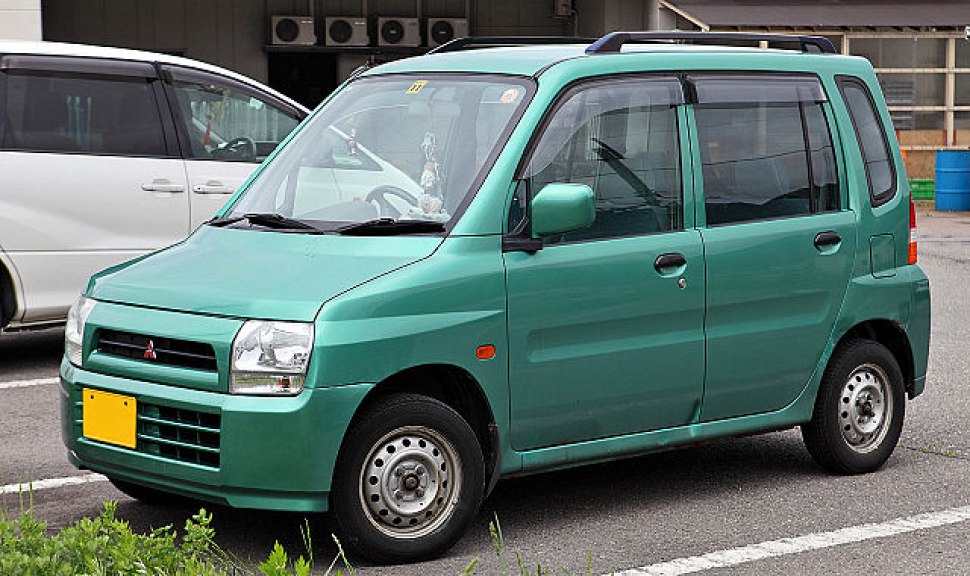
The Mitsubishi Toppo 657 U, produced between 1990 and 1999, represents a significant entry in the Japanese Kei car class, though it wasn’t directly marketed in the United States. This small, three-door hatchback was designed to navigate the congested urban environments of Japan, offering an affordable and practical transportation solution. The “657 U” designation refers to the engine displacement, a key characteristic defining vehicles within the Kei car regulations. While modest in power by American standards, the Toppo 657 U played a vital role in providing efficient personal mobility in its home market.
Mitsubishi Toppo 657 U: A Kei Car Overview
The Mitsubishi Toppo, in its various iterations, was a mainstay of Mitsubishi’s Kei car lineup for decades. The 1990-1999 generation, specifically the 657 U model, focused on maximizing interior space within the strict dimensional limits imposed by Kei car regulations. These regulations, designed to encourage the development of small, fuel-efficient vehicles, dictated maximum engine size, vehicle dimensions, and power output. The Toppo 657 U successfully balanced these constraints with a functional and relatively comfortable cabin for its size, accommodating up to five passengers. It was a popular choice for first-time car buyers, commuters, and families in Japan needing a compact and economical vehicle.
Engine & Performance
The heart of the Mitsubishi Toppo 657 U is a 657cc inline three-cylinder petrol engine. This engine, producing 40 horsepower at 6000 rpm and 51 Nm (37.62 lb-ft) of torque at 4000 rpm, was designed for efficiency rather than outright performance. The power-to-weight ratio of 16.8 kg/Hp (59.7 Hp/tonne) and torque-to-weight ratio of 13.1 kg/Nm (76.1 Nm/tonne) reflect this focus. The engine utilizes a carburetor fuel injection system and an overhead camshaft (OHC) valvetrain with two valves per cylinder. The naturally aspirated configuration contributes to its simplicity and reliability. Power is delivered to the front wheels via a four-speed manual transmission. While acceleration is not a strong point, the Toppo 657 U provides adequate power for navigating city streets and achieving reasonable highway speeds. The engine’s small displacement and carburetor setup are indicative of the technology prevalent in Kei cars of this era, prioritizing affordability and ease of maintenance.
Design & Features
The Mitsubishi Toppo 657 U is a three-door hatchback, a body style chosen to minimize length and maximize interior space within the Kei car constraints. Its compact dimensions – 3295 mm (129.72 in) in length, 1395 mm (54.92 in) in width, and 1765 mm (69.49 in) in height – make it exceptionally maneuverable in tight urban environments. The vehicle’s design is functional and utilitarian, prioritizing practicality over stylistic flourishes. The interior is designed to accommodate five passengers, although rear seat space is limited. Features were relatively basic, reflecting the vehicle’s affordable price point. The inclusion of an Anti-lock Braking System (ABS) was a notable safety feature for its time, enhancing braking performance and stability. The steering system utilizes a rack and pinion setup, providing responsive and precise handling. The Toppo 657 U rides on 135/80 R12 S tires, chosen for their balance of grip and fuel efficiency. The kerb weight of 670 kg (1477.1 lbs) contributes to its relatively nimble handling characteristics.
Technical Specifications
| Brand | Mitsubishi |
| Model | Toppo |
| Generation | Toppo |
| Type (Engine) | 657 U (40 Hp) |
| Start of production | 1990 year |
| End of production | 1999 year |
| Powertrain Architecture | Internal Combustion engine |
| Body type | Hatchback |
| Seats | 5 |
| Doors | 3 |
| Fuel Type | Petrol (Gasoline) |
| Weight-to-power ratio | 16.8 kg/Hp, 59.7 Hp/tonne |
| Weight-to-torque ratio | 13.1 kg/Nm, 76.1 Nm/tonne |
| Power | 40 Hp @ 6000 rpm |
| Power per litre | 60.9 Hp/l |
| Torque | 51 Nm @ 4000 rpm |
| Torque (lb-ft) | 37.62 lb.-ft. @ 4000 rpm |
| Engine layout | Front, Transverse |
| Engine displacement | 657 cm3 |
| Engine displacement (cu. in.) | 40.09 cu. in. |
| Number of cylinders | 3 |
| Engine configuration | Inline |
| Cylinder Bore | 65 mm |
| Cylinder Bore (in.) | 2.56 in. |
| Piston Stroke | 66 mm |
| Piston Stroke (in.) | 2.6 in. |
| Compression ratio | 9.8:1 |
| Number of valves per cylinder | 2 |
| Fuel injection system | Carburettor |
| Engine aspiration | Naturally aspirated engine |
| Valvetrain | OHC |
| Kerb Weight | 670 kg |
| Kerb Weight (lbs.) | 1477.1 lbs. |
| Fuel tank capacity | 32 l |
| Fuel tank capacity (US gal) | 8.45 US gal |
| Fuel tank capacity (UK gal) | 7.04 UK gal |
| Length | 3295 mm |
| Length (in.) | 129.72 in. |
| Width | 1395 mm |
| Width (in.) | 54.92 in. |
| Height | 1765 mm |
| Height (in.) | 69.49 in. |
| Wheelbase | 2260 mm |
| Wheelbase (in.) | 88.98 in. |
| Front track | 1215 mm |
| Front track (in.) | 47.83 in. |
| Rear track | 1215 mm |
| Rear track (in.) | 47.83 in. |
| Drivetrain Architecture | The Internal combustion engine (ICE) drives the front wheels of the vehicle. |
| Drive wheel | Front wheel drive |
| Number of gears | 4 gears |
| Type of gearbox | manual transmission |
| Front suspension | Spring Strut |
| Rear suspension | Coil spring |
| Front brakes | Disc |
| Rear brakes | Drum |
| Assisting systems | ABS (Anti-lock braking system) |
| Steering type | Steering rack and pinion |
| Tires size | 135/80 R12 S |
The Mitsubishi Toppo 657 U, while not a vehicle commonly found outside of Japan, represents a significant example of Kei car engineering. Its compact size, fuel efficiency, and affordability made it a popular choice for Japanese commuters and urban dwellers. It exemplifies the innovative solutions developed to meet the unique demands of the Japanese automotive market and the regulatory environment surrounding Kei cars.