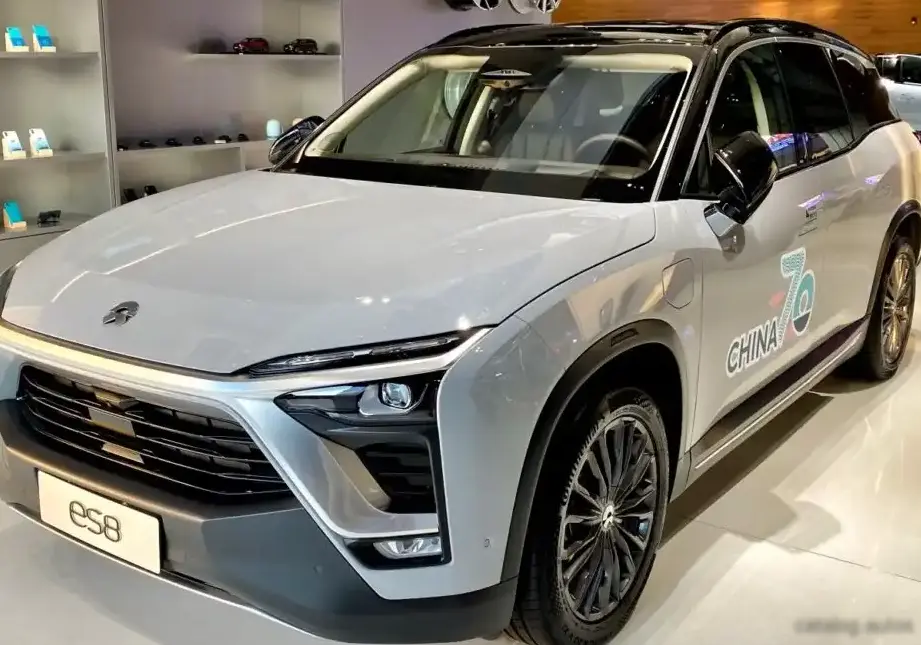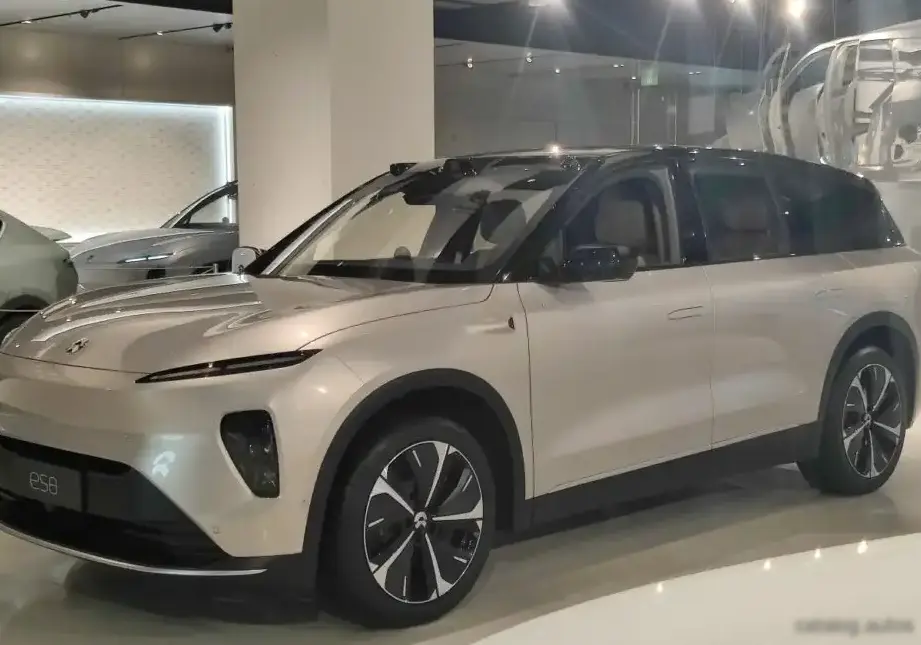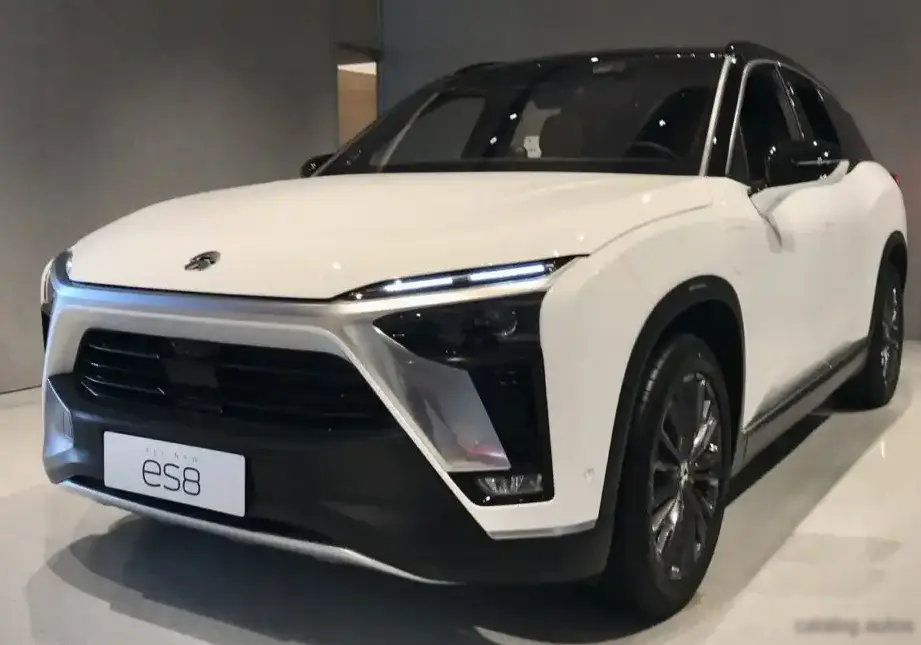
The NIO ES8 I (facelift, introduced in 2020) represents a significant step in the development of NIO’s all-electric SUV lineup. Positioned as a premium, technologically advanced vehicle, the ES8 aimed to compete with established luxury SUV brands, particularly within the burgeoning Chinese electric vehicle market. This specific variant, equipped with a 70 kWh battery pack and dual electric motors producing a combined 544 horsepower, was in production from 2020 to 2023. It offered a blend of performance, range, and spaciousness, catering to families and those seeking a high-end electric driving experience. The ES8 I facelift brought notable improvements in design, technology, and battery efficiency compared to the original ES8.
Technical Specifications
| Brand | NIO |
| Model | ES8 |
| Generation | ES8 I (facelift 2020) |
| Type (Engine) | 70 kWh (544 Hp) 4WD Electric |
| Start of production | 2020 |
| End of production | 2023 |
| Powertrain Architecture | BEV (Electric Vehicle) |
| Body type | SUV |
| Seats | 6-7 |
| Doors | 5 |
| Fuel Type | Electricity |
| Acceleration 0 – 100 km/h | 4.9 sec |
| Acceleration 0 – 62 mph | 4.9 sec |
| Acceleration 0 – 60 mph | 4.7 sec |
| Maximum speed | 200 km/h (124.27 mph) |
| Weight-to-power ratio | 4.5 kg/Hp, 224.3 Hp/tonne |
| Weight-to-torque ratio | 3.3 kg/Nm, 299 Nm/tonne |
| Gross battery capacity | 70 kWh |
| All-electric range | 415 km (257.87 mi) |
| Electric motor 1 power | 218 Hp |
| Electric motor 1 location | Front axle, Transverse |
| Electric motor 2 power | 326 Hp |
| Electric motor 2 location | Rear axle, Transverse |
| System power | 544 Hp |
| System torque | 725 Nm (534.73 lb.-ft.) |
| Kerb Weight | 2425 kg (5346.21 lbs.) |
| Trunk (boot) space – minimum | 310 l (10.95 cu. ft.) |
| Trunk (boot) space – maximum | 1861-1901 l (65.72 – 67.13 cu. ft.) |
| Length | 5022 mm (197.72 in.) |
| Width | 1962 mm (77.24 in.) |
| Height | 1756 mm (69.13 in.) |
| Wheelbase | 3010 mm (118.5 in.) |
| Front track | 1668 mm (65.67 in.) |
| Rear (Back) track | 1672 mm (65.83 in.) |
| Drag coefficient (Cd) | 0.29 |
| Drivetrain Architecture | One electric motor drives the front wheels, one electric motor drives the rear wheels. |
| Drive wheel | All wheel drive (4×4) |
| Number of gears and type of gearbox | 1 gears, automatic transmission |
| Front suspension | Double wishbone |
| Rear suspension | Independent multi-link suspension |
| Front brakes | Ventilated discs |
| Rear brakes | Ventilated discs |
| Assisting systems | ABS (Anti-lock braking system) |
| Power steering | Electric Steering |
| Tires size | 255/55 R19 |
| Wheel rims size | 19 |
Powertrain & Engine Architecture
The ES8 I 70 kWh variant utilizes a dual-motor, all-wheel-drive (AWD) powertrain. Unlike traditional internal combustion engine vehicles, it doesn’t have an “engine” in the conventional sense. Instead, it employs two independent electric motors – one powering the front axle and the other powering the rear. The front motor produces 218 horsepower, while the rear motor generates 326 horsepower, resulting in a combined system output of 544 horsepower and 725 Nm (534.73 lb.-ft.) of torque. Both motors are permanent magnet synchronous motors, known for their high efficiency and power density. The 70 kWh battery pack, composed of lithium-ion cells, is mounted in the floor of the vehicle, contributing to a low center of gravity and improved handling. The vehicle features a single-speed automatic transmission for each axle, simplifying the drivetrain and maximizing efficiency. The battery management system (BMS) is a crucial component, responsible for monitoring and controlling the battery’s temperature, voltage, and state of charge, ensuring optimal performance and longevity.
Driving Characteristics
The ES8 I 70 kWh delivers brisk acceleration, achieving 0-60 mph in approximately 4.7 seconds. The instant torque characteristic of electric motors provides a responsive and engaging driving experience. The AWD system ensures excellent traction in various weather conditions. While not as overtly sporty as some performance-focused EVs, the ES8 I offers a comfortable and refined ride quality. The single-speed transmission provides seamless acceleration, eliminating the need for gear changes. Compared to potential higher-range variants (with larger battery packs), the 70 kWh version offers a slightly reduced range of approximately 415 km (257.87 miles) on a full charge. This trade-off was aimed at offering a more accessible price point. The weight of the vehicle, at 2425 kg (5346.21 lbs), is noticeable, but the low center of gravity helps mitigate body roll during cornering.
Equipment & Trim Levels
The ES8 I 70 kWh typically came standard with a high level of equipment, reflecting its premium positioning. Standard features included a large touchscreen infotainment system, a digital instrument cluster, leather upholstery, heated and ventilated front seats, a panoramic sunroof, and a comprehensive suite of advanced driver-assistance systems (ADAS), including adaptive cruise control, lane keeping assist, and automatic emergency braking. Higher trim levels offered additional features such as premium audio systems, upgraded interior materials, and more sophisticated ADAS functionalities. Optional extras included a self-driving package (NIO Pilot), a rear-seat entertainment system, and various customization options for the interior and exterior.
Chassis & Braking
The ES8 I features a double wishbone suspension setup at the front and an independent multi-link suspension at the rear, providing a comfortable and controlled ride. Ventilated disc brakes are used on all four wheels, offering ample stopping power. The electronic stability control (ESC) system and anti-lock braking system (ABS) work in conjunction to enhance safety and stability. Electric power steering provides precise and responsive steering feel. The vehicle’s relatively long wheelbase (3010 mm / 118.5 in.) contributes to ride comfort and stability. The suspension tuning is geared towards providing a balance between comfort and handling, rather than outright sportiness.
Market Reception & Comparison
The NIO ES8 I was generally well-received by critics and consumers in the Chinese market. It was praised for its spacious interior, advanced technology, and comfortable ride. The 70 kWh variant offered a compelling value proposition for buyers seeking a premium electric SUV without the higher cost of the long-range models. Compared to other electric SUVs in its class, such as the Tesla Model X and the BYD Tang, the ES8 I offered a unique blend of luxury, technology, and practicality. Fuel economy, being an electric vehicle, is measured in energy consumption rather than miles per gallon. The ES8 I’s energy consumption was competitive with other EVs in its segment. Reliability reports have been generally positive, although long-term data is still emerging given the relatively recent introduction of the model.
Legacy
The NIO ES8 I played a crucial role in establishing NIO as a major player in the Chinese electric vehicle market. It demonstrated the company’s ability to design, engineer, and manufacture a high-quality, technologically advanced electric SUV. While the 70 kWh variant was eventually superseded by models with larger battery packs and improved performance, it remains a popular choice in the used car market. The ES8 I’s innovative features, such as its battery swapping technology and advanced ADAS systems, helped pave the way for future developments in the EV industry. The powertrain, while not the most powerful in the ES8 lineup, has proven to be relatively reliable, and parts availability is generally good within the NIO service network.