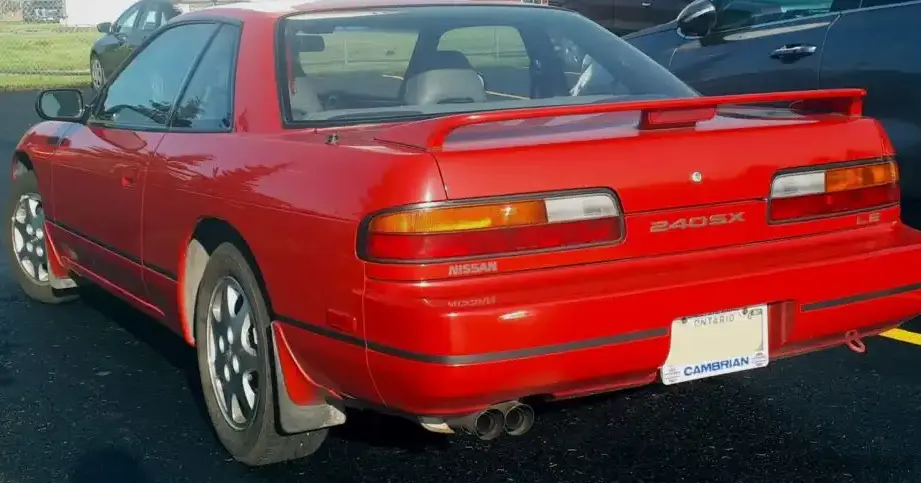
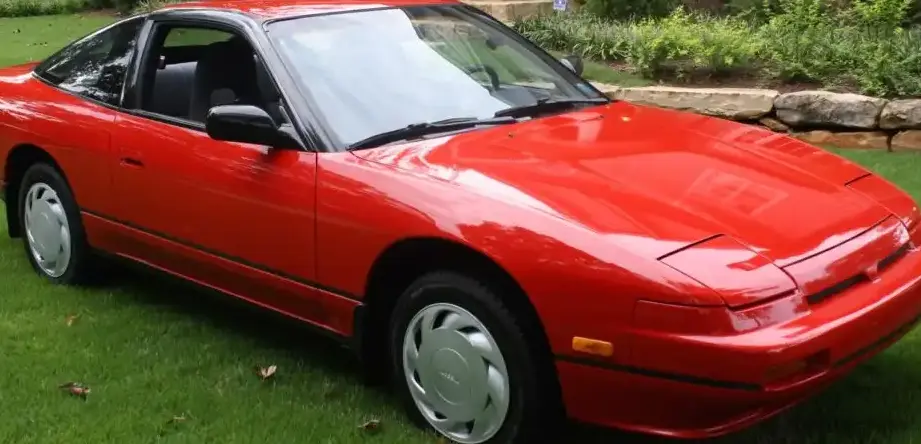
The Nissan 240SX Coupe (S13) with the 2.4-liter engine producing 134 horsepower was a short-lived but significant variant of the popular S13 chassis, produced primarily for the 1989 and 1990 model years. Positioned as a step up from the base 1.8-liter models, it offered a balance of affordability and performance, appealing to buyers seeking a more engaging driving experience without the higher price tag of the turbocharged SR20DET models available in Japan and later grey-market imports. This version was primarily sold in the North American market, where it quickly gained a reputation as a capable and customizable platform for enthusiasts.
Technical Specifications
| Brand | Nissan |
| Model | 240SX |
| Generation | 240SX Coupe (S13) |
| Type (Engine) | 2.4 (134 Hp) |
| Start of production | 1989 |
| End of production | 1990 |
| Powertrain Architecture | Internal Combustion engine |
| Body type | Coupe |
| Seats | 4 |
| Doors | 2 |
| Fuel Type | Petrol (Gasoline) |
| Weight-to-power ratio | 9 kg/Hp, 111.2 Hp/tonne |
| Weight-to-torque ratio | 5.8 kg/Nm, 171 Nm/tonne |
| Power | 134 Hp @ 5600 rpm |
| Power per litre | 56.1 Hp/l |
| Torque | 206 Nm @ 4400 rpm (151.94 lb.-ft. @ 4400 rpm) |
| Engine layout | Front, Longitudinal |
| Engine Model/Code | KA24E |
| Engine displacement | 2389 cm3 (145.79 cu. in.) |
| Number of cylinders | 4 |
| Engine configuration | Inline |
| Cylinder Bore | 89 mm (3.5 in.) |
| Piston Stroke | 96 mm (3.78 in.) |
| Compression ratio | 9.1:1 |
| Number of valves per cylinder | 4 |
| Fuel injection system | Multi-port manifold injection |
| Engine aspiration | Naturally aspirated engine |
| Valvetrain | SOHC |
| Engine oil capacity | 3.5 l (3.7 US qt | 3.08 UK qt) |
| Coolant | 6.7 l (7.08 US qt | 5.9 UK qt) |
| Kerb Weight | 1205 kg (2656.57 lbs.) |
| Trunk (boot) space – maximum | 402 l (14.2 cu. ft.) |
| Fuel tank capacity | 60 l (15.85 US gal | 13.2 UK gal) |
| Permitted trailer load without brakes | 206 kg (454.15 lbs.) |
| Permitted towbar download | 110 kg (242.51 lbs.) |
| Length | 4520 mm (177.95 in.) |
| Width | 1690 mm (66.54 in.) |
| Height | 1290 mm (50.79 in.) |
| Wheelbase | 2475 mm (97.44 in.) |
| Front track | 1465 mm (57.68 in.) |
| Rear (Back) track | 1460 mm (57.48 in.) |
| Minimum turning circle (turning diameter) | 9.4 m (30.84 ft.) |
| Drivetrain Architecture | The Internal combustion engine (ICE) drives the rear wheels of the vehicle. |
| Drive wheel | Rear wheel drive |
| Number of gears and type of gearbox | 5 gears, manual transmission |
| Front suspension | Independent, type McPherson with coil spring and anti-roll bar |
| Rear suspension | Dependent, multi-link spring with telescopic shock absorbers, Transverse stabilizer, Trailing arm |
| Front brakes | Ventilated discs, 252 mm |
| Rear brakes | Disc, 258 mm |
| Steering type | Steering rack and pinion |
| Power steering | Hydraulic Steering |
| Tires size | Front wheel tires: 195/60 R15; 205/60 R15 Rear wheel tires: 195/60 R15; 205/60 R15 |
| Wheel rims size | Front wheel rims: 6J x 15 Rear wheel rims: 6J x 15 |
INTRODUCTION
The Nissan 240SX Coupe (S13) 2.4, introduced for the 1989 and 1990 model years, represented a middle-ground offering within the S13 lineup. The S13 generation 240SX, launched in 1989, was Nissan’s replacement for the popular 240Z and 280ZX. It was built on Nissan’s ‘H’ platform, also known as the 1HX0/A3 platform, which it shared with other Nissan models like the Altima and Primera. The 2.4-liter variant aimed to provide a more spirited driving experience than the base 1.8-liter models, while remaining more accessible than the higher-performance turbocharged options that would become highly sought after in the import scene.
Powertrain & Engine Architecture
The heart of this 240SX variant is the KA24E engine, a 2.4-liter inline-four cylinder powerplant. Unlike the KA24DE found in later 240SX models, the KA24E featured a single overhead camshaft (SOHC) valvetrain, operating four valves per cylinder. This configuration, while simpler than a dual overhead cam setup, provided a good balance of reliability and adequate power for the intended market. The engine utilized multi-port fuel injection, contributing to improved fuel efficiency and smoother operation. The KA24E produced 134 horsepower at 5600 rpm and 151.94 lb-ft of torque at 4400 rpm. The engine was mounted longitudinally in the front of the vehicle, driving the rear wheels. The standard transmission for this model was a 5-speed manual, although an automatic transmission was also available, albeit less common and generally considered to diminish the driving experience.
Driving Characteristics
The 2.4-liter 240SX offered a noticeable improvement in acceleration and overall responsiveness compared to the 1.8-liter models. While not a sports car in the purest sense, the KA24E provided sufficient power for enjoyable everyday driving and even some spirited back-road excursions. The 5-speed manual transmission allowed drivers to fully utilize the engine’s powerband, while the automatic, though convenient, resulted in some power loss and a less engaging feel. The rear-wheel-drive layout contributed to a balanced chassis and predictable handling, making it a popular choice for those interested in learning car control. The gear ratios in the 5-speed manual were well-suited for both city and highway driving, providing adequate acceleration in each scenario.
Equipment & Trim Levels
The 2.4-liter 240SX typically came with a fairly basic level of equipment, reflecting its position as a relatively affordable sports coupe. Standard features generally included cloth upholstery, manual windows and locks, and a basic AM/FM stereo. Air conditioning was a common option. Higher trim levels, though not specifically designated with unique names, could be equipped with features like power windows and locks, upgraded sound systems, and a sunroof. The interior design was functional and straightforward, prioritizing usability over luxury.
Chassis & Braking
The S13 240SX featured an independent McPherson strut suspension in the front, providing responsive steering and good handling characteristics. The rear suspension utilized a multi-link setup with coil springs and telescopic shock absorbers, along with a transverse stabilizer bar, contributing to a comfortable ride and stable handling. Braking duties were handled by ventilated discs in the front and solid discs in the rear. The braking system was adequate for the vehicle’s weight and performance, but lacked the stopping power of more modern sports cars. The standard tire size was 195/60R15 or 205/60R15, providing a good balance of grip and ride comfort.
Market Reception & Comparison
The 2.4-liter 240SX was generally well-received by automotive critics as a capable and affordable sports coupe. It was praised for its balanced handling, responsive engine, and overall value. Compared to the base 1.8-liter models, the 2.4 offered a significant performance upgrade. However, it couldn’t match the outright speed and performance of the turbocharged SR20DET models, which were primarily available in Japan and later imported into the US. Fuel economy was reasonable for the time, averaging around 22-26 mpg in combined driving. Reliability was generally good, although the KA24E engine was known to be susceptible to timing chain wear if maintenance was neglected.
Legacy
The Nissan 240SX (S13) 2.4 has become a highly sought-after platform among car enthusiasts, particularly those interested in drifting and motorsports. The KA24E engine, while not as powerful as the SR20DET, is known for its durability and relative simplicity, making it a popular choice for engine swaps and modifications. Well-maintained examples of the 2.4-liter 240SX are becoming increasingly rare and valuable in the used car market, as enthusiasts recognize their potential and historical significance. The S13 chassis, in general, remains a cornerstone of the import car scene, celebrated for its customizable nature and engaging driving dynamics.