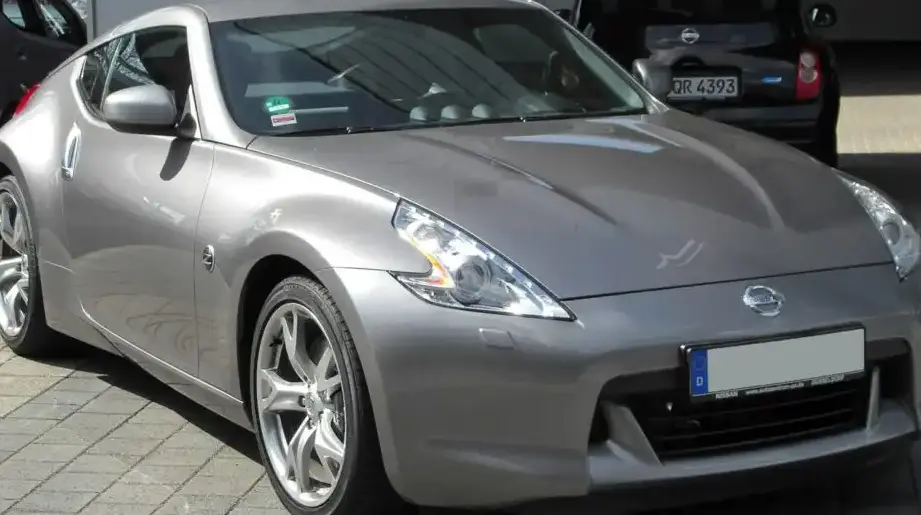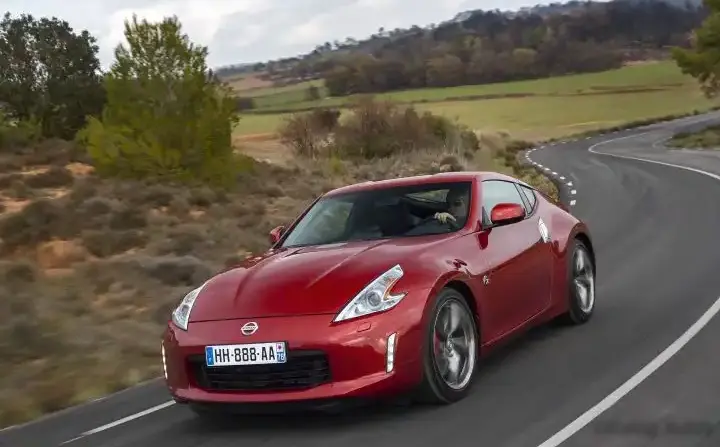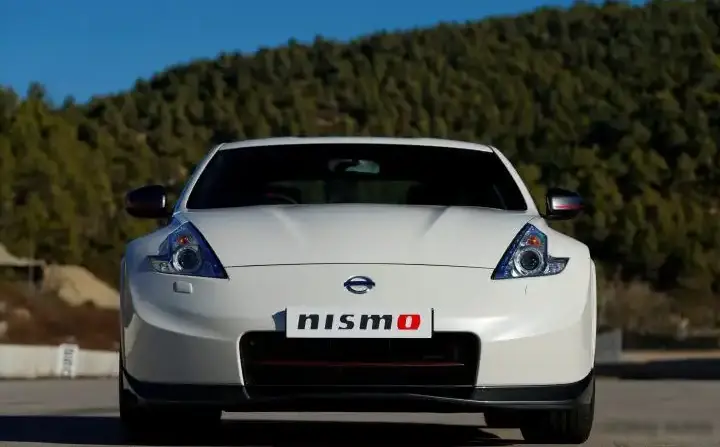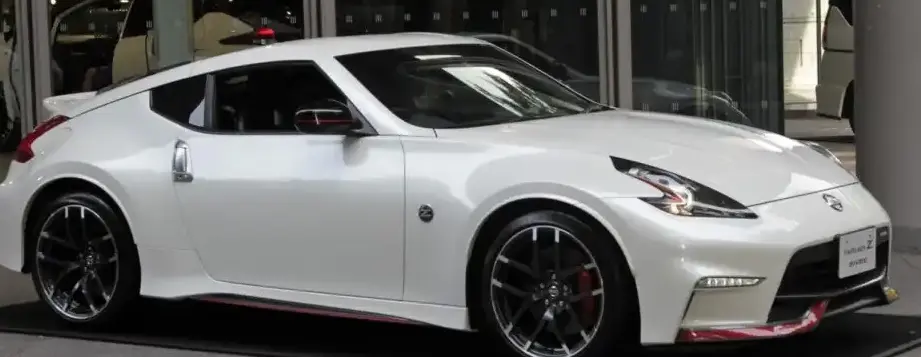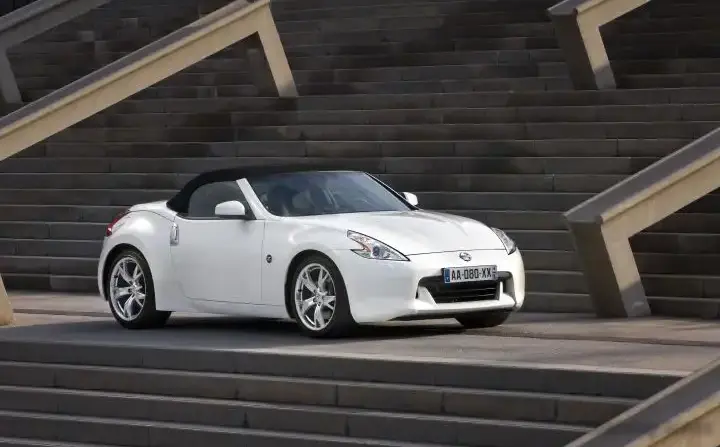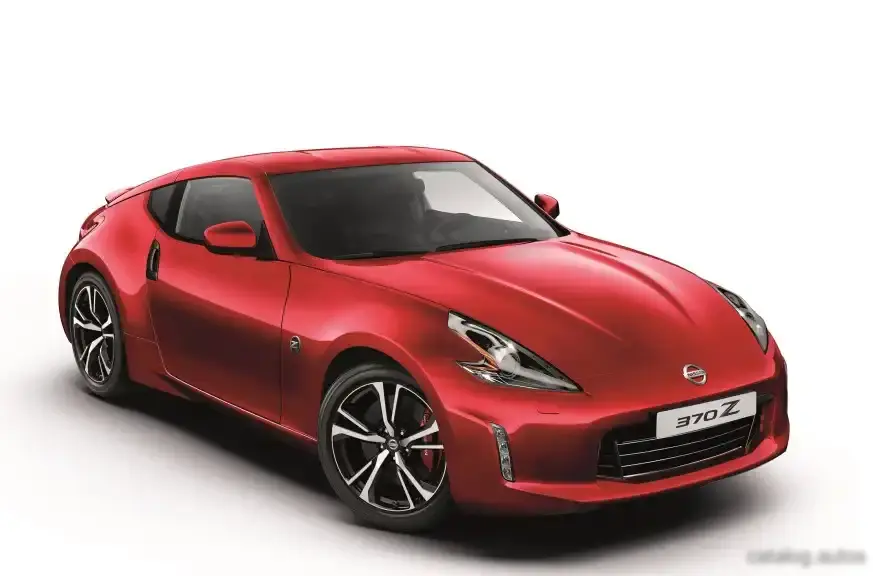
The Nissan 370Z Coupe, specifically the facelifted version produced from 2017 to 2020, represented the final iteration of the Z33 generation. Positioned as a driver-focused sports car, the 370Z aimed to deliver a blend of performance, style, and relative affordability within the American sports car market. The 3.7-liter V6 engine paired with a seven-speed automatic transmission was a popular configuration, offering a balance between spirited driving and everyday usability. This variant served as a step up from the base manual transmission models, appealing to buyers who prioritized convenience and ease of driving without sacrificing significant performance.
Technical Specifications
| Brand | Nissan |
| Model | 370Z |
| Generation | 370Z Coupe (facelift 2017) |
| Type (Engine) | 3.7 V6 (332 Hp) Automatic (USA) |
| Start of production | 2017 |
| End of production | 2020 |
| Powertrain Architecture | Internal Combustion engine |
| Body type | Coupe |
| Seats | 2 |
| Doors | 3 |
| Fuel consumption (economy) – urban (EPA) | 12.4 l/100 km (19 US mpg, 22.8 UK mpg, 8.1 km/l) |
| Fuel consumption (economy) – extra urban (EPA) | 9 l/100 km (26.1 US mpg, 31.4 UK mpg, 11.1 km/l) |
| Fuel consumption (economy) – combined (EPA) | 10.7 l/100 km (22 US mpg, 26.4 UK mpg, 9.3 km/l) |
| Fuel Type | Petrol (Gasoline) |
| Emission standard | LEV2 ULEV |
| Weight-to-power ratio | 4.6 kg/Hp, 217.6 Hp/tonne |
| Weight-to-torque ratio | 4.2 kg/Nm, 239.8 Nm/tonne |
| Power | 332 Hp @ 7000 rpm |
| Power per litre | 89.8 Hp/l |
| Torque | 366 Nm @ 5200 rpm (269.95 lb.-ft. @ 5200 rpm) |
| Maximum engine speed | 7500 rpm |
| Engine layout | Front, Longitudinal |
| Engine Model/Code | VQ37VHR |
| Engine displacement | 3696 cm3 (225.54 cu. in.) |
| Number of cylinders | 6 |
| Engine configuration | V-engine |
| Cylinder Bore | 95.5 mm (3.76 in.) |
| Piston Stroke | 86 mm (3.39 in.) |
| Compression ratio | 11.1:1 |
| Number of valves per cylinder | 4 |
| Fuel injection system | Multi-port manifold injection |
| Engine aspiration | Naturally aspirated engine |
| Valvetrain | DOHC, VVEL |
| Engine oil capacity | 4.9 l (5.18 US qt | 4.31 UK qt) |
| Coolant | 9.1 l (9.62 US qt | 8.01 UK qt) |
| Kerb Weight | 1526 kg (3364.25 lbs.) |
| Max. weight | 1800 kg (3968.32 lbs.) |
| Max load | 274 kg (604.07 lbs.) |
| Trunk (boot) space – minimum | 195 l (6.89 cu. ft.) |
| Fuel tank capacity | 72 l (19.02 US gal | 15.84 UK gal) |
| Length | 4255 mm (167.52 in.) |
| Width | 1845 mm (72.64 in.) |
| Height | 1316 mm (51.81 in.) |
| Wheelbase | 2550 mm (100.39 in.) |
| Front track | 1550 mm (61.02 in.) |
| Rear (Back) track | 1565 mm (61.61 in.) |
| Drag coefficient (Cd) | 0.30 |
| Minimum turning circle (turning diameter) | 10 m (32.81 ft.) |
| Drivetrain Architecture | The Internal combustion engine (ICE) drives the rear wheels of the vehicle. |
| Drive wheel | Rear wheel drive |
| Number of gears and type of gearbox | 7 gears, automatic transmission |
| Front suspension | Double wishbone, Transverse stabilizer |
| Rear suspension | Independent multi-link suspension, Transverse stabilizer |
| Front brakes | Ventilated discs, 320×28 mm |
| Rear brakes | Ventilated discs, 320×16 mm |
| Assisting systems | ABS (Anti-lock braking system) |
| Steering type | Steering rack and pinion |
| Power steering | Hydraulic Steering |
| Tires size | Front wheel tires: 225/50 R18; 245/40 R19 Rear wheel tires: 245/45 R18; 275/35 R19 |
| Wheel rims size | Front wheel rims: 8J x 18; 9J x 19 Rear wheel rims: 9J x 18; 10J x 19 |
Powertrain & Engine Architecture
The heart of the 2017-2020 Nissan 370Z Automatic is the VQ37VHR 3.7-liter V6 engine. This engine, a member of Nissan’s highly regarded VQ family, is a naturally aspirated powerplant known for its smooth power delivery and robust construction. The “VHR” designation stands for “High Revolution,” indicating the engine’s capability to rev freely. It features a 60-degree V-angle, four valves per cylinder, and Nissan’s Variable Valve Event and Lift (VVEL) technology. VVEL continuously adjusts valve timing and lift based on driving conditions, optimizing both performance and fuel efficiency. Fuel delivery is handled by a multi-port fuel injection system. The engine produces 332 horsepower at 7,000 rpm and 270 lb-ft of torque at 5,200 rpm.
Paired with the VQ37VHR is a seven-speed automatic transmission. This transmission, sourced from Jatco, features adaptive shift control, allowing it to learn the driver’s habits and adjust shift points accordingly. It also includes manual shift mode with paddle shifters, providing a degree of driver control. The transmission is designed to handle the engine’s power output and deliver smooth, responsive shifts.
Driving Characteristics
The 370Z Automatic offers a distinct driving experience. While not as raw or engaging as the six-speed manual version, the automatic provides a more relaxed and accessible driving experience, particularly in urban environments. The seven-speed transmission offers relatively quick shifts, but it doesn’t quite match the immediacy of a dual-clutch transmission. The gear ratios are tuned for a balance of acceleration and fuel economy. The car feels responsive and capable, with ample power for highway passing and spirited driving on winding roads. However, the automatic transmission can sometimes hunt for the right gear, especially during aggressive driving. Compared to the manual, the automatic sacrifices some driver involvement but gains in convenience.
Equipment & Trim Levels
The 2017-2020 Nissan 370Z Automatic was typically offered in a single, well-equipped trim level. Standard features included automatic climate control, power windows and locks, a Bose premium audio system, Bluetooth connectivity, and a rearview camera. Leather upholstery, heated seats, and a navigation system were often available as optional extras. The interior design was driver-focused, with a simple and functional layout. The dashboard featured analog gauges, providing clear and concise information. The overall interior quality was good, but it didn’t quite match the refinement of some European sports cars.
Chassis & Braking
The 370Z utilizes a front-engine, rear-wheel-drive layout. The chassis features a double wishbone suspension in the front and an independent multi-link suspension in the rear, both with transverse stabilizers. This suspension setup provides a good balance of handling and ride comfort. The car’s relatively short wheelbase and wide track contribute to its agile handling characteristics. Braking duties are handled by ventilated disc brakes on all four wheels, providing ample stopping power. An Anti-lock Braking System (ABS) is standard. The steering is hydraulic, offering a direct and communicative feel.
Market Reception & Comparison
The 2017-2020 Nissan 370Z Automatic was generally well-received by automotive critics. It was praised for its powerful engine, engaging handling, and relatively affordable price. However, some critics noted that the interior was starting to feel dated compared to newer sports cars. Fuel economy was also a concern, with the EPA-estimated combined fuel economy of 22 mpg being relatively low for a sports car. Compared to other trims, the automatic version offered a more convenient driving experience but sacrificed some performance and driver engagement. Against competitors like the Ford Mustang GT and Chevrolet Camaro SS, the 370Z offered a more focused and refined driving experience, but it lacked the raw power and spaciousness of those American muscle cars.
Legacy
The Nissan 370Z, including the 3.7L Automatic variant, has established a reputation for reliability and durability. The VQ37VHR engine is known for its longevity, and the Jatco seven-speed automatic transmission has proven to be a robust unit. On the used car market, the 370Z Automatic remains a popular choice for buyers seeking an affordable and engaging sports car. Maintenance costs are generally reasonable, and parts availability is good. While it may not be the most technologically advanced sports car on the market, the 370Z continues to offer a compelling blend of performance, style, and value.