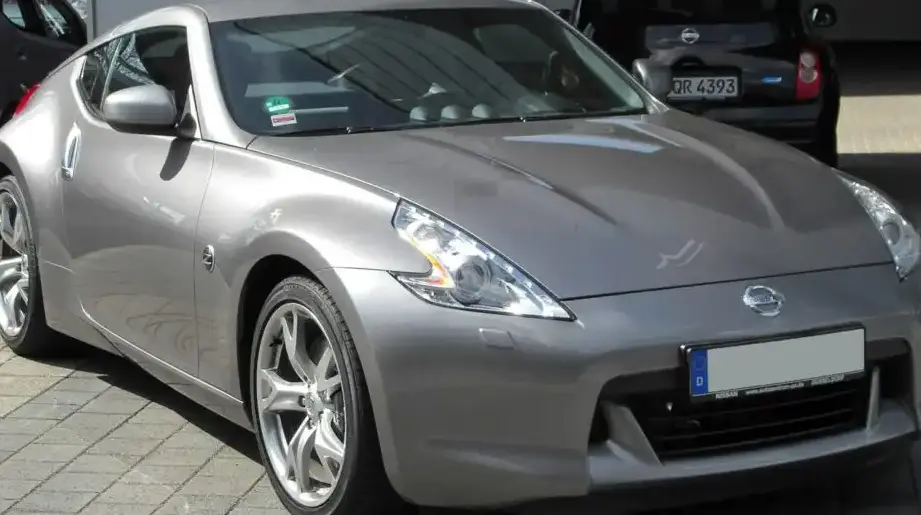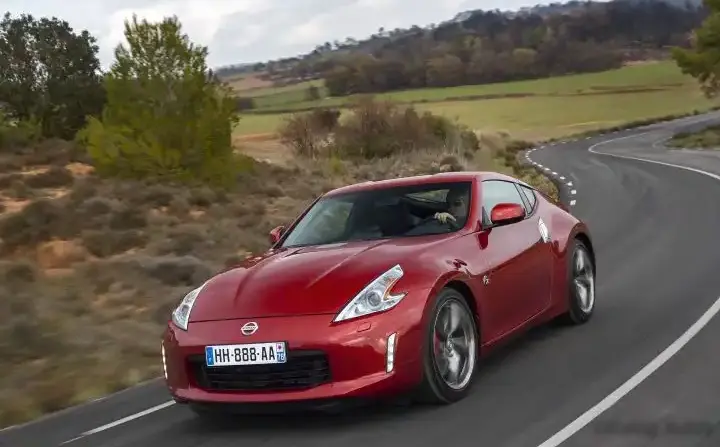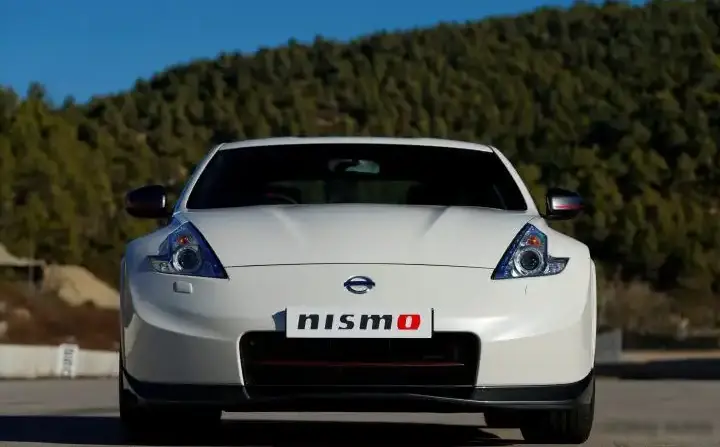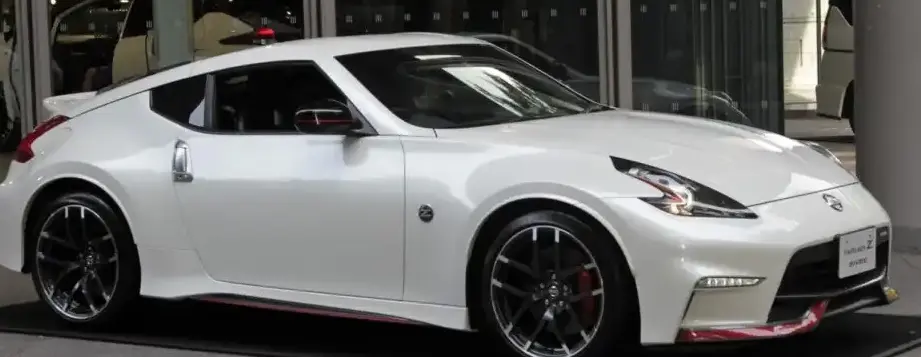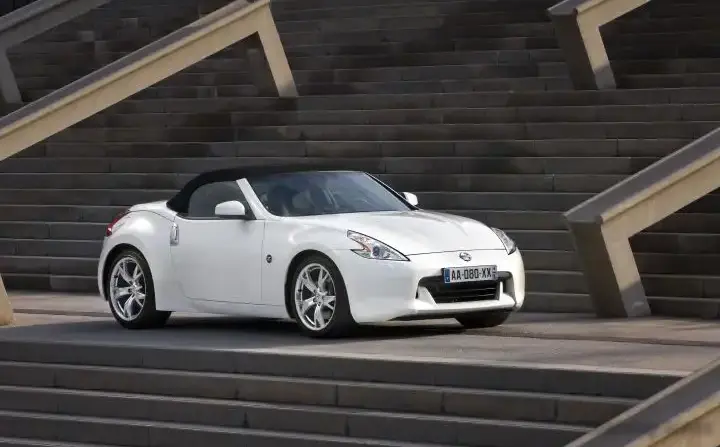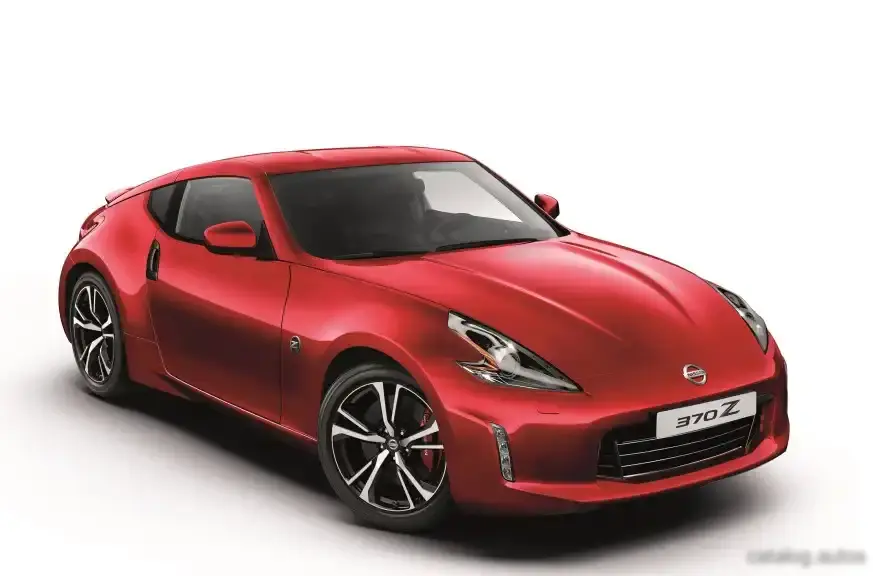
The Nissan 370Z Coupe, particularly the facelifted version produced from 2017 to 2020 for the US market, represents the final iteration of the Z33 generation. Positioned as a driver-focused sports car, it continued Nissan’s tradition of offering accessible performance. The 2017 refresh brought subtle styling updates and maintained the core appeal of the 370Z: a naturally aspirated V6 engine, rear-wheel drive, and a relatively lightweight chassis. This variant, equipped with the 3.7-liter V6 producing 332 horsepower, served as the primary offering throughout its production run, bridging the gap between affordable sports cars and more expensive grand tourers.
Technical Specifications
| Brand | Nissan |
| Model | 370Z |
| Generation | 370Z Coupe (facelift 2017) |
| Type (Engine) | 3.7 V6 (332 Hp) (USA) |
| Start of production | 2017 |
| End of production | 2020 |
| Powertrain Architecture | Internal Combustion engine |
| Body type | Coupe |
| Seats | 2 |
| Doors | 3 |
| Fuel consumption (economy) – urban (EPA) | 13.1 l/100 km (18 US mpg, 21.6 UK mpg, 7.6 km/l) |
| Fuel consumption (economy) – extra urban (EPA) | 9 l/100 km (26.1 US mpg, 31.4 UK mpg, 11.1 km/l) |
| Fuel consumption (economy) – combined (EPA) | 11.2 l/100 km (21 US mpg, 25.2 UK mpg, 8.9 km/l) |
| Fuel Type | Petrol (Gasoline) |
| Emission standard | LEV2 ULEV |
| Weight-to-power ratio | 4.6 kg/Hp, 219.6 Hp/tonne |
| Weight-to-torque ratio | 4.1 kg/Nm, 242.1 Nm/tonne |
| Power | 332 Hp @ 7000 rpm |
| Power per litre | 89.8 Hp/l |
| Torque | 366 Nm @ 5200 rpm (269.95 lb.-ft. @ 5200 rpm) |
| Maximum engine speed | 7500 rpm |
| Engine layout | Front, Longitudinal |
| Engine Model/Code | VQ37VHR |
| Engine displacement | 3696 cm3 (225.54 cu. in.) |
| Number of cylinders | 6 |
| Engine configuration | V-engine |
| Cylinder Bore | 95.5 mm (3.76 in.) |
| Piston Stroke | 86 mm (3.39 in.) |
| Compression ratio | 11.1:1 |
| Number of valves per cylinder | 4 |
| Fuel injection system | Multi-port manifold injection |
| Engine aspiration | Naturally aspirated engine |
| Valvetrain | DOHC, VVEL |
| Engine oil capacity | 4.9 l (5.18 US qt, 4.31 UK qt) |
| Coolant | 9.2 l (9.72 US qt, 8.09 UK qt) |
| Kerb Weight | 1512 kg (3333.39 lbs.) |
| Max. weight | 1800 kg (3968.32 lbs.) |
| Max load | 288 kg (634.93 lbs.) |
| Trunk (boot) space – minimum | 195 l (6.89 cu. ft.) |
| Fuel tank capacity | 72 l (19.02 US gal, 15.84 UK gal) |
| Length | 4255 mm (167.52 in.) |
| Width | 1845 mm (72.64 in.) |
| Height | 1316 mm (51.81 in.) |
| Wheelbase | 2550 mm (100.39 in.) |
| Front track | 1550 mm (61.02 in.) |
| Rear (Back) track | 1565 mm (61.61 in.) |
| Drag coefficient (Cd) | 0.30 |
| Minimum turning circle (turning diameter) | 10 m (32.81 ft.) |
| Drivetrain Architecture | Rear wheel drive. Internal Combustion engine (ICE) drives the rear wheels. |
| Drive wheel | Rear wheel drive |
| Number of gears and type of gearbox | 6 gears, manual transmission |
| Front suspension | Double wishbone, Transverse stabilizer |
| Rear suspension | Independent multi-link suspension, Transverse stabilizer |
| Front brakes | Ventilated discs, 320×28 mm |
| Rear brakes | Ventilated discs, 320×16 mm |
| Assisting systems | ABS (Anti-lock braking system) |
| Steering type | Steering rack and pinion |
| Power steering | Hydraulic Steering |
| Tires size | Front: 225/50 R18; 245/40 R19, Rear: 245/45 R18; 275/35 R19 |
| Wheel rims size | Front: 8J x 18; 9J x 19, Rear: 9J x 18; 10J x 19 |
Powertrain & Engine Architecture
The heart of the 2017-2020 Nissan 370Z is the VQ37VHR 3.7-liter V6 engine. This engine, a member of Nissan’s highly regarded VQ family, is naturally aspirated, meaning it doesn’t rely on turbocharging or supercharging for power. The “VHR” designation stands for “High Revolution,” indicating its capability for high engine speeds. It features a 60-degree V-angle, four valves per cylinder, and Nissan’s Variable Valve Event and Lift (VVEL) technology. VVEL continuously adjusts valve timing and lift based on driving conditions, optimizing both power and fuel efficiency. Fuel delivery is handled by a multi-port fuel injection system. The engine produces 332 horsepower at 7,000 rpm and 270 lb-ft of torque at 5,200 rpm. The standard transmission for this model year was a 6-speed manual, providing a direct connection to the rear wheels. While an automatic transmission was available, it was less common and generally considered to diminish the driving experience.
Driving Characteristics
The 370Z with the 3.7-liter V6 and manual transmission delivers a classic sports car experience. Power delivery is linear and predictable, with a strong mid-range punch. The engine eagerly revs to its 7,500 rpm redline, providing an engaging soundtrack. The manual gearbox is precise and relatively short-throw, encouraging spirited driving. The rear-wheel-drive layout contributes to a balanced chassis, although traction can be a concern, especially when exiting corners aggressively. Compared to hypothetical turbocharged alternatives, the 370Z’s power delivery feels more immediate and less prone to turbo lag. The automatic transmission, while offering convenience, noticeably softens the driving experience, with slower shift times and a less direct feel.
Equipment & Trim Levels
The 2017-2020 Nissan 370Z was offered in several trim levels, including Base, Sport, and Touring. The base model included standard features such as automatic climate control, power windows and locks, and a basic audio system. The Sport trim added features like a limited-slip differential, sport-tuned suspension, and upgraded brakes. The Touring trim offered premium features like leather upholstery, heated seats, and a Bose audio system. Optional extras included navigation, a rearview camera, and various cosmetic enhancements. Interior upholstery was typically cloth on the base model, with leather available on higher trims. The dashboard layout was functional and driver-focused, with clearly marked gauges and intuitive controls.
Chassis & Braking
The 370Z utilizes a front-engine, rear-wheel-drive layout with a double-wishbone suspension in the front and an independent multi-link suspension in the rear. This configuration provides a good balance of handling and ride comfort. Stabilizer bars are included at both ends to reduce body roll during cornering. Braking duties are handled by ventilated disc brakes at all four corners. The front brakes measure 320x28mm, while the rear brakes are 320x16mm. Anti-lock braking system (ABS) is standard. The chassis is relatively lightweight, contributing to the car’s agility.
Market Reception & Comparison
The 2017-2020 Nissan 370Z received generally positive reviews from automotive critics. It was praised for its engaging driving dynamics, powerful engine, and relatively affordable price. However, some critics noted that the interior felt dated compared to newer sports cars. Fuel economy was also a point of concern, with the EPA-estimated combined fuel economy of 21 mpg being relatively low for its class. Compared to competitors like the Ford Mustang GT and Chevrolet Camaro SS, the 370Z offered a more focused driving experience, but lacked the same level of technology and refinement. Reliability was generally good, although some owners reported issues with the oil consumption of the VQ37VHR engine.
Legacy
The Nissan 370Z, particularly the facelifted models, holds a strong position in the used car market. Its combination of performance, affordability, and engaging driving dynamics makes it a popular choice for enthusiasts. The VQ37VHR engine is known for its durability, although regular maintenance is crucial to prevent oil consumption issues. The 370Z represents a final chapter in the era of naturally aspirated, rear-wheel-drive sports cars, and its legacy continues to appeal to drivers who prioritize driving enjoyment over modern conveniences.