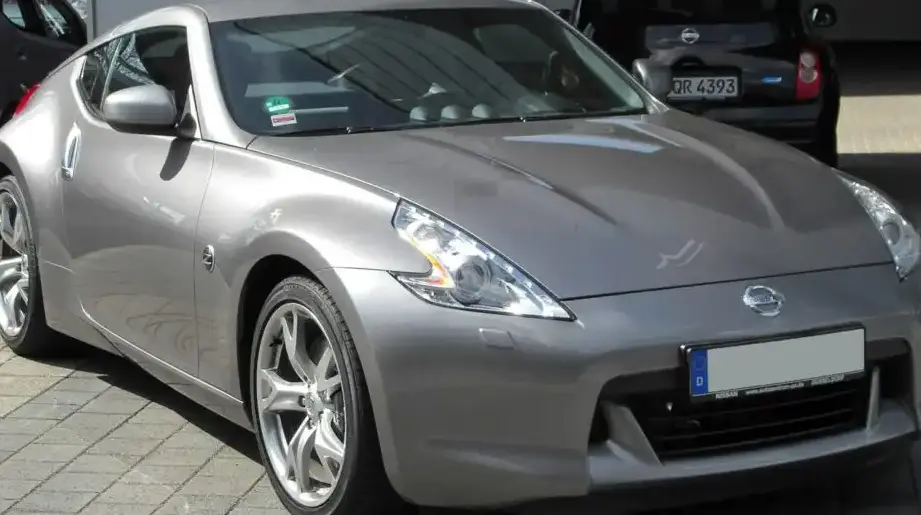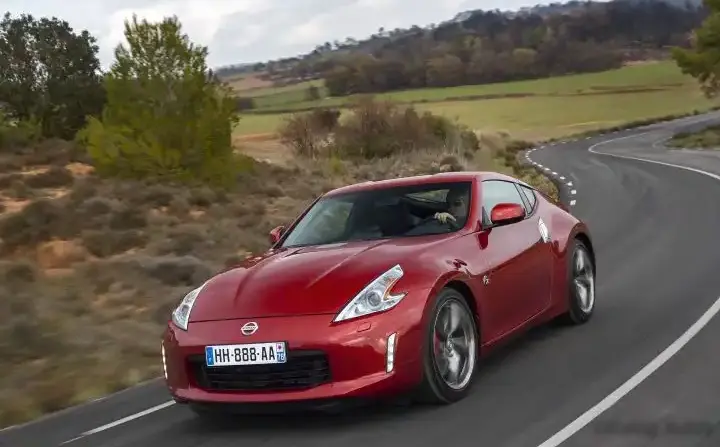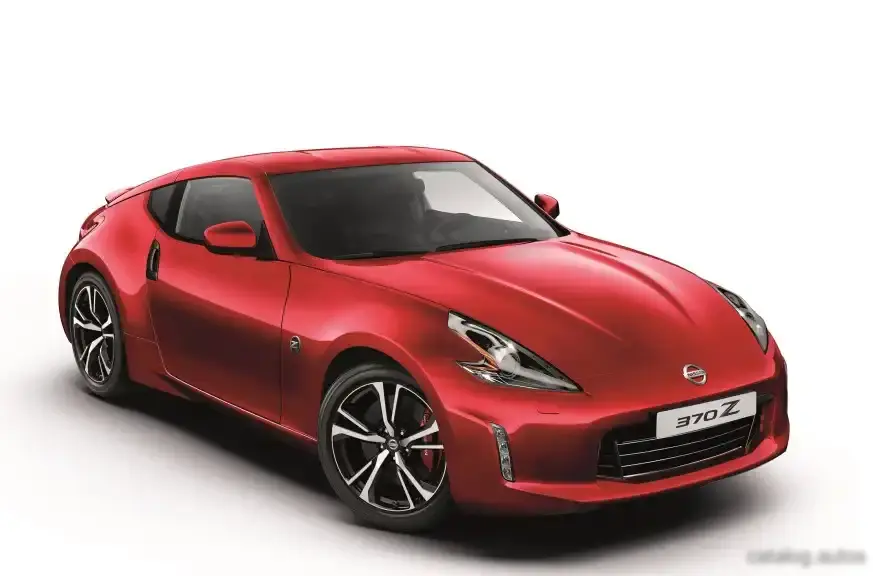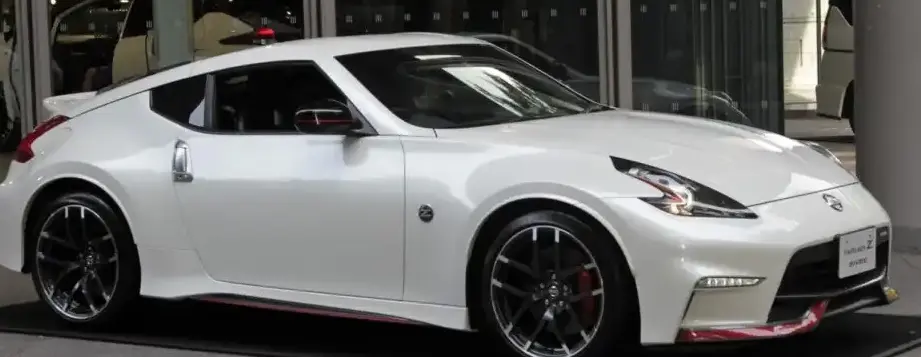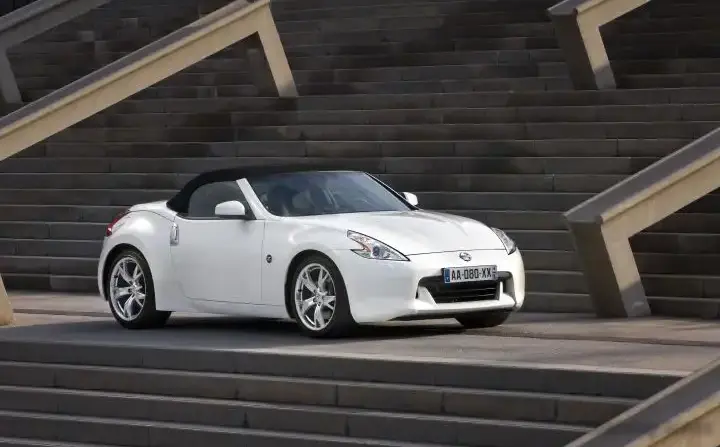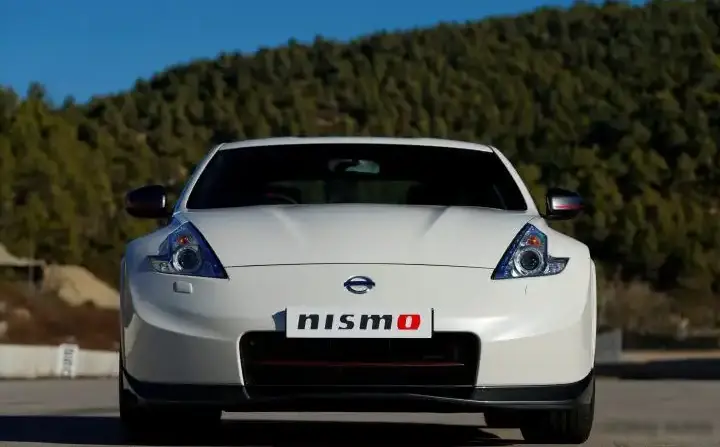
The Nissan 370Z Nismo, specifically the facelifted model produced from 2013 to 2017, represents the high-performance variant of Nissan’s popular sports coupe. Building upon the Z34 chassis introduced in 2009, the Nismo model was designed to deliver a more focused driving experience, blending track-ready capabilities with everyday usability. This iteration of the 370Z occupied the top tier of the lineup, positioned above the base and Touring models, and aimed to compete with established sports cars like the Subaru BRZ/Toyota 86, Ford Mustang GT, and Chevrolet Camaro SS. The 2013-2017 Nismo benefitted from a mid-cycle refresh that included revised styling cues and minor mechanical updates, further solidifying its position as a driver’s car.
Technical Specifications
| Brand | Nissan |
| Model | 370Z |
| Generation | 370Z Coupe (facelift 2012) |
| Type (Engine) | Nismo 3.7 V6 (344 Hp) |
| Start of production | 2013 |
| End of production | 2017 |
| Powertrain Architecture | Internal Combustion engine |
| Body type | Coupe |
| Seats | 2 |
| Doors | 3 |
| Fuel consumption (economy) – urban (NEDC) | 15.3-15.4 l/100 km (15.4 – 15.3 US mpg, 18.5 – 18.3 UK mpg, 6.5 – 6.5 km/l) |
| Fuel consumption (economy) – extra urban (NEDC) | 7.8 l/100 km (30.2 US mpg, 36.2 UK mpg, 12.8 km/l) |
| Fuel consumption (economy) – combined (NEDC) | 10.5-10.6 l/100 km (22.4 – 22.2 US mpg, 26.9 – 26.6 UK mpg, 9.5 – 9.4 km/l) |
| CO2 emissions (NEDC) | 245-248 g/km |
| Fuel Type | Petrol (Gasoline) |
| Acceleration 0 – 100 km/h | 5.2 sec |
| Acceleration 0 – 62 mph | 5.2 sec |
| Acceleration 0 – 60 mph | 4.9 sec |
| Maximum speed | 250 km/h (155.34 mph) |
| Emission standard | Euro 5 |
| Weight-to-power ratio | 4.5 kg/Hp, 224.5 Hp/tonne |
| Weight-to-torque ratio | 4.1 kg/Nm, 242.2 Nm/tonne |
| Power | 344 Hp @ 7400 rpm |
| Power per litre | 93.1 Hp/l |
| Torque | 371 Nm @ 5200 rpm (273.64 lb.-ft. @ 5200 rpm) |
| Engine layout | Front, Longitudinal |
| Engine Model/Code | VQ37VHR |
| Engine displacement | 3696 cm3 (225.54 cu. in.) |
| Number of cylinders | 6 |
| Engine configuration | V-engine |
| Cylinder Bore | 95.5 mm (3.76 in.) |
| Piston Stroke | 86 mm (3.39 in.) |
| Compression ratio | 11:1 |
| Number of valves per cylinder | 4 |
| Fuel injection system | Multi-port manifold injection |
| Engine aspiration | Naturally aspirated engine |
| Valvetrain | DOHC, VVEL |
| Engine oil capacity | 4.9 l (5.18 US qt | 4.31 UK qt) |
| Coolant | 9.2 l (9.72 US qt | 8.09 UK qt) |
| Kerb Weight | 1532 kg (3377.48 lbs.) |
| Max. weight | 1800 kg (3968.32 lbs.) |
| Max load | 268 kg (590.84 lbs.) |
| Trunk (boot) space – minimum | 235 l (8.3 cu. ft.) |
| Fuel tank capacity | 72 l (19.02 US gal | 15.84 UK gal) |
| Length | 4410 mm (173.62 in.) |
| Width | 1870 mm (73.62 in.) |
| Height | 1310 mm (51.57 in.) |
| Wheelbase | 2550 mm (100.39 in.) |
| Front track | 1540-1550 mm (60.63 – 61.02 in.) |
| Rear (Back) track | 1565-1595 mm (61.61 – 62.8 in.) |
| Ride height (ground clearance) | 115 mm (4.53 in.) |
| Drag coefficient (Cd) | 0.30 |
| Minimum turning circle (turning diameter) | 10.6 m (34.78 ft.) |
| Approach angle | 11° |
| Departure angle | 19° |
| Drivetrain Architecture | Rear wheel drive |
| Drive wheel | Rear wheel drive |
| Number of gears and type of gearbox | 6 gears, manual transmission |
| Front suspension | Double wishbone, Transverse stabilizer |
| Rear suspension | Independent multi-link suspension, Transverse stabilizer |
| Front brakes | Ventilated discs, 355 mm |
| Rear brakes | Ventilated discs, 350 mm |
| Assisting systems | ABS (Anti-lock braking system) |
| Steering type | Steering rack and pinion |
| Power steering | Hydraulic Steering |
| Tires size | Front wheel tires: 225/50 R18; 245/40 R19 Rear wheel tires: 245/45 R18; 285/35 R19 |
| Wheel rims size | Front wheel rims: 8J x 18; 9J x 19 Rear wheel rims: 9J x 18; 10J x 19 |
Powertrain & Engine Architecture
The heart of the 370Z Nismo is the VQ37VHR 3.7-liter V6 engine. This naturally aspirated powerplant is a descendant of Nissan’s long-running VQ engine family, known for its reliability and performance. The “VHR” designation signifies Variable Valve Event and Lift, a system that optimizes valve timing and lift for improved power and efficiency. The engine utilizes multi-port fuel injection and a compression ratio of 11:1. The Nismo variant received specific engine tuning, including revised ECU mapping and optimized air intake and exhaust systems, to boost output to 344 horsepower at 7400 rpm and 273 lb-ft of torque at 5200 rpm. The engine is longitudinally mounted, driving the rear wheels. The standard transmission for the Nismo model was a close-ratio 6-speed manual gearbox, designed for precise shifts and enhanced driver engagement. While an automatic transmission was available on other 370Z trims, the Nismo was exclusively offered with the manual.
Driving Characteristics
The 370Z Nismo delivers a raw and engaging driving experience. The manual transmission, combined with the high-revving V6, encourages spirited driving. Acceleration from 0-60 mph takes approximately 4.9 seconds, and the car feels responsive and eager to accelerate. The Nismo’s suspension, featuring stiffer springs and dampers, provides excellent body control and minimizes roll during cornering. The steering is direct and communicative, offering good feedback to the driver. Compared to the standard 370Z, the Nismo feels noticeably more planted and composed, particularly at higher speeds. While the engine lacks the low-end grunt of turbocharged rivals, it rewards drivers who are willing to rev it out. The close-ratio gearbox keeps the engine in its powerband, maximizing acceleration.
Equipment & Trim Levels
The 370Z Nismo came standard with a comprehensive list of features. Interior appointments included Recaro sport seats upholstered in suede and leather, providing excellent support during aggressive driving. A Nismo-specific steering wheel, aluminum pedals, and unique interior trim further distinguished the Nismo from other 370Z models. Standard exterior features included a unique Nismo body kit with aggressive front and rear fascias, side skirts, and a rear spoiler. Other standard equipment included a Bose premium audio system, automatic climate control, and power windows and locks. Optional extras included navigation, a rearview camera, and various cosmetic enhancements.
Chassis & Braking
The 370Z Nismo utilizes a double wishbone front suspension and an independent multi-link rear suspension, both tuned for performance. Stabilizer bars are fitted at both ends to reduce body roll. The Nismo benefits from larger, more powerful brakes than the standard 370Z, featuring ventilated discs at all four corners. Front brakes measure 355mm, while rear brakes are 350mm. ABS is standard. The chassis is reinforced with additional bracing to improve rigidity and handling precision.
Market Reception & Comparison
The 370Z Nismo was generally well-received by automotive critics, who praised its engaging driving dynamics, powerful engine, and distinctive styling. However, some reviewers noted the car’s relatively Spartan interior and lack of modern technology compared to some rivals. Fuel economy was also a point of criticism, with the Nismo achieving around 22 mpg in combined driving. Compared to the base 370Z, the Nismo offered a significant performance upgrade, but at a higher price point. Against competitors like the Mustang GT and Camaro SS, the 370Z Nismo offered a more focused and refined driving experience, but lacked the sheer power and practicality of those larger cars.
Legacy
The Nissan 370Z Nismo has established a strong following among enthusiasts. The VQ37VHR engine is known for its durability and relatively straightforward maintenance. While not without its quirks, the engine has proven to be reliable with proper care. On the used car market, the 370Z Nismo holds its value well, particularly well-maintained examples with low mileage. It remains a popular choice for those seeking an affordable and engaging sports car experience, offering a compelling blend of performance, style, and driver involvement.