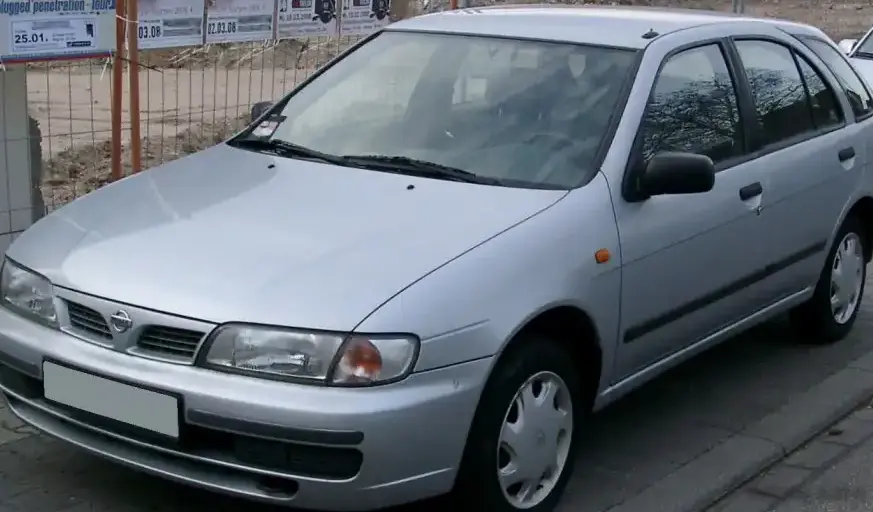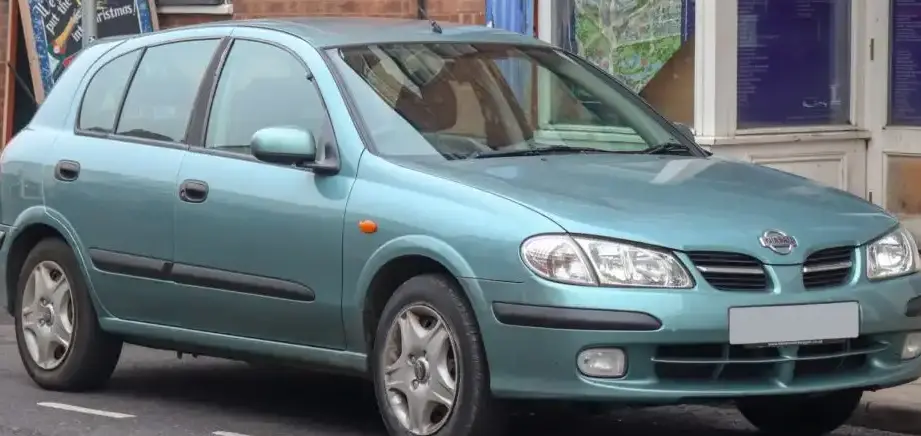
The Nissan Almera II Hatchback, specifically the 1.5-liter (90 hp) variant, was produced between 2000 and 2002 as part of the N16 series. This model represented Nissan’s entry-level offering in the compact hatchback segment, primarily targeted at the European market. Positioned as a practical and affordable vehicle, the 1.5L Almera aimed to provide reliable transportation for families and individuals seeking economical motoring. It sat below the more powerful 1.8 and 2.0-liter engine options in the Almera lineup, and was generally considered a more budget-conscious alternative to rivals like the Ford Focus and Volkswagen Golf.
Technical Specifications
| Brand | Nissan |
| Model | Almera |
| Generation | Almera II Hatchback (N16) |
| Type (Engine) | 1.5 (90 Hp) |
| Start of production | 2000 |
| End of production | 2002 |
| Powertrain Architecture | Internal Combustion engine |
| Body type | Hatchback |
| Seats | 5 |
| Doors | 3/5 |
| Fuel consumption (urban) | 8.6 l/100 km (27.4 US mpg, 32.8 UK mpg, 11.6 km/l) |
| Fuel consumption (extra urban) | 5.5 l/100 km (42.8 US mpg, 51.4 UK mpg, 18.2 km/l) |
| Fuel consumption (combined) | 6.7 l/100 km (35.1 US mpg, 42.2 UK mpg, 14.9 km/l) |
| Fuel Type | Petrol (Gasoline) |
| Acceleration 0 – 100 km/h | 13.8 sec |
| Acceleration 0 – 62 mph | 13.8 sec |
| Acceleration 0 – 60 mph | 13.1 sec |
| Maximum speed | 173 km/h (107.5 mph) |
| Weight-to-power ratio | 12.3 kg/Hp, 81.4 Hp/tonne |
| Weight-to-torque ratio | 8.6 kg/Nm, 115.8 Nm/tonne |
| Power | 90 Hp @ 5600 rpm |
| Power per litre | 60.1 Hp/l |
| Torque | 128 Nm @ 2800 rpm (94.41 lb.-ft. @ 2800 rpm) |
| Engine layout | Front, Transverse |
| Engine Model/Code | QG15DE |
| Engine displacement | 1497 cm3 (91.35 cu. in.) |
| Number of cylinders | 4 |
| Engine configuration | Inline |
| Cylinder Bore | 73.6 mm (2.9 in.) |
| Piston Stroke | 88 mm (3.46 in.) |
| Compression ratio | 9.9:1 |
| Number of valves per cylinder | 4 |
| Fuel injection system | Multi-port manifold injection |
| Engine aspiration | Naturally aspirated engine |
| Valvetrain | DOHC |
| Engine oil capacity | 2.9 l (3.06 US qt | 2.55 UK qt) |
| Coolant capacity | 6.7 l (7.08 US qt | 5.9 UK qt) |
| Kerb Weight | 1105 kg (2436.11 lbs.) |
| Max. weight | 1690 kg (3725.81 lbs.) |
| Max load | 585 kg (1289.7 lbs.) |
| Trunk (boot) space – minimum | 355 l (12.54 cu. ft.) |
| Trunk (boot) space – maximum | 1100 l (38.85 cu. ft.) |
| Fuel tank capacity | 60 l (15.85 US gal | 13.2 UK gal) |
| Length | 4184 mm (164.72 in.) |
| Width | 1706 mm (67.17 in.) |
| Height | 1448 mm (57.01 in.) |
| Wheelbase | 2535 mm (99.8 in.) |
| Front track | 1470 mm (57.87 in.) |
| Rear (Back) track | 1455 mm (57.28 in.) |
| Ride height (ground clearance) | 165 mm (6.5 in.) |
| Drivetrain Architecture | Front wheel drive |
| Drive wheel | Front wheel drive |
| Number of gears and type of gearbox | 5 gears, manual transmission |
| Front suspension | Wishbone |
| Rear suspension | Rigid axle suspension |
| Front brakes | Ventilated discs |
| Rear brakes | Disc |
| Assisting systems | ABS (Anti-lock braking system) |
| Steering type | Steering rack and pinion |
| Power steering | Hydraulic Steering |
| Tires size | 185/65 R15 |
| Wheel rims size | 15 |
Powertrain & Engine Architecture
The heart of this Almera variant is the QG15DE engine, a 1.5-liter inline-four cylinder gasoline engine. This engine is a member of Nissan’s QG series, known for its relatively simple design and focus on fuel efficiency. The QG15DE utilizes a multi-port fuel injection system, delivering fuel directly into the intake ports, and a double overhead camshaft (DOHC) valvetrain for improved breathing and efficiency. The engine produces 90 horsepower at 5600 rpm and 128 Nm (94.41 lb-ft) of torque at 2800 rpm. The engine’s design prioritized smooth operation and low emissions over outright performance. The Almera 1.5 typically came equipped with a 5-speed manual transmission, although a 4-speed automatic transmission was also available. The automatic transmission, while offering convenience, did impact acceleration and fuel economy compared to the manual version.
Driving Characteristics
The 1.5L Almera with the manual transmission offered adequate, though not exhilarating, performance. Acceleration from 0-60 mph took around 13.1 seconds, and top speed was approximately 107.5 mph. The engine felt somewhat strained when pushed hard, particularly when fully loaded with passengers or cargo. The automatic transmission further dulled performance, adding a noticeable delay in response. However, for everyday commuting and urban driving, the 1.5L engine provided sufficient power. The suspension, tuned for comfort, offered a reasonably smooth ride, absorbing bumps and imperfections in the road well. Steering was light and easy, making it maneuverable in tight spaces.
Equipment & Trim Levels
The 1.5L Almera typically came with a fairly basic level of equipment, reflecting its position as the entry-level model. Standard features generally included power steering, central locking, electric front windows, and an AM/FM radio. Higher trim levels, such as the ‘S’ or ‘SE’ variants, added features like alloy wheels, air conditioning, and a more comprehensive audio system. Interior upholstery was typically cloth, with a simple and functional dashboard layout. Optional extras included a sunroof, rear electric windows, and upgraded audio systems.
Chassis & Braking
The Almera N16 utilized a front-wheel-drive layout with a MacPherson strut front suspension and a torsion beam rear suspension. This setup provided a good balance between ride comfort and handling. Braking duties were handled by ventilated discs on the front wheels and discs on the rear. Anti-lock Braking System (ABS) was standard, enhancing safety by preventing wheel lockup during hard braking. The chassis was designed to be lightweight, contributing to the car’s fuel efficiency.
Market Reception & Comparison
The Nissan Almera 1.5L was generally well-received as a practical and affordable hatchback. Critics praised its fuel efficiency and comfortable ride, but noted its lack of outright performance. Compared to the 1.8L and 2.0L Almera variants, the 1.5L offered significantly lower running costs but at the expense of acceleration and overall driving enjoyment. It competed directly with other compact hatchbacks like the Ford Focus, Volkswagen Golf, and Opel/Vauxhall Astra. The Almera 1.5L often undercut these rivals on price, making it an attractive option for budget-conscious buyers.
Legacy
The QG15DE engine, while not known for being particularly exciting, proved to be a reliable and durable unit. Almeras equipped with this engine have generally aged well, and many are still on the road today. The 1.5L automatic variant, while less popular than the manual, remains a viable option for those seeking a comfortable and economical city car. In the used car market, these Almeras are typically very affordable, making them a popular choice for first-time drivers or those needing a dependable and inexpensive vehicle. However, potential buyers should be aware of the typical wear and tear associated with older vehicles, such as suspension components and exhaust systems.