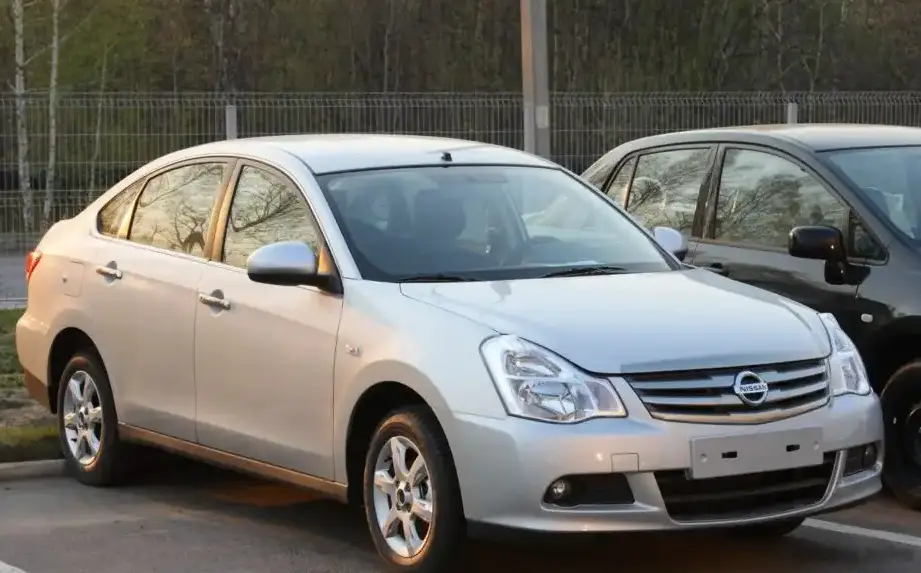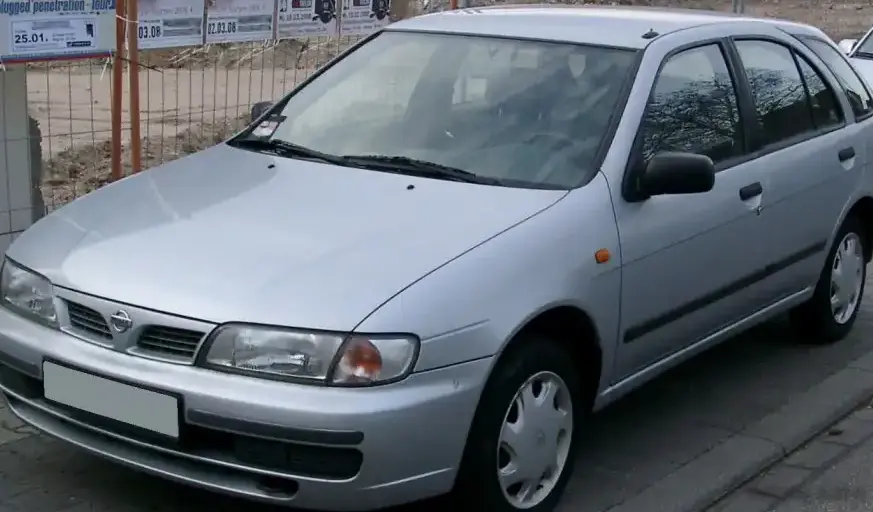
The Nissan Almera II, designated as the N16 chassis code, was a compact sedan produced by Nissan from 2000 to 2002 in Europe and other international markets. Positioned as an affordable and practical family car, the N16 Almera represented Nissan’s attempt to gain a stronger foothold in the competitive European C-segment. The 1.5-liter (90 hp) variant, equipped with an automatic transmission, served as the entry-level offering in many markets, prioritizing fuel efficiency and ease of use over outright performance. This model aimed at buyers seeking a reliable and economical vehicle for daily commuting and family transport.
Technical Specifications
| Brand | Nissan |
| Model | Almera |
| Generation | Almera II (N16) |
| Type (Engine) | 1.5 (90 Hp) |
| Start of production | 2000 |
| End of production | 2002 |
| Powertrain Architecture | Internal Combustion engine |
| Body type | Sedan |
| Seats | 5 |
| Doors | 4 |
| Fuel consumption (urban) | 8.6 l/100 km (27.4 US mpg) |
| Fuel consumption (extra urban) | 5.5 l/100 km (42.8 US mpg) |
| Fuel consumption (combined) | 6.7 l/100 km (35.1 US mpg) |
| Fuel Type | Petrol (Gasoline) |
| Acceleration 0 – 100 km/h | 13.8 sec |
| Acceleration 0 – 62 mph | 13.8 sec |
| Acceleration 0 – 60 mph | 13.1 sec |
| Maximum speed | 173 km/h (107.5 mph) |
| Weight-to-power ratio | 12.3 kg/Hp |
| Weight-to-torque ratio | 8.6 kg/Nm |
| Power | 90 Hp @ 5600 rpm |
| Torque | 128 Nm @ 2800 rpm (94.41 lb.-ft. @ 2800 rpm) |
| Engine layout | Front, Transverse |
| Engine Model/Code | QG15DE |
| Engine displacement | 1497 cm3 (91.35 cu. in.) |
| Number of cylinders | 4 |
| Engine configuration | Inline |
| Cylinder Bore | 73.6 mm (2.9 in.) |
| Piston Stroke | 88 mm (3.46 in.) |
| Compression ratio | 9.9:1 |
| Number of valves per cylinder | 4 |
| Fuel injection system | Multi-port manifold injection |
| Engine aspiration | Naturally aspirated engine |
| Valvetrain | DOHC |
| Engine oil capacity | 2.9 l (3.06 US qt | 2.55 UK qt) |
| Coolant capacity | 6.7 l (7.08 US qt | 5.9 UK qt) |
| Kerb Weight | 1105 kg (2436.11 lbs.) |
| Max. weight | 1690 kg (3725.81 lbs.) |
| Max load | 585 kg (1289.7 lbs.) |
| Trunk (boot) space – minimum | 393 l (13.88 cu. ft.) |
| Fuel tank capacity | 60 l (15.85 US gal | 13.2 UK gal) |
| Length | 4425 mm (174.21 in.) |
| Width | 1695 mm (66.73 in.) |
| Height | 1445 mm (56.89 in.) |
| Wheelbase | 2535 mm (99.8 in.) |
| Front track | 1470 mm (57.87 in.) |
| Rear (Back) track | 1450 mm (57.09 in.) |
| Ride height (ground clearance) | 165 mm (6.5 in.) |
| Drivetrain Architecture | Front wheel drive |
| Number of gears and type of gearbox | 4 gears, automatic transmission |
| Front suspension | Wishbone |
| Rear suspension | Rigid axle suspension |
| Front brakes | Ventilated discs |
| Rear brakes | Disc |
| Steering type | Steering rack and pinion |
| Power steering | Hydraulic Steering |
| Tires size | 185/65 R15 |
Powertrain & Engine Architecture
The heart of the Almera II 1.5 was the QG15DE engine, a 1.5-liter inline-four cylinder gasoline engine. This engine was part of Nissan’s QG series, known for its relatively simple design and focus on reliability. The QG15DE featured a dual overhead camshaft (DOHC) valvetrain with four valves per cylinder, and utilized multi-port fuel injection. The engine produced 90 horsepower at 5600 rpm and 128 Nm (94.41 lb-ft) of torque at 2800 rpm. Paired with this engine was a four-speed automatic transmission. This transmission was chosen for its ease of use and suitability for urban driving conditions, though it wasn’t known for particularly sporty performance. The automatic transmission featured typical torque converter technology, prioritizing smooth shifts over rapid acceleration.
Driving Characteristics
The 1.5-liter automatic Almera II offered a comfortable, but uninspiring, driving experience. Acceleration was modest, taking approximately 13.8 seconds to reach 62 mph (100 km/h). The four-speed automatic transmission, while smooth, lacked the responsiveness of a manual gearbox or a more modern automatic with additional gears. Gear ratios were optimized for fuel economy rather than performance, resulting in a noticeable delay during overtaking maneuvers. Compared to the more powerful 1.8-liter variants, the 1.5 automatic felt significantly slower. However, it provided a more relaxed driving experience, particularly in city traffic, where the automatic transmission simplified operation.
Equipment & Trim Levels
The 1.5-liter automatic Almera II typically came with a basic level of equipment. Standard features generally included power steering, central locking, electric front windows, and an AM/FM radio. Air conditioning was often an optional extra, as were alloy wheels and a more advanced audio system. Interior upholstery was typically cloth, and the dashboard featured a straightforward design with easy-to-use controls. Higher trim levels, available with the 1.8-liter engine, offered features like climate control, upgraded audio systems, and more luxurious interior materials.
Chassis & Braking
The Almera II utilized a front-wheel-drive layout with a relatively simple suspension setup. The front suspension consisted of wishbones, while the rear suspension employed a rigid axle configuration. This setup prioritized ride comfort over handling precision. Braking duties were handled by ventilated discs at the front and solid discs at the rear. The braking system was adequate for everyday driving, but lacked the stopping power of more performance-oriented vehicles. The steering was hydraulic power-assisted, providing light and easy steering feel.
Market Reception & Comparison
The Nissan Almera II 1.5 automatic was generally well-received as an affordable and practical family car. Critics praised its fuel efficiency and comfortable ride, but noted its lack of performance and somewhat dated interior design. Compared to rivals like the Ford Focus and Volkswagen Golf, the Almera II offered a more budget-friendly option, but lacked the refinement and driving dynamics of those competitors. The 1.8-liter variants of the Almera II offered a noticeable improvement in performance, but at a higher price point. The 1.5-liter automatic appealed to buyers who prioritized economy and ease of use over sporty driving characteristics.
Legacy
The QG15DE engine, when properly maintained, proved to be a reliable and durable unit. The four-speed automatic transmission, while not particularly advanced, also demonstrated reasonable longevity. Today, the Almera II 1.5 automatic can be found as an affordable used car, often appealing to first-time buyers or those seeking a simple and economical mode of transportation. While not a particularly sought-after model, its reputation for reliability and low running costs ensures a continued presence on the used car market. Common issues include wear and tear on suspension components and potential for oil leaks as the engine ages, but overall, the Almera II 1.5 automatic remains a reasonably dependable vehicle.