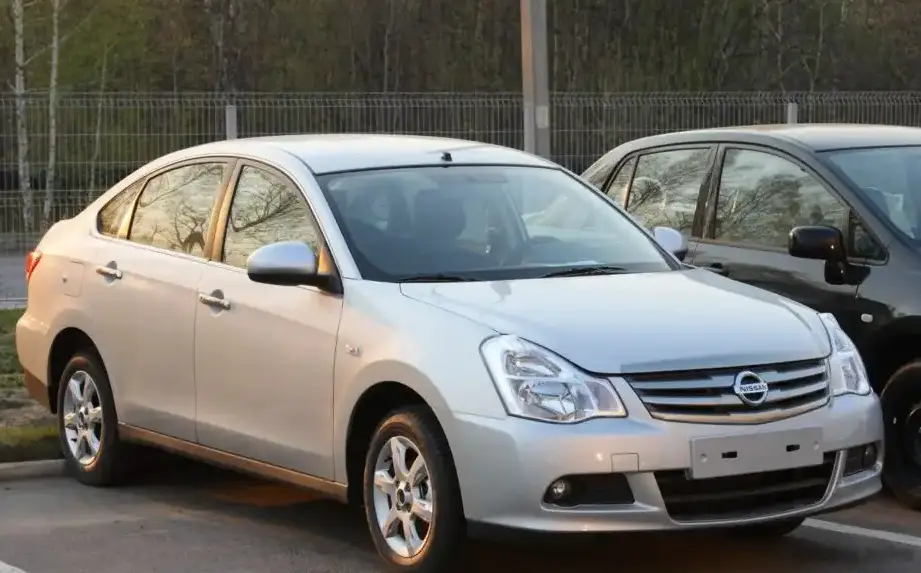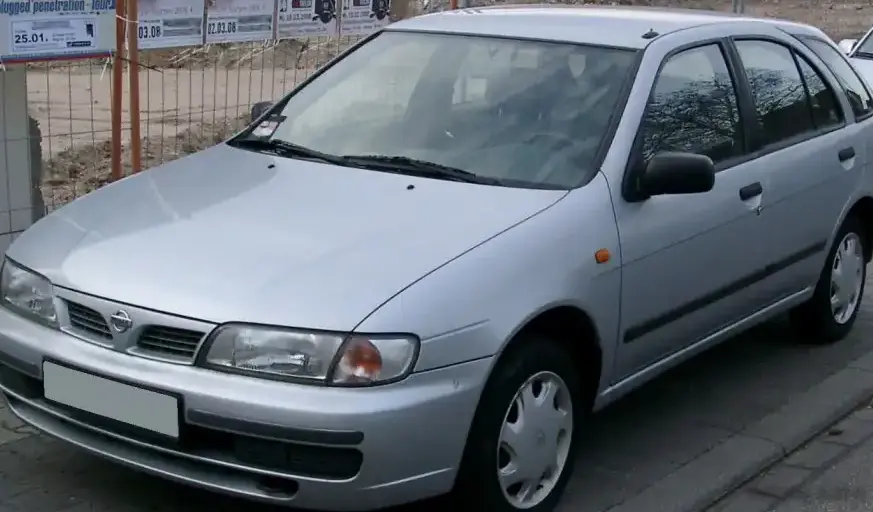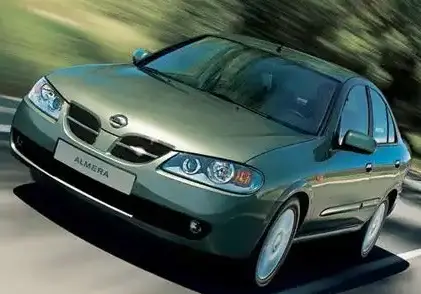
The Nissan Almera II (N16) facelift, produced from 2003 to 2006, represented a mid-cycle refresh of Nissan’s compact sedan. Within the N16 series, the 1.5 Di variant, powered by the K9K engine and producing 82 horsepower, occupied the entry-level position in many European markets. This model aimed to provide economical transportation, appealing to buyers prioritizing fuel efficiency and affordability over outright performance. It was a key offering in a segment dominated by competitors like the Ford Focus, Opel/Vauxhall Astra, and Renault Mégane.
Technical Specifications
| Brand | Nissan |
| Model | Almera |
| Generation | Almera II (N16, facelift 2003) |
| Type (Engine) | 1.5 Di (82 Hp) |
| Start of production | 2003 |
| End of production | 2006 |
| Powertrain Architecture | Internal Combustion engine |
| Body type | Sedan |
| Seats | 5 |
| Doors | 4 |
| Fuel consumption (urban) | 6 l/100 km (39.2 US mpg, 47.1 UK mpg, 16.7 km/l) |
| Fuel consumption (extra urban) | 4.1 l/100 km (57.4 US mpg, 68.9 UK mpg, 24.4 km/l) |
| Fuel consumption (combined) | 4.9 l/100 km (48 US mpg, 57.6 UK mpg, 20.4 km/l) |
| Fuel Type | Diesel |
| Acceleration 0 – 100 km/h | 14.5 sec |
| Acceleration 0 – 62 mph | 14.5 sec |
| Acceleration 0 – 60 mph | 13.8 sec |
| Maximum speed | 168 km/h (104.39 mph) |
| Weight-to-power ratio | 13.5 kg/Hp, 74.2 Hp/tonne |
| Weight-to-torque ratio | 6 kg/Nm, 167.4 Nm/tonne |
| Power | 82 Hp @ 4000 rpm |
| Power per litre | 56.2 Hp/l |
| Torque | 185 Nm @ 1750 rpm (136.45 lb.-ft. @ 1750 rpm) |
| Engine layout | Front, Transverse |
| Engine Model/Code | K9K 722 |
| Engine displacement | 1460 cm3 (89.09 cu. in.) |
| Number of cylinders | 4 |
| Engine configuration | Inline |
| Cylinder Bore | 76 mm (2.99 in.) |
| Piston Stroke | 80.5 mm (3.17 in.) |
| Compression ratio | 19.2:1 |
| Number of valves per cylinder | 2 |
| Fuel injection system | Diesel Commonrail |
| Engine aspiration | Turbocharger, Intercooler |
| Valvetrain | OHC |
| Engine oil capacity | 4.55 l (4.81 US qt | 4 UK qt) |
| Coolant | 6.56 l (6.93 US qt | 5.77 UK qt) |
| Kerb Weight | 1105 kg (2436.11 lbs.) |
| Max. weight | 1735 kg (3825.02 lbs.) |
| Max load | 630 kg (1388.91 lbs.) |
| Trunk (boot) space – minimum | 393 l (13.88 cu. ft.) |
| Fuel tank capacity | 60 l (15.85 US gal | 13.2 UK gal) |
| Length | 4425 mm (174.21 in.) |
| Width | 1695 mm (66.73 in.) |
| Height | 1445 mm (56.89 in.) |
| Wheelbase | 2535 mm (99.8 in.) |
| Front track | 1470 mm (57.87 in.) |
| Rear (Back) track | 1450 mm (57.09 in.) |
| Drivetrain Architecture | The Internal combustion engine (ICE) drives the front wheels of the vehicle. |
| Drive wheel | Front wheel drive |
| Number of gears and type of gearbox | 5 gears, manual transmission |
| Front suspension | Spring Strut |
| Rear suspension | Rigid axle suspension |
| Front brakes | Ventilated discs |
| Rear brakes | Disc |
| Steering type | Steering rack and pinion |
| Power steering | Hydraulic Steering |
| Tires size | 185/65 R15 |
| Wheel rims size | 15 |
INTRODUCTION
The Nissan Almera II (N16) facelift, launched in 2003, built upon the foundation of the original N16 released in 2000. This refresh included subtle styling changes to the front and rear fascias, along with interior enhancements. The 1.5 Di variant, powered by the Renault-sourced K9K engine, was specifically targeted at the European market where diesel engines were – and continue to be – highly popular due to their fuel efficiency and lower running costs. Positioned as the base model, it offered a more affordable entry point into the Almera range compared to the 1.8-liter petrol versions.
Powertrain & Engine Architecture
The heart of the Almera 1.5 Di is the K9K 722 engine, a 1.5-liter inline-four cylinder diesel. This engine was a product of the Renault-Nissan Alliance, and it’s a common sight in various European compact cars of the era. The K9K utilizes a direct injection common rail system, delivering fuel at extremely high pressure for improved combustion efficiency and reduced emissions. The engine features an overhead camshaft (OHC) valvetrain with two valves per cylinder. A turbocharger with an intercooler is employed to boost power output and improve torque across a wider rev range. The 82 horsepower and 185 Nm (136 lb-ft) of torque are respectable figures for a small-displacement diesel, but prioritize economy over outright performance. The engine is transversely mounted in the front of the vehicle. The 5-speed manual transmission was the standard offering for this variant, chosen for its simplicity and contribution to fuel efficiency.
Driving Characteristics
The Almera 1.5 Di, with its 82 horsepower and relatively low weight of around 1105 kg (2436 lbs), offered adequate, but not exhilarating, performance. Acceleration from 0-100 km/h (0-62 mph) took around 14.5 seconds, and top speed was limited to 168 km/h (104 mph). The engine’s torque peak at 1750 rpm provided reasonable pulling power for everyday driving, making it suitable for urban commutes and highway cruising. However, compared to the 1.8-liter petrol versions, the 1.5 Di felt noticeably slower, especially when fully loaded or tackling steep inclines. The 5-speed manual gearbox was well-matched to the engine’s characteristics, offering smooth shifts and a usable spread of ratios. The gear ratios were optimized for fuel economy rather than sporty acceleration.
Equipment & Trim Levels
The 1.5 Di trim level typically came with a basic, but functional, equipment list. Standard features generally included power steering, central locking, electric front windows, and an adjustable steering column. Air conditioning was often an optional extra. Interior upholstery was typically cloth, and the dashboard featured a simple, straightforward design. Higher trim levels, such as the Visia, Acenta, and Tekna, added features like alloy wheels, climate control, a CD player, and upgraded interior trim. The 1.5 Di was often seen as a ‘fleet’ vehicle, meaning it was frequently purchased by companies for employees, and therefore often lacked many optional extras.
Chassis & Braking
The Almera N16 utilized a relatively conventional chassis setup. The front suspension consisted of MacPherson strut springs, while the rear employed a torsion beam axle. This configuration provided a comfortable ride quality, but didn’t offer particularly engaging handling. The front brakes were ventilated discs, providing adequate stopping power, while the rear brakes were solid discs. The steering was a hydraulic rack and pinion system, offering reasonable precision and feedback. Tire size was typically 185/65 R15, providing a good balance between comfort and grip.
Market Reception & Comparison
The Almera 1.5 Di was generally well-received as an economical and practical family car. Critics praised its fuel efficiency and low running costs, but noted its lack of performance compared to some of its rivals. Compared to the 1.8-liter petrol versions of the Almera, the 1.5 Di offered significantly better fuel economy, but at the expense of acceleration and overall refinement. The 1.5 Di was also often compared to diesel-powered competitors like the Ford Focus 1.8 TDCi and the Opel/Vauxhall Astra 1.7 CDTi. The Almera generally offered a competitive fuel economy figure, but its interior quality and driving dynamics were sometimes considered inferior to those of its rivals.
Legacy
The K9K engine, found in the Almera 1.5 Di, proved to be a robust and reliable unit. With proper maintenance, these engines can accumulate high mileage without major issues. Today, the Almera 1.5 Di can be found on the used car market at very affordable prices. While not a particularly sought-after model, it represents a practical and economical option for buyers looking for a reliable and fuel-efficient compact sedan. Common issues include wear and tear on suspension components and potential problems with the turbocharger, but these are generally manageable with regular maintenance. The Almera 1.5 Di remains a testament to the enduring appeal of simple, reliable, and economical transportation.