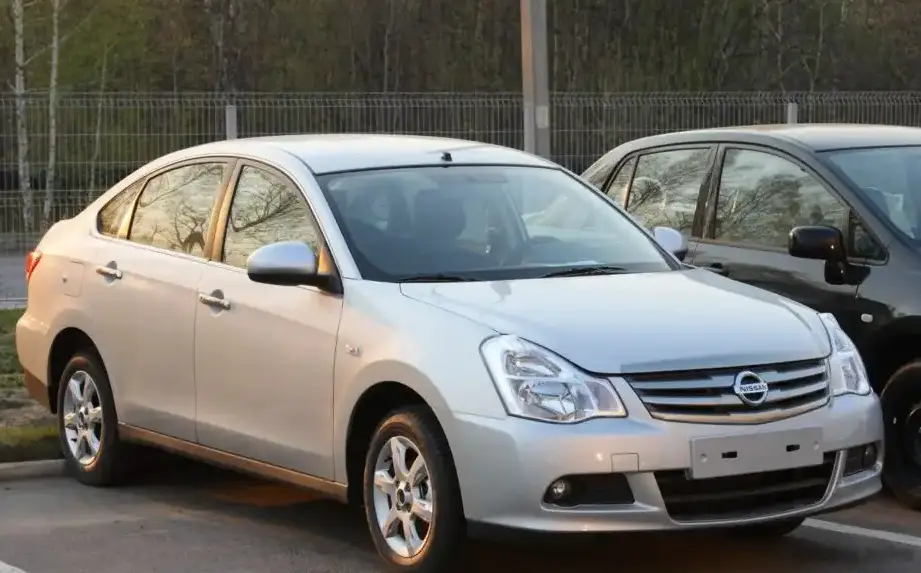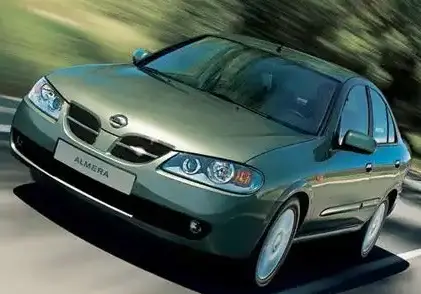
The Nissan Almera II, specifically the N16 series produced from 2003 to 2006, represented Nissan’s entry into the compact sedan market in Europe and several other international markets. The 1.8 16V variant, equipped with a four-speed automatic transmission, occupied a mid-range position within the Almera II lineup, offering a balance between performance and convenience. This model aimed to provide a comfortable and practical option for families and commuters seeking a reliable and reasonably equipped vehicle. It was positioned above the base 1.5L models and below the more performance-oriented, though less commonly available, options.
Technical Specifications
| Brand | Nissan |
| Model | Almera |
| Generation | Almera II (N16, facelift 2003) |
| Type (Engine) | 1.8 16V (116 Hp) Automatic |
| Start of production | 2003 |
| End of production | 2006 |
| Powertrain Architecture | Internal Combustion engine |
| Body type | Sedan |
| Seats | 5 |
| Doors | 4 |
| Fuel Type | Petrol (Gasoline) |
| Acceleration 0 – 100 km/h | 11.2 sec |
| Acceleration 0 – 62 mph | 11.2 sec |
| Acceleration 0 – 60 mph | 10.6 sec |
| Maximum speed | 180 km/h (111.85 mph) |
| Weight-to-power ratio | 9.6 kg/Hp, 104 Hp/tonne |
| Weight-to-torque ratio | 6.8 kg/Nm, 146.2 Nm/tonne |
| Power | 116 Hp @ 5600 rpm |
| Power per litre | 65.6 Hp/l |
| Torque | 163 Nm @ 4000 rpm (120.22 lb.-ft. @ 4000 rpm) |
| Engine layout | Front, Transverse |
| Engine Model/Code | QG18DE |
| Engine displacement | 1769 cm3 (107.95 cu. in.) |
| Number of cylinders | 4 |
| Engine configuration | Inline |
| Cylinder Bore | 80 mm (3.15 in.) |
| Piston Stroke | 88 mm (3.46 in.) |
| Compression ratio | 9.5:1 |
| Number of valves per cylinder | 4 |
| Fuel injection system | Multi-port manifold injection |
| Engine aspiration | Naturally aspirated engine |
| Valvetrain | DOHC |
| Engine oil capacity | 2.9 l (3.06 US qt | 2.55 UK qt) |
| Coolant | 6.7 l (7.08 US qt | 5.9 UK qt) |
| Kerb Weight | 1115 kg (2458.15 lbs.) |
| Max. weight | 1735 kg (3825.02 lbs.) |
| Max load | 620 kg (1366.87 lbs.) |
| Trunk (boot) space – minimum | 393 l (13.88 cu. ft.) |
| Fuel tank capacity | 60 l (15.85 US gal | 13.2 UK gal) |
| Length | 4425 mm (174.21 in.) |
| Width | 1695 mm (66.73 in.) |
| Height | 1445 mm (56.89 in.) |
| Wheelbase | 2535 mm (99.8 in.) |
| Front track | 1470 mm (57.87 in.) |
| Rear (Back) track | 1450 mm (57.09 in.) |
| Ride height (ground clearance) | 165 mm (6.5 in.) |
| Drivetrain Architecture | The Internal combustion engine (ICE) drives the front wheels of the vehicle. |
| Drive wheel | Front wheel drive |
| Number of gears and type of gearbox | 4 gears, automatic transmission |
| Front suspension | Spring Strut |
| Rear suspension | Rigid axle suspension |
| Front brakes | Ventilated discs |
| Rear brakes | Drum |
| Assisting systems | ABS (Anti-lock braking system) |
| Steering type | Steering rack and pinion |
| Power steering | Hydraulic Steering |
| Tires size | 185/65 R15 |
| Wheel rims size | 15 |
Powertrain & Engine Architecture
The heart of the Almera II 1.8 Automatic is the QG18DE engine, a 1.8-liter inline-four cylinder gasoline engine. This engine is part of Nissan’s QG series, known for its relatively simple design and focus on reliability. The QG18DE utilizes a dual overhead camshaft (DOHC) valvetrain with four valves per cylinder, contributing to its decent power output for its displacement. Fuel delivery is managed by a multi-port fuel injection system, providing precise fuel metering for efficient combustion. The engine produces 116 horsepower at 5600 rpm and 163 Nm (120.22 lb-ft) of torque at 4000 rpm. Paired with this engine is a four-speed automatic transmission. While not the most modern transmission by today’s standards, it provided smooth and convenient shifting for everyday driving. The transmission’s gear ratios were tuned for fuel efficiency and comfortable cruising rather than outright performance.
Driving Characteristics
The 1.8L automatic Almera II offered a comfortable, if not particularly sporty, driving experience. Acceleration from 0-60 mph took around 10.6 seconds, which was adequate for typical commuting and highway merging. The automatic transmission, while smooth, did contribute to a slight loss of responsiveness compared to the available five-speed manual version. The engine’s torque curve was relatively flat, providing usable power across a wide range of engine speeds. However, drivers seeking more spirited performance would find the engine lacking compared to higher-output variants. The suspension setup prioritized comfort, resulting in a relatively soft ride quality. This made the Almera II a pleasant companion on long journeys, but it also meant that handling was not as sharp or engaging as some of its competitors.
Equipment & Trim Levels
The 1.8 Automatic trim level typically included features such as air conditioning, power windows, central locking, and an audio system. Higher trim levels, often denoted by suffixes like ‘SE’ or ‘S’, added features like alloy wheels, upgraded interior trim, and potentially a sunroof. Interior upholstery was generally cloth, with options for upgraded materials on higher trims. The dashboard layout was functional and straightforward, prioritizing ease of use over stylistic flair. Optional extras could include features like a CD changer, upgraded speakers, and metallic paint finishes.
Chassis & Braking
The Almera II utilized a front-engine, front-wheel-drive layout. The front suspension employed a MacPherson strut setup, while the rear suspension featured a torsion beam axle. This configuration provided a good balance between ride comfort and handling. Braking duties were handled by ventilated discs on the front wheels and drum brakes on the rear. Anti-lock Braking System (ABS) was standard, enhancing safety by preventing wheel lockup during hard braking. The steering system was a rack-and-pinion setup with hydraulic power assistance, providing light and easy steering feel.
Market Reception & Comparison
The Nissan Almera II 1.8 Automatic was generally well-received as a practical and reliable family sedan. Critics praised its comfortable ride, spacious interior, and reasonable fuel economy. However, some reviewers noted that its performance was not particularly exciting, and its styling was somewhat conservative. Compared to other trims in the Almera II lineup, the 1.8 Automatic offered a good compromise between performance and fuel efficiency. The 1.5L models were more affordable but lacked the power of the 1.8L, while the higher-output variants (if available in specific markets) offered more performance but at a higher price point and with potentially increased fuel consumption.
Legacy
The QG18DE engine, when properly maintained, proved to be a durable and reliable unit. The four-speed automatic transmission, while not as sophisticated as modern transmissions, also demonstrated reasonable longevity. Today, used examples of the Almera II 1.8 Automatic are relatively affordable and can be found in good condition. Common issues include wear and tear on suspension components and potential corrosion, particularly in regions with harsh winters. However, the Almera II remains a viable option for budget-conscious buyers seeking a dependable and practical compact sedan. Its simplicity and relatively low maintenance costs contribute to its continued appeal in the used car market.