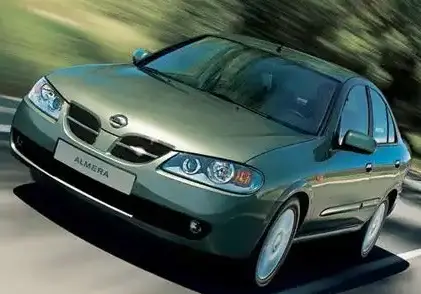
The Nissan Almera II (N16) facelift, produced from 2003 to 2006, marked a significant refinement of Nissan’s compact car offering for the European market. While never officially sold in North America, this generation Almera was designed to compete with popular models like the Ford Focus, Opel/Vauxhall Astra, and Peugeot 307. The 2.2 dCi variant, delivering 136 horsepower, was positioned as the premium engine choice within the Almera II lineup, appealing to buyers who prioritized fuel efficiency, long-distance comfort, and practicality. It found its primary market in Europe and other international regions.
Technical Specifications
| Brand | Nissan |
| Model | Almera |
| Generation | Almera II (N16, facelift 2003) |
| Type (Engine) | 2.2 dCi (136 Hp) |
| Start of production | 2003 |
| End of production | 2006 |
| Powertrain Architecture | Internal Combustion engine |
| Body type | Sedan |
| Seats | 5 |
| Doors | 4 |
| Fuel consumption (urban) | 7.9 l/100 km (29.8 US mpg) |
| Fuel consumption (extra urban) | 4.8 l/100 km (49 US mpg) |
| Fuel Type | Diesel |
| Acceleration 0 – 100 km/h | 9.2 sec |
| Acceleration 0 – 62 mph | 9.2 sec |
| Acceleration 0 – 60 mph | 8.7 sec |
| Maximum speed | 200 km/h (124.27 mph) |
| Weight-to-power ratio | 9.1 kg/Hp |
| Weight-to-torque ratio | 3.9 kg/Nm |
| Power | 136 Hp @ 4000 rpm |
| Torque | 314 Nm @ 2000 rpm (231.59 lb.-ft. @ 2000 rpm) |
| Engine layout | Front, Transverse |
| Engine Model/Code | YD22DDTi |
| Engine displacement | 2184 cm3 (133.28 cu. in.) |
| Number of cylinders | 4 |
| Engine configuration | Inline |
| Cylinder Bore | 86 mm (3.39 in.) |
| Piston Stroke | 94 mm (3.7 in.) |
| Compression ratio | 18:1 |
| Number of valves per cylinder | 4 |
| Fuel injection system | Diesel Commonrail |
| Engine aspiration | Turbocharger, Intercooler |
| Valvetrain | DOHC |
| Engine oil capacity | 5.4 l (5.71 US qt | 4.75 UK qt) |
| Coolant capacity | 8.7 l (9.19 US qt | 7.65 UK qt) |
| Kerb Weight | 1240 kg (2733.73 lbs.) |
| Max. weight | 1800 kg (3968.32 lbs.) |
| Max load | 560 kg (1234.59 lbs.) |
| Trunk (boot) space – minimum | 393 l (13.88 cu. ft.) |
| Fuel tank capacity | 60 l (15.85 US gal | 13.2 UK gal) |
| Length | 4425 mm (174.21 in.) |
| Width | 1695 mm (66.73 in.) |
| Height | 1445 mm (56.89 in.) |
| Wheelbase | 2535 mm (99.8 in.) |
| Front track | 1470 mm (57.87 in.) |
| Rear track | 1450 mm (57.09 in.) |
| Drivetrain Architecture | Front wheel drive |
| Number of gears | 6 |
| Gearbox type | Manual transmission |
| Front suspension | Wishbone |
| Rear suspension | Rigid axle suspension |
| Front brakes | Ventilated discs |
| Rear brakes | Disc |
| Steering type | Steering rack and pinion |
| Power steering | Hydraulic |
| Tires size | 185/65 R15 |
| Wheel rims size | 15 |
Powertrain & Engine Architecture
The Nissan Almera II 2.2 dCi was powered by the YD22DDTi engine, a 2.2-liter inline-four cylinder diesel. This engine represented Nissan’s advancements in common-rail direct injection technology. The YD22DDTi incorporated a turbocharger with an intercooler, resulting in an output of 136 horsepower and 314 Nm (231.59 lb-ft) of torque. The Bosch-supplied common-rail system enabled precise fuel delivery, contributing to both improved fuel economy and reduced emissions. The engine featured a double overhead camshaft (DOHC) valvetrain with four valves per cylinder, optimizing gas flow for enhanced performance. A 6-speed manual transmission was standard, offering a balance between efficiency and driver control. The engine’s transverse mounting and front-wheel-drive layout were typical for compact European cars of the period.
Driving Characteristics
The 2.2 dCi engine provided a noticeable performance upgrade compared to the 1.5 and 1.8-liter petrol engines offered in the Almera II range. While not a performance-oriented vehicle, the 136 hp and 314 Nm of torque allowed for brisk acceleration, achieving 0-60 mph in approximately 8.7 seconds. The turbocharger delivered a surge of power in the mid-range, facilitating effortless overtaking. The 6-speed manual transmission complemented the engine’s characteristics, providing smooth gear changes and allowing the driver to maintain the engine within its optimal power band. Compared to the petrol versions, the diesel offered significantly improved fuel economy, making it a popular choice for long-distance drivers. However, the diesel engine was inherently louder and produced more vibration than its petrol counterparts.
Equipment & Trim Levels
The 2.2 dCi variant of the Almera II generally included a higher level of standard equipment compared to the base models. This typically included air conditioning, power windows, central locking, and an upgraded audio system. Higher trim levels added features such as alloy wheels, fog lights, a multi-function steering wheel, and climate control. Interior upholstery was usually cloth, with leather options available on select models. The dashboard design was functional and user-friendly, prioritizing practicality over elaborate styling. Optional extras included a sunroof, parking sensors, and a navigation system.
Chassis & Braking
The Almera II featured a conventional chassis setup. The front suspension utilized independent wishbones, providing a comfortable ride and reasonable handling. The rear suspension employed a rigid axle, a cost-effective solution that offered less sophisticated handling characteristics. Braking was handled by ventilated discs at the front and solid discs at the rear. Hydraulic power steering was standard, providing light and easy steering input. The 185/65 R15 tires offered a balance between ride comfort and grip.
Market Reception & Comparison
The Nissan Almera II 2.2 dCi received generally positive reviews from automotive critics, praising its fuel efficiency, comfortable ride, and respectable performance. However, it was often criticized for its somewhat unremarkable styling and uninspired interior. Compared to competitors like the Ford Focus and Opel/Vauxhall Astra, the Almera II was often perceived as lacking the same level of driving engagement. The 2.2 dCi engine offered a significant fuel economy advantage over the petrol engines, but it also carried a higher purchase price. Reliability was generally good, although some owners reported issues with the diesel particulate filter (DPF) and the common-rail injection system.
Legacy
The Nissan Almera II 2.2 dCi remains a relatively affordable and practical used car option today. The YD22DDTi engine, while not without potential issues, is generally considered a robust and reliable unit when properly maintained. The availability of spare parts is good, and its relatively simple mechanical design makes it accessible to independent mechanics. However, prospective buyers should be aware of the potential for DPF problems and the importance of regular servicing. The Almera II 2.2 dCi represents a solid, if not exceptional, example of a European compact diesel, offering a blend of fuel efficiency, practicality, and affordability.