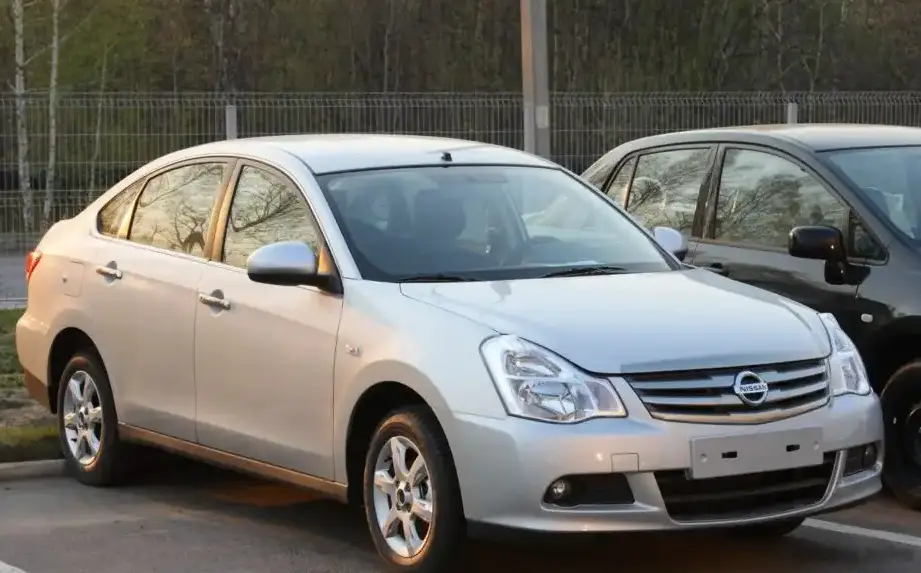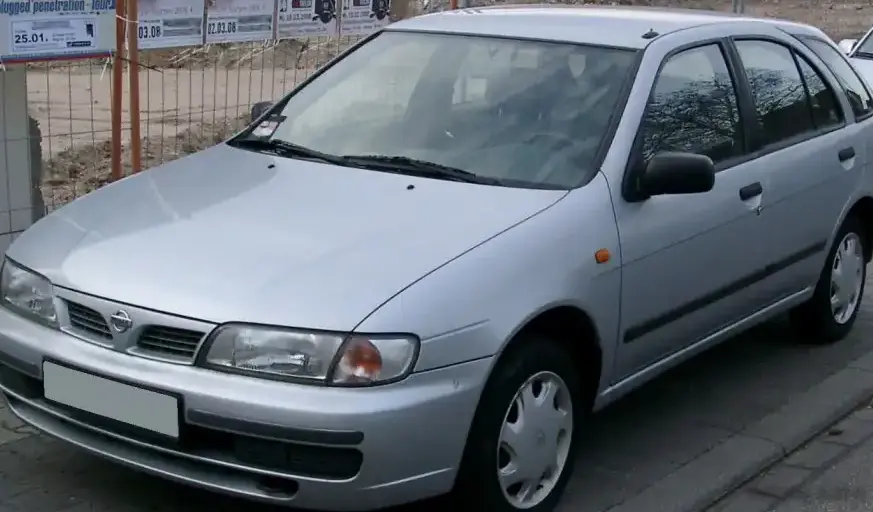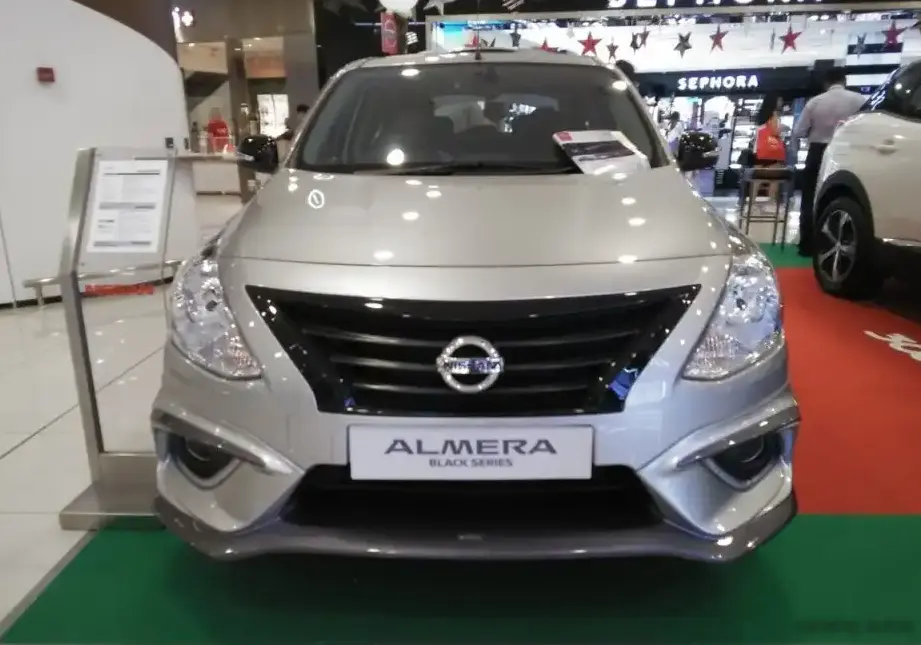
The Nissan Almera III (N17) facelift, specifically the 1.5-liter (99 horsepower) variant paired with an automatic transmission, was produced from 2015 to 2018. This model represented a significant update to the N17 Almera, primarily aimed at the European and Asian markets, including regions like Russia and Malaysia. Positioned as an entry-level to mid-range offering within the Almera lineup, it provided a more affordable and fuel-efficient alternative to the higher-powered engine options. The facelift brought styling revisions and minor equipment upgrades, enhancing the car’s appeal in a competitive compact sedan segment.
Technical Specifications
| Brand | Nissan |
| Model | Almera |
| Generation | Almera III (N17, facelift 2015) |
| Type (Engine) | 1.5 (99 Hp) Automatic |
| Start of production | 2015 |
| End of production | 2018 |
| Powertrain Architecture | Internal Combustion engine |
| Body type | Sedan |
| Seats | 5 |
| Doors | 4 |
| Fuel Type | Petrol (Gasoline) |
| Weight-to-power ratio | 10.7 kg/Hp, 93.8 Hp/tonne |
| Weight-to-torque ratio | 7.9 kg/Nm, 126.9 Nm/tonne |
| Power | 99 Hp @ 6000 rpm |
| Power per litre | 66.1 Hp/l |
| Torque | 134 Nm @ 4000 rpm (98.83 lb.-ft. @ 4000 rpm) |
| Engine Model/Code | HR15DE |
| Engine displacement | 1498 cm3 (91.41 cu. in.) |
| Number of cylinders | 4 |
| Engine configuration | Inline |
| Cylinder Bore | 78 mm (3.07 in.) |
| Piston Stroke | 78.4 mm (3.09 in.) |
| Number of valves per cylinder | 4 |
| Fuel injection system | Multi-port manifold injection |
| Engine aspiration | Naturally aspirated engine |
| Valvetrain | DOHC |
| Engine oil capacity | 3 l (3.17 US qt | 2.64 UK qt) |
| Coolant | 6 l (6.34 US qt | 5.28 UK qt) |
| Kerb Weight | 1056-1077 kg (2328.08 – 2374.38 lbs.) |
| Trunk (boot) space – minimum | 490 l (17.3 cu. ft.) |
| Fuel tank capacity | 41 l (10.83 US gal | 9.02 UK gal) |
| Length | 4425 mm (174.21 in.) |
| Width | 1695 mm (66.73 in.) |
| Height | 1505 mm (59.25 in.) |
| Wheelbase | 2600 mm (102.36 in.) |
| Minimum turning circle (turning diameter) | 10.6 m (34.78 ft.) |
| Drivetrain Architecture | The Internal combustion engine (ICE) drives the front wheels of the vehicle. |
| Drive wheel | Front wheel drive |
| Number of gears and type of gearbox | 4 gears, automatic transmission |
| Front suspension | Independent, type McPherson with coil spring and anti-roll bar |
| Rear suspension | Torsion |
| Front brakes | Ventilated discs |
| Rear brakes | Drum |
| Assisting systems | ABS (Anti-lock braking system) |
| Power steering | Electric Steering |
| Tires size | 185/65 R15 |
| Wheel rims size | 5.5J x 15 |
Powertrain & Engine Architecture
The heart of this Almera variant is the HR15DE 1.5-liter inline-four cylinder engine. This engine is a naturally aspirated powerplant utilizing multi-point fuel injection. The HR series engines are known for their relatively simple design and focus on fuel efficiency rather than outright performance. The engine features a double overhead camshaft (DOHC) valvetrain, contributing to improved breathing and efficiency. The 99 horsepower output is achieved at 6000 rpm, while peak torque of 134 Nm (98.83 lb-ft) arrives at 4000 rpm. Paired with this engine is a four-speed automatic transmission. This transmission, while providing convenience, is a relatively older design compared to the continuously variable transmissions (CVTs) becoming increasingly common in the segment. The four-speed automatic prioritizes simplicity and cost-effectiveness over maximizing fuel economy or offering rapid gear changes.
Driving Characteristics
The 1.5-liter automatic Almera delivers a comfortable, but not particularly engaging, driving experience. Acceleration is adequate for everyday driving, but the 99 horsepower and four-speed automatic limit its ability to handle steep inclines or quick overtaking maneuvers. The automatic transmission’s gear ratios are tuned for fuel economy, resulting in a noticeable delay during acceleration. Compared to the manual transmission versions of the same engine, the automatic suffers a slight performance penalty. Higher-powered Almera variants, such as those equipped with larger engines, offered significantly more responsive acceleration and a more dynamic driving experience. The suspension is tuned for comfort, absorbing bumps and imperfections in the road reasonably well, but it doesn’t provide a particularly sporty feel.
Equipment & Trim Levels
The 1.5-liter automatic Almera typically came equipped with a standard set of features, including air conditioning, power windows, power steering, and a basic audio system. Safety features generally included ABS (Anti-lock Braking System) and dual front airbags. Interior upholstery was typically cloth, with a relatively simple dashboard layout. Optional extras could include alloy wheels, a more advanced audio system with Bluetooth connectivity, and rear parking sensors. Trim levels varied depending on the specific market, but this variant generally represented a mid-range offering, bridging the gap between the base models and the more fully equipped versions.
Chassis & Braking
The Almera N17 utilizes a front-wheel-drive layout. The front suspension employs an independent McPherson strut setup with coil springs and an anti-roll bar, providing a balance of comfort and handling. The rear suspension utilizes a torsion beam setup, which is a cost-effective and space-efficient solution. Braking duties are handled by ventilated discs at the front and drum brakes at the rear. While adequate for normal driving conditions, the drum brakes at the rear are less effective than disc brakes, particularly during repeated or hard braking. Electric power steering is standard, providing light and easy steering feel.
Market Reception & Comparison
The 1.5-liter automatic Almera was generally well-received as a practical and affordable compact sedan. Critics praised its fuel efficiency and comfortable ride, but noted its lack of performance and somewhat dated automatic transmission. Compared to rivals like the Toyota Corolla and Honda Civic, the Almera offered a more competitive price point, but often lacked the same level of refinement and driving dynamics. In terms of fuel economy, the 1.5-liter automatic Almera typically achieved around 6.0-7.0 liters per 100 kilometers (39-45 mpg) in mixed driving conditions, making it a relatively economical choice for urban commuters.
Legacy
The HR15DE engine, in general, has proven to be a relatively reliable powerplant, with few major issues reported. The four-speed automatic transmission, while not the most advanced, is also generally durable. However, as with any used car, regular maintenance is crucial to ensure long-term reliability. In the used car market, the 1.5-liter automatic Almera represents a budget-friendly option for those seeking a practical and economical compact sedan. Its simplicity and relatively low running costs make it an appealing choice for first-time car buyers or those on a tight budget. While it may not offer the excitement of more powerful rivals, it provides a dependable and comfortable transportation solution.