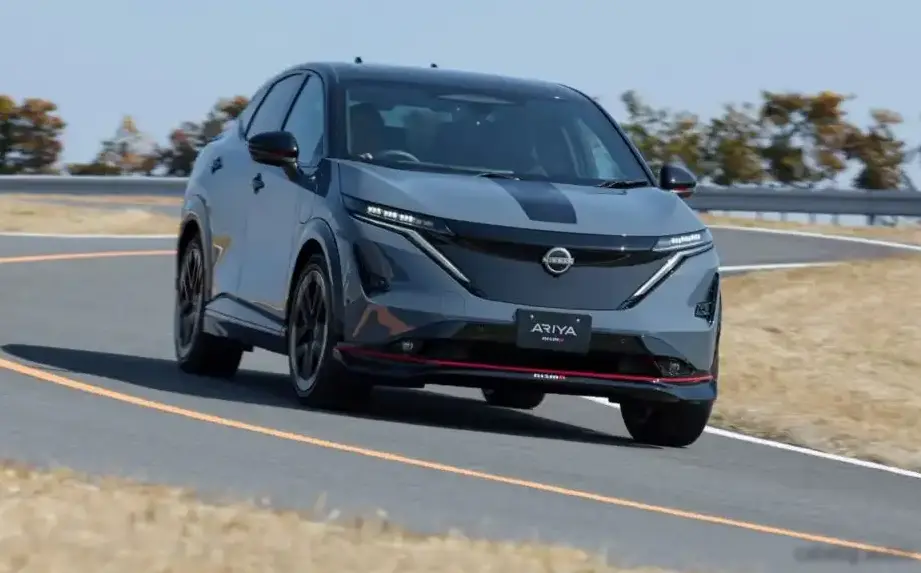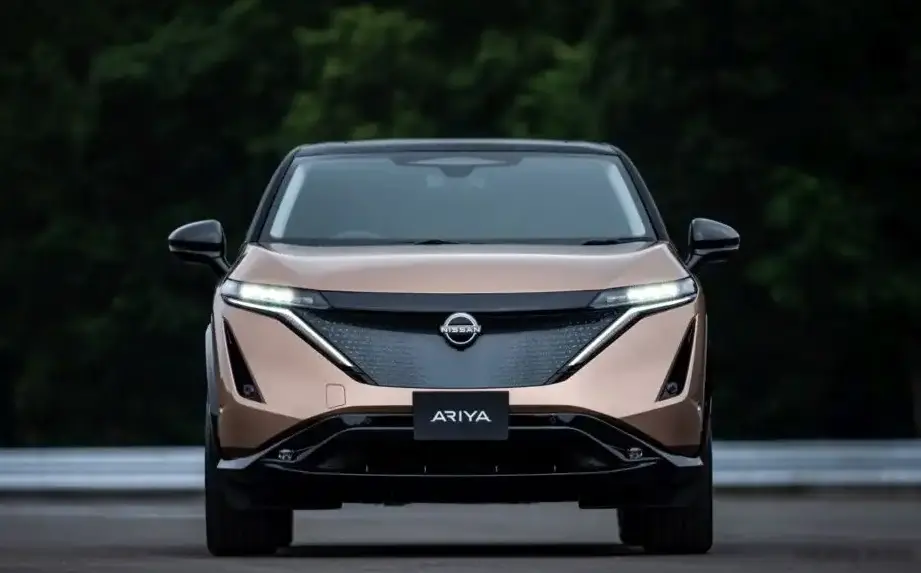
The Nissan Ariya 90 kWh, producing 242 horsepower, represents Nissan’s significant entry into the all-electric crossover market. Introduced in 2021, the Ariya is built upon the CMF-EV platform co-developed with Renault, marking a departure from Nissan’s traditional internal combustion engine vehicle architecture. This variant, equipped with the larger 90 kWh battery pack, is positioned as a mid-to-upper range offering within the Ariya lineup, prioritizing extended range and a comfortable driving experience over outright performance. It aims to compete with established electric vehicles like the Tesla Model Y, Hyundai IONIQ 5, and Kia EV6, offering a blend of Japanese engineering, innovative technology, and a distinctive design aesthetic.
Technical Specifications
| Brand | Nissan |
| Model | Ariya |
| Generation | Ariya |
| Type (Engine) | 90 kWh (242 Hp) |
| Start of production | 2021 |
| Powertrain Architecture | BEV (Electric Vehicle) |
| Body type | Coupe, SUV |
| Seats | 5 |
| Doors | 5 |
| Fuel Type | Electricity |
| Acceleration 0 – 100 km/h | 7.6 sec |
| Acceleration 0 – 62 mph | 7.6 sec |
| Acceleration 0 – 60 mph | 7.2 sec |
| Maximum speed | 160 km/h (99.42 mph) |
| Gross battery capacity | 90 kWh |
| All-electric range (WLTP) | 499 km (310.06 mi) |
| Electric motor power | 242 Hp |
| Electric motor Torque | 300 Nm (221.27 lb.-ft.) |
| Electric motor location | Front axle, Transverse |
| System power | 242 Hp |
| Trunk (boot) space – minimum | 466-468 l (16.46 – 16.53 cu. ft.) |
| Length | 4595 mm (180.91 in.) |
| Width | 1850 mm (72.83 in.) |
| Height | 1660 mm (65.35 in.) |
| Wheelbase | 2775 mm (109.25 in.) |
| Drivetrain Architecture | One electric motor drives the front wheels. |
| Drive wheel | Front wheel drive |
| Number of gears and type of gearbox | 1 gears, automatic transmission |
| Rear suspension | Independent multi-link suspension |
| Tires size | 235/55 R19; 255/45 R20 |
| Wheel rims size | 19; 20 |
Powertrain & Engine Architecture
The Ariya 90 kWh utilizes a permanent magnet synchronous motor driving the front wheels. This single-motor configuration simplifies the drivetrain and contributes to efficiency. The 90 kWh battery pack employs a lithium-ion chemistry, providing a substantial energy reserve for extended range. Nissan’s thermal management system is crucial for maintaining optimal battery temperature, ensuring consistent performance and longevity. The Ariya doesn’t have a traditional multi-speed transmission; instead, it employs a single-speed reduction gear. This is typical for electric vehicles, as electric motors deliver maximum torque from zero RPM, negating the need for multiple gears. The power electronics, including the inverter, are integrated into the powertrain to efficiently convert DC power from the battery to AC power for the motor.
Driving Characteristics
The Ariya 90 kWh offers a smooth and refined driving experience. Acceleration from 0-60 mph in approximately 7.2 seconds is respectable, though not as brisk as dual-motor, all-wheel-drive variants. The single-motor configuration results in a more front-wheel-drive feel, with some torque steer noticeable under hard acceleration. The Ariya’s low center of gravity, thanks to the battery pack being mounted in the floor, contributes to stable handling. The single-speed transmission provides seamless acceleration, and the regenerative braking system allows for one-pedal driving in certain modes, enhancing efficiency and convenience. Compared to the dual-motor Ariya, the 90 kWh version prioritizes range and efficiency over outright performance.
Equipment & Trim Levels
The Ariya 90 kWh is typically offered in higher trim levels, such as the Evolve+ and Empower+. Standard features generally include Nissan’s ProPILOT Assist 2.0, a suite of advanced driver-assistance systems offering hands-off driving in certain conditions. Interior appointments include premium cloth or leather upholstery, a large dual-screen infotainment system, and a panoramic sunroof. Optional extras often include a Bose audio system, heated and ventilated front seats, and a head-up display. The Ariya’s interior is characterized by its minimalist design and high-quality materials, creating a comfortable and technologically advanced cabin.
Chassis & Braking
The Ariya utilizes a MacPherson strut front suspension and an independent multi-link rear suspension. This setup provides a good balance of ride comfort and handling. The suspension is tuned to prioritize comfort, but it remains composed during cornering. The Ariya features disc brakes on all four wheels, providing ample stopping power. Regenerative braking contributes significantly to slowing the vehicle, reducing wear on the conventional brakes. The Ariya’s chassis is designed to be lightweight and rigid, enhancing both efficiency and handling. The steering is electrically assisted, providing a light and precise feel.
Market Reception & Comparison
The Nissan Ariya has been generally well-received by critics, praised for its stylish design, spacious interior, and advanced technology. However, some reviewers have noted the relatively modest acceleration of the single-motor variants compared to competitors. The Ariya’s range of approximately 310 miles (WLTP) is competitive with other electric crossovers in its class. Compared to the dual-motor Ariya, the 90 kWh version offers a longer range but sacrifices some performance. Fuel economy, expressed as MPGe (miles per gallon equivalent), is competitive with other electric vehicles, typically exceeding 100 MPGe combined. Reliability data is still emerging, but Nissan has a generally good reputation for building durable vehicles.
Legacy
The Nissan Ariya represents a pivotal moment for Nissan, signaling its commitment to electrification. The 90 kWh variant, with its extended range, is likely to become a popular choice for buyers seeking a practical and efficient electric crossover. The Ariya’s innovative technology, including ProPILOT Assist 2.0 and the dual-screen infotainment system, sets a new standard for Nissan. As the electric vehicle market continues to evolve, the Ariya is poised to remain a competitive and influential player. The long-term reliability of the Ariya’s powertrain remains to be seen, but Nissan’s extensive experience in electric vehicle technology suggests a promising outlook. The Ariya’s impact on the used car market will depend on factors such as battery degradation and the availability of charging infrastructure.