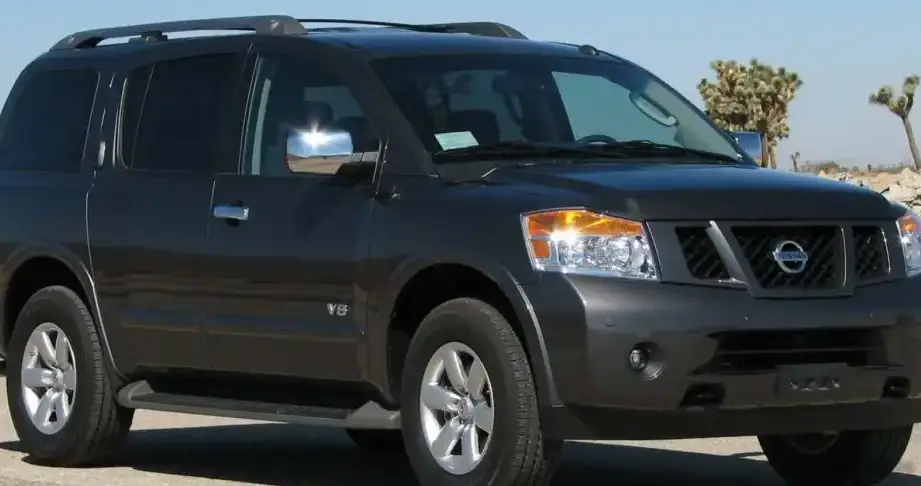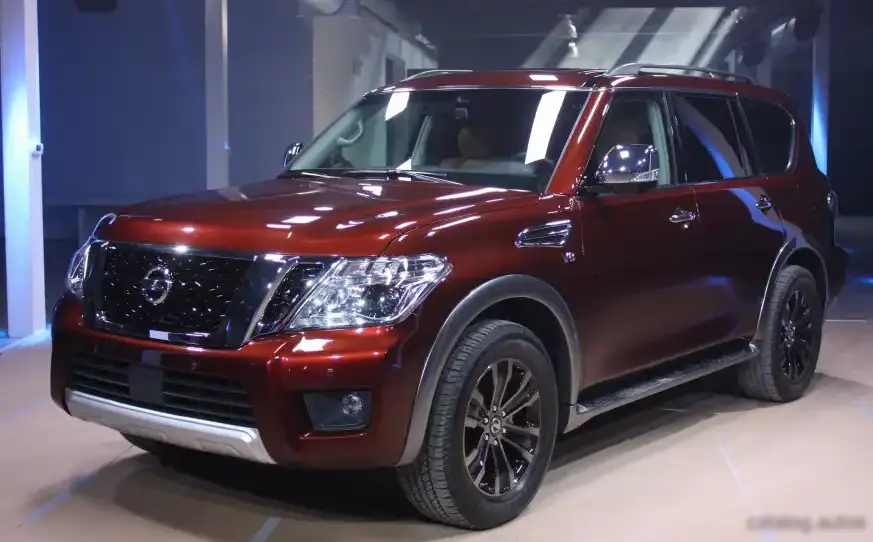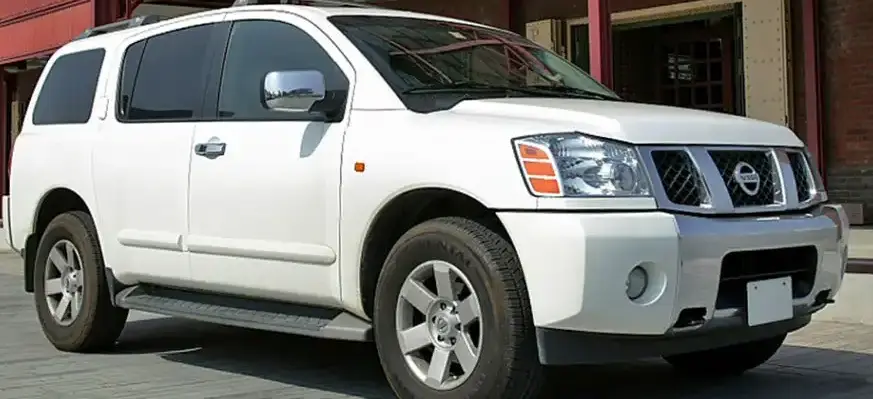
The Nissan Armada, introduced for the 2004 model year, represented Nissan’s entry into the full-size SUV segment in North America. Built on the Nissan F-Alpha platform (WA60 chassis), the Armada was essentially a rebadged version of the Nissan Patrol, a globally sold SUV known for its ruggedness and off-road capability. The 5.6-liter V8 engine variant, producing 305 horsepower, was the primary powertrain offered throughout the first generation’s production run from 2004 to 2007. This model aimed to compete with established American SUVs like the Chevrolet Tahoe and Ford Expedition, offering a blend of space, power, and a more luxurious interior than some of its domestic rivals. The 5-speed automatic transmission was standard across the range.
Technical Specifications
| Brand | Nissan |
| Model | Armada |
| Generation | Armada I (WA60) |
| Type (Engine) | 5.6 i V8 32V (305 Hp) |
| Start of production | 2003 year |
| End of production | 2007 year |
| Powertrain Architecture | Internal Combustion engine |
| Body type | SUV |
| Seats | 8 |
| Doors | 5 |
| Fuel consumption (economy) – urban | 18.1 l/100 km (13 US mpg, 15.6 UK mpg, 5.5 km/l) |
| Fuel consumption (economy) – extra urban | 12.4 l/100 km (19 US mpg, 22.8 UK mpg, 8.1 km/l) |
| Fuel consumption (economy) – combined | 15.2 l/100 km (15.5 US mpg, 18.6 UK mpg, 6.6 km/l) |
| Fuel Type | Petrol (Gasoline) |
| Acceleration 0 – 100 km/h | 7.3 sec |
| Acceleration 0 – 62 mph | 7.3 sec |
| Acceleration 0 – 60 mph | 6.9 sec |
| Maximum speed | 185 km/h (114.95 mph) |
| Weight-to-power ratio | 7.7 kg/Hp, 130.3 Hp/tonne |
| Weight-to-torque ratio | 4.5 kg/Nm, 223.1 Nm/tonne |
| Power | 305 Hp @ 4900 rpm |
| Power per litre | 54.9 Hp/l |
| Torque | 522 Nm (385.01 lb.-ft.) |
| Engine layout | Front, Longitudinal |
| Engine Model/Code | VK56DE |
| Engine displacement | 5552 cm3 (338.8 cu. in.) |
| Number of cylinders | 8 |
| Engine configuration | V-engine |
| Cylinder Bore | 98 mm (3.86 in.) |
| Piston Stroke | 92 mm (3.62 in.) |
| Compression ratio | 9.8:1 |
| Number of valves per cylinder | 4 |
| Fuel injection system | Multi-port manifold injection |
| Engine aspiration | Naturally aspirated engine |
| Engine oil capacity | 6.2 l (6.55 US qt | 5.46 UK qt) |
| Coolant | 14.4 l (15.22 US qt | 12.67 UK qt) |
| Kerb Weight | 2340 kg (5158.82 lbs.) |
| Max. weight | 3085 kg (6801.26 lbs.) |
| Max load | 745 kg (1642.44 lbs.) |
| Trunk (boot) space – minimum | 566 l (19.99 cu. ft.) |
| Trunk (boot) space – maximum | 2750 l (97.12 cu. ft.) |
| Fuel tank capacity | 106 l (28 US gal | 23.32 UK gal) |
| Length | 5255 mm (206.89 in.) |
| Width | 2002 mm (78.82 in.) |
| Height | 1913 mm (75.31 in.) |
| Wheelbase | 3130 mm (123.23 in.) |
| Front track | 1715 mm (67.52 in.) |
| Rear (Back) track | 1715 mm (67.52 in.) |
| Ride height (ground clearance) | 250 mm (9.84 in.) |
| Drivetrain Architecture | The Internal combustion engine (ICE) drives the rear wheels of the vehicle. |
| Drive wheel | Rear wheel drive |
| Number of gears and type of gearbox | 5 gears, automatic transmission |
| Front suspension | Independent coil spring |
| Rear suspension | Independent coil spring |
| Front brakes | Disc |
| Rear brakes | Drum |
| Assisting systems | ABS (Anti-lock braking system) |
| Tires size | 265/70 R18 |
| Wheel rims size | 18 |
Powertrain & Engine Architecture
The heart of the 2004-2007 Nissan Armada was the VK56DE 5.6-liter V8 engine. This engine, part of Nissan’s VQ engine family, featured a 90-degree V-angle, four valves per cylinder, and a dual overhead camshaft (DOHC) design. The VK56DE utilized a multi-port fuel injection system, delivering fuel directly into the intake ports. The engine’s robust construction and relatively simple design contributed to its reliability. The 5-speed automatic transmission (typically the RE5R05A) was chosen for its durability and ability to handle the engine’s torque output. While not the most technologically advanced transmission available at the time, it proved to be a dependable component. The transmission featured electronically controlled shift points, offering a relatively smooth driving experience.
Driving Characteristics
The Armada 5.6L Automatic offered a comfortable and capable driving experience, prioritizing smooth power delivery over outright sportiness. Acceleration from 0-60 mph was achieved in around 6.9-7.3 seconds, respectable for a full-size SUV of its era. The automatic transmission, while smooth, wasn’t particularly quick to downshift, meaning passing maneuvers required planning. Compared to the later addition of a 5.6L with variable valve timing, the earlier VK56DE felt less responsive at higher RPMs. The rear-wheel-drive configuration provided a more traditional SUV feel, and while four-wheel drive was available, the base model’s RWD setup emphasized on-road comfort and fuel efficiency (though still relatively low for its class). The Armada’s substantial weight was noticeable during cornering, but the independent suspension provided a reasonably comfortable ride over uneven surfaces.
Equipment & Trim Levels
The Armada was generally well-equipped, even in its base trim. Standard features typically included air conditioning, power windows and locks, a CD player, and cloth upholstery. Higher trim levels, such as the LE and SE, added features like leather upholstery, heated seats, a premium sound system, and alloy wheels. Optional extras included a navigation system, a rear entertainment system, and power-adjustable pedals. The interior design was functional and spacious, with seating for up to eight passengers. The third-row seats were relatively comfortable for adults on shorter trips.
Chassis & Braking
The Armada’s chassis was a body-on-frame construction, providing a robust and durable platform. The front suspension utilized independent coil springs, while the rear suspension also employed independent coil springs, a relatively sophisticated setup for a full-size SUV at the time. Braking duties were handled by disc brakes at the front and drum brakes at the rear. Anti-lock braking system (ABS) was standard. The Armada’s substantial weight necessitated a robust braking system, and while adequate, it wasn’t particularly sporty in feel. The standard tire size was 265/70 R18, providing a good balance of on-road comfort and off-road capability.
Market Reception & Comparison
The Nissan Armada was generally well-received by critics, who praised its spacious interior, comfortable ride, and powerful V8 engine. However, it was often criticized for its relatively poor fuel economy and somewhat bland styling. Compared to the Chevrolet Tahoe and Ford Expedition, the Armada offered a more luxurious interior and a smoother ride, but it lacked the brand recognition and established reputation of its American rivals. The 1.8L engine was not available on the Armada, it was only offered with the 5.6L V8. Fuel economy was a significant drawback, averaging around 15.5 mpg in combined driving. Reliability was generally good, although some owners reported issues with the automatic transmission and cooling system.
Legacy
The first-generation Nissan Armada established Nissan as a credible player in the full-size SUV segment. The VK56DE engine proved to be a durable and reliable powerplant, and many examples are still on the road today. While fuel economy remains a concern, the Armada’s spacious interior, comfortable ride, and robust construction continue to appeal to buyers looking for a capable and affordable full-size SUV. In the used car market, the 2004-2007 Armada represents a good value proposition, offering a lot of SUV for the money. However, potential buyers should be aware of potential maintenance issues, such as the automatic transmission and cooling system, and ensure that the vehicle has been properly maintained.