
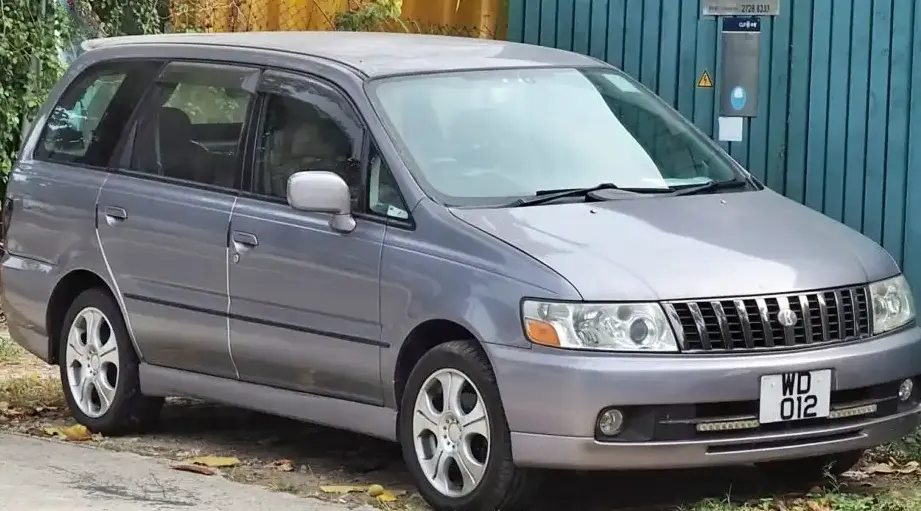
The Nissan Bassara 2.4i 4×4 Automatic, produced between 1999 and 2001, represents a unique offering within Nissan’s lineup of the time. Positioned as a comfortable and spacious family minivan, the Bassara aimed to provide a blend of practicality, all-weather capability with its four-wheel-drive system, and a relatively refined driving experience. This particular variant, equipped with the 2.4-liter inline-four engine and a four-speed automatic transmission, occupied a mid-range position within the Bassara series, offering a step up in performance from the smaller engine options while remaining more accessible than the top-tier trims. The Bassara was primarily marketed in Japan, where large, comfortable minivans were – and continue to be – highly popular. It wasn’t officially sold in the United States.
Technical Specifications
| Brand | Nissan |
| Model | Bassara |
| Generation | Bassara |
| Type | 2.4i (150 Hp) 4×4 Automatic |
| Start of production | 1999 |
| End of production | 2001 |
| Powertrain Architecture | Internal Combustion engine |
| Body type | Minivan |
| Seats | 7 |
| Doors | 5 |
| Fuel Type | Petrol (Gasoline) |
| Weight-to-power ratio | 10.5 kg/Hp, 94.9 Hp/tonne |
| Weight-to-torque ratio | 7.3 kg/Nm, 136.7 Nm/tonne |
| Power | 150 Hp @ 5600 rpm |
| Power per litre | 62.8 Hp/l |
| Torque | 216 Nm @ 4400 rpm (159.31 lb.-ft. @ 4400 rpm) |
| Engine layout | Front, Longitudinal |
| Engine displacement | 2388 cm3 (145.72 cu. in.) |
| Number of cylinders | 4 |
| Engine configuration | Inline |
| Cylinder Bore | 89 mm (3.5 in.) |
| Piston Stroke | 96 mm (3.78 in.) |
| Compression ratio | 9.2:1 |
| Number of valves per cylinder | 4 |
| Fuel injection system | Multi-port manifold injection |
| Engine aspiration | Naturally aspirated engine |
| Valvetrain | DOHC |
| Kerb Weight | 1580 kg (3483.3 lbs.) |
| Max. weight | 2020 kg (4453.34 lbs.) |
| Max load | 440 kg (970.03 lbs.) |
| Fuel tank capacity | 60 l (15.85 US gal | 13.2 UK gal) |
| Length | 4795 mm (188.78 in.) |
| Width | 1770 mm (69.69 in.) |
| Height | 1720 mm (67.72 in.) |
| Wheelbase | 2800 mm (110.24 in.) |
| Front track | 1535 mm (60.43 in.) |
| Rear (Back) track | 1520 mm (59.84 in.) |
| Ride height (ground clearance) | 130 mm (5.12 in.) |
| Drive wheel | All wheel drive (4×4) |
| Number of gears and type of gearbox | 4 gears, automatic transmission |
| Front suspension | Coil spring |
| Rear suspension | Coil spring |
| Front brakes | Ventilated discs |
| Rear brakes | Disc |
| Assisting systems | ABS (Anti-lock braking system) |
| Steering type | Steering rack and pinion |
| Power steering | Hydraulic Steering |
| Tires size | 215/60/R16 |
| Wheel rims size | 16 |
Powertrain & Engine Architecture
The heart of the Bassara 2.4i is the Nissan KA24DE engine, a 2.4-liter (2388 cc) inline-four cylinder powerplant. This engine utilizes a naturally aspirated configuration with multi-port fuel injection and a double overhead camshaft (DOHC) valvetrain. The KA24DE is known for its relative reliability and smooth power delivery, although it isn’t a particularly high-performance engine. The 9.2:1 compression ratio contributes to a balance between efficiency and power output. The four-speed automatic transmission, while providing convenience, is a somewhat dated design by modern standards. It features typical torque converter operation and lacks the efficiency and responsiveness of more modern automatic transmissions with five, six, or even eight speeds. The longitudinal engine layout, coupled with the all-wheel-drive system, necessitates a more complex drivetrain than front-wheel-drive counterparts.
Driving Characteristics
The Bassara 2.4i 4×4 Automatic delivers a comfortable and predictable driving experience. With 150 horsepower and 216 Nm (159.31 lb-ft) of torque, acceleration is adequate for everyday driving, but it’s not particularly brisk. The four-speed automatic transmission contributes to a somewhat leisurely pace, with noticeable gear changes. Compared to the manual transmission versions of the Bassara, the automatic sacrifices some responsiveness. The all-wheel-drive system provides enhanced traction, particularly in inclement weather conditions, making it a suitable choice for regions with snow or rain. The ride quality is generally smooth, thanks to the coil spring suspension, but the vehicle’s weight and size can be felt in corners.
Equipment & Trim Levels
The 2.4i 4×4 Automatic trim typically included features such as power windows, power locks, air conditioning, and an AM/FM radio. Higher trim levels offered options like upgraded audio systems, woodgrain interior trim, and leather upholstery. The Bassara’s interior was designed with family comfort in mind, offering ample space for passengers and cargo. The seven-seat configuration provided flexibility for larger families or groups. The dashboard layout is functional but somewhat dated in appearance, typical of vehicles from the late 1990s and early 2000s.
Chassis & Braking
The Bassara utilizes a conventional chassis design with coil spring suspension at both the front and rear. The front suspension features independent struts, while the rear suspension employs a semi-independent setup. Braking duties are handled by ventilated discs at the front and solid discs at the rear. The inclusion of an Anti-lock Braking System (ABS) enhances safety by preventing wheel lockup during hard braking. Steering is rack-and-pinion with hydraulic power assistance, providing a reasonably responsive feel. The 215/60R16 tires offer a good balance between comfort and grip.
Market Reception & Comparison
The Nissan Bassara was well-received in the Japanese market as a practical and comfortable family minivan. Critics praised its spacious interior, smooth ride, and the added security of all-wheel drive. However, the 2.4i Automatic variant was sometimes criticized for its relatively modest performance compared to other minivans available at the time. Compared to the smaller-engined Bassara models, the 2.4i offered a noticeable improvement in power and drivability. However, it didn’t quite match the performance of larger-displacement engines found in competing minivans. Fuel economy was reasonable for a vehicle of its size and class, but not exceptional.
Legacy
The Nissan Bassara, while not a globally recognized model, holds a certain niche appeal among enthusiasts of Japanese domestic market (JDM) vehicles. The KA24DE engine is known for its durability and relatively simple maintenance requirements. However, as with any vehicle of this age, finding parts can become increasingly challenging. The Bassara 2.4i 4×4 Automatic remains a viable option for those seeking a spacious, comfortable, and reliable minivan, particularly in regions where all-wheel drive is beneficial. In the used car market, these vehicles are typically found at affordable prices, making them an attractive option for budget-conscious buyers. The Bassara represents a snapshot of Japanese automotive engineering from the late 1990s, prioritizing practicality and comfort over outright performance.
