
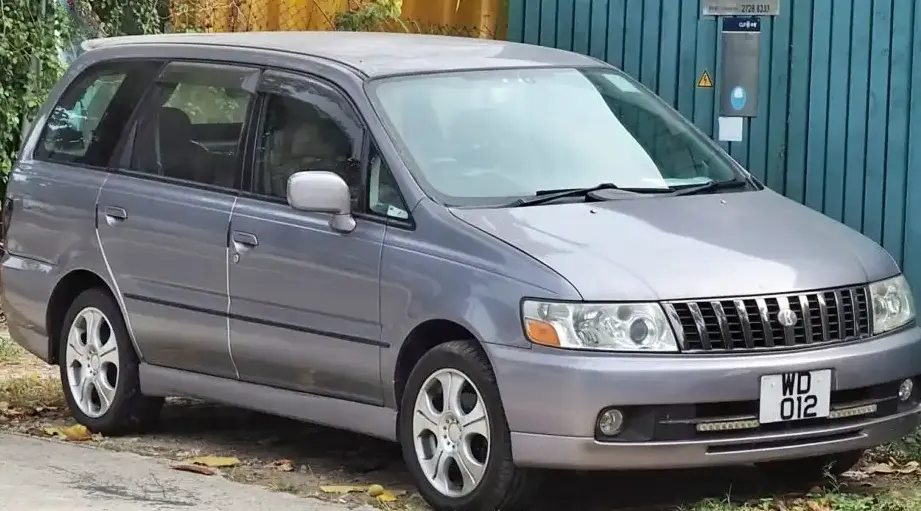
The Nissan Bassara 2.5i 4×4 Automatic, produced between 2001 and 2003, represents a unique offering within Nissan’s lineup during that period. Positioned as a mid-range trim within the broader Bassara generation (U30 chassis), this variant catered to families seeking a spacious, comfortable, and all-weather capable minivan. The Bassara itself was primarily a Japan-market vehicle, not widely exported, making this 2.5i 4×4 Automatic a relatively uncommon sight outside of its domestic market. It aimed to provide a blend of practicality, reasonable performance, and a more premium feel compared to lower-spec Bassara models.
Technical Specifications
| Brand | Nissan |
| Model | Bassara |
| Generation | Bassara |
| Type | 2.5i (165 Hp) 4×4 Automatic |
| Start of production | 2001 |
| End of production | 2003 |
| Powertrain Architecture | Internal Combustion engine |
| Body type | Minivan |
| Seats | 7 |
| Doors | 5 |
| Fuel Type | Petrol (Gasoline) |
| Maximum speed | 180 km/h (111.85 mph) |
| Weight-to-power ratio | 9.6 kg/Hp, 104.4 Hp/tonne |
| Weight-to-torque ratio | 6.8 kg/Nm, 147.5 Nm/tonne |
| Power | 165 Hp @ 6000 rpm |
| Power per litre | 66.3 Hp/l |
| Torque | 233 Nm @ 4000 rpm (171.85 lb.-ft. @ 4000 rpm) |
| Engine layout | Front, Longitudinal |
| Engine displacement | 2488 cm3 (151.83 cu. in.) |
| Number of cylinders | 4 |
| Engine configuration | Inline |
| Cylinder Bore | 89 mm (3.5 in.) |
| Piston Stroke | 100 mm (3.94 in.) |
| Compression ratio | 9.5:1 |
| Number of valves per cylinder | 4 |
| Fuel injection system | Multi-port manifold injection |
| Engine aspiration | Naturally aspirated engine |
| Valvetrain | DOHC |
| Kerb Weight | 1580 kg (3483.3 lbs.) |
| Max. weight | 2020 kg (4453.34 lbs.) |
| Max load | 440 kg (970.03 lbs.) |
| Fuel tank capacity | 65 l (17.17 US gal | 14.3 UK gal) |
| Length | 4795 mm (188.78 in.) |
| Width | 1770 mm (69.69 in.) |
| Height | 1720 mm (67.72 in.) |
| Wheelbase | 2800 mm (110.24 in.) |
| Front track | 1535 mm (60.43 in.) |
| Rear (Back) track | 1520 mm (59.84 in.) |
| Ride height (ground clearance) | 150 mm (5.91 in.) |
| Drive wheel | All wheel drive (4×4) |
| Number of gears and type of gearbox | 4 gears, automatic transmission |
| Front suspension | Coil spring |
| Rear suspension | Coil spring |
| Front brakes | Ventilated discs |
| Rear brakes | Disc |
| Assisting systems | ABS (Anti-lock braking system) |
| Steering type | Steering rack and pinion |
| Power steering | Hydraulic Steering |
| Tires size | 205/65 R16 |
| Wheel rims size | 16 |
Powertrain & Engine Architecture
The heart of the Bassara 2.5i is Nissan’s 2.5-liter (2488 cc) inline-four cylinder engine, designated as the QR25DE. This engine is a naturally aspirated unit featuring multi-port fuel injection and a double overhead camshaft (DOHC) valvetrain with four valves per cylinder. The QR series engines were known for their relatively smooth operation and decent power output for their displacement. The 9.5:1 compression ratio contributed to the engine’s 165 horsepower at 6000 rpm and 233 Nm (171.85 lb-ft) of torque at 4000 rpm. The engine’s longitudinal mounting was a notable feature, contributing to the vehicle’s all-wheel-drive capability. Paired with the QR25DE is a four-speed automatic transmission, designed for smooth shifts and ease of use. While not the most advanced transmission by modern standards, it was well-suited to the engine’s characteristics and the intended use case of a family minivan.
Driving Characteristics
The Bassara 2.5i 4×4 Automatic offered a comfortable and predictable driving experience. The four-speed automatic transmission, while lacking the efficiency of more modern gearboxes, provided smooth shifts and adequate acceleration for everyday driving. The 165 hp engine provided sufficient power for highway cruising and overtaking, although it wasn’t particularly sporty. The all-wheel-drive system enhanced traction, particularly in inclement weather, making it a practical choice for regions with snow or rain. Compared to the lower-powered 2.0-liter Bassara variants, the 2.5i offered a noticeable improvement in performance. However, it didn’t match the responsiveness of potential sportier Nissan offerings of the time. The gear ratios were tuned for fuel economy and comfortable cruising rather than outright acceleration.
Equipment & Trim Levels
The 2.5i 4×4 Automatic trim typically included features such as power windows, power locks, air conditioning, and an upgraded audio system. Interior upholstery was generally cloth, although leather options were sometimes available as optional extras. The dashboard layout was functional and straightforward, prioritizing ease of use. Common optional extras included a sunroof, upgraded sound system with CD changer, and woodgrain interior trim. The Bassara aimed for a comfortable and well-equipped interior, though it didn’t reach the luxury levels of some competing minivans.
Chassis & Braking
The Bassara utilized a coil spring suspension system at both the front and rear, providing a comfortable ride quality. The front suspension featured independent components, while the rear suspension was a semi-independent setup. Braking duties were handled by ventilated discs at the front and solid discs at the rear. An Anti-lock Braking System (ABS) was standard, enhancing safety. The steering system employed a rack and pinion setup with hydraulic power assistance, providing responsive and easy steering. The 205/65 R16 tires offered a good balance of comfort and grip.
Market Reception & Comparison
The Nissan Bassara, and specifically the 2.5i 4×4 Automatic, was generally well-received in the Japanese market as a practical and comfortable family vehicle. Critics praised its spacious interior, comfortable ride, and the added security of all-wheel drive. However, it wasn’t considered a particularly exciting vehicle to drive. Compared to the 2.0-liter Bassara models, the 2.5i offered a noticeable performance advantage, justifying the higher price point. Fuel economy was reasonable for a vehicle of its size and class, though not exceptional. Reliability was generally good, typical of Nissan products from that era.
Legacy
The Nissan Bassara, while not a globally recognized model, holds a niche following among enthusiasts of Japanese domestic market (JDM) vehicles. The 2.5i 4×4 Automatic variant, with its combination of power, practicality, and all-weather capability, is considered a desirable trim level. The QR25DE engine proved to be a relatively durable and reliable unit, and well-maintained examples continue to be found on the used car market today. While parts availability may be a concern outside of Japan, the Bassara remains a unique and interesting minivan offering a glimpse into Nissan’s product strategy during the early 2000s.
