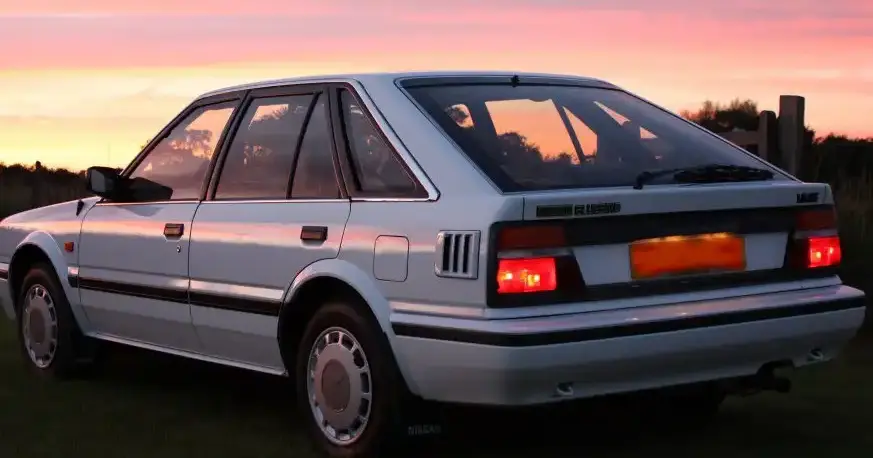
The Nissan Bluebird Hatchback, specifically the T72 and T12 series produced between 1986 and 1990, represented Nissan’s entry into the increasingly popular compact hatchback market. While the Bluebird name had a long history dating back to 1936, these later iterations aimed for practicality and affordability. The 2.0 D variant, designated FSLT72 and T12, was a diesel-powered option primarily aimed at markets where fuel economy and durability were prioritized. This model occupied the lower end of the Bluebird hatchback range, offering a more economical alternative to the gasoline-powered versions.
Technical Specifications
| Brand | Nissan |
| Model | Bluebird |
| Generation | Bluebird Hatchback (T72, T12) |
| Type (Engine) | 2.0 D (FSLT72, T12) (67 Hp) |
| Start of Production | 1986 |
| End of Production | 1990 |
| Powertrain Architecture | Internal Combustion Engine |
| Body Type | Hatchback |
| Seats | 5 |
| Doors | 5 |
| Fuel Type | Diesel |
| Power | 67 Hp |
| Engine Aspiration | Naturally Aspirated |
| Drivetrain | Front Wheel Drive |
Powertrain & Engine Architecture
The 2.0 D Bluebird Hatchback utilized a naturally aspirated diesel engine, likely a variant of Nissan’s SD20 series. This engine, while not known for high performance, was valued for its robustness and fuel efficiency. The SD20 was an inline-four cylinder engine, featuring a cast iron block and head. It employed indirect injection, a common technology for diesel engines of the era, utilizing a pre-combustion chamber to improve combustion efficiency. The engine’s 67 horsepower output and relatively low compression ratio (typical for indirect injection diesels) prioritized longevity over outright power. Details regarding the specific fuel injection pump used in the FSLT72/T12 are scarce, but it would have been a mechanically governed rotary pump, typical for the time. The engine was mated to a four or five-speed manual transmission, or a three-speed automatic transmission, depending on the specific market and trim level. The automatic transmission was a conventional hydraulic unit, offering smooth but not particularly quick shifts.
Driving Characteristics
The 2.0 D Bluebird Hatchback was not designed for spirited driving. With only 67 horsepower propelling a relatively weighty hatchback body, acceleration was modest. The engine produced a usable amount of torque at low RPMs, making it suitable for everyday driving and hauling loads, but overtaking maneuvers required careful planning. The automatic transmission, while providing convenience, further diminished performance due to its limited number of gears and inherent efficiency losses. Gear ratios were optimized for fuel economy rather than acceleration. Compared to the gasoline-powered Bluebird hatchbacks, the diesel version felt significantly slower, but offered a substantial improvement in fuel consumption. The suspension, tuned for comfort, provided a reasonably smooth ride, but body roll was noticeable during cornering. Steering was light and easy, making it suitable for urban driving.
Equipment & Trim Levels
The 2.0 D Bluebird Hatchback typically represented the base trim level within the Bluebird hatchback range. Standard equipment generally included cloth upholstery, basic instrumentation (speedometer, fuel gauge, temperature gauge), and a simple AM/FM radio. Power steering was often optional, as were features like electric windows and central locking. Interior plastics were durable but utilitarian, reflecting the car’s focus on affordability. The dashboard layout was functional and straightforward, prioritizing ease of use over aesthetic appeal. Optional extras could include upgraded audio systems, alloy wheels (though rare on the base model), and a sunroof. The overall interior ambiance was practical and aimed at providing a comfortable, if not luxurious, driving experience.
Chassis & Braking
The Bluebird Hatchback utilized a conventional front-wheel-drive chassis with MacPherson strut suspension at the front and a twist-beam axle at the rear. The suspension was tuned for comfort and ride quality, rather than sporty handling. Braking systems varied depending on the market. Lower-spec models, like the 2.0 D, typically featured drum brakes on the rear wheels, while higher-spec gasoline models often received disc brakes all around. Front brakes were typically ventilated discs. The braking system was adequate for normal driving conditions, but lacked the stopping power of more modern vehicles. Stabilizer bars were fitted to both the front and rear axles to reduce body roll, but their effectiveness was limited by the relatively soft suspension setup.
Market Reception & Comparison
The 2.0 D Bluebird Hatchback was generally well-received in markets where diesel engines were popular, such as Europe and Australia. Critics praised its fuel economy and durability, but noted its lack of performance. Compared to its gasoline-powered siblings, the diesel version offered significantly better fuel efficiency, but at the cost of acceleration and refinement. The 1.6L and 1.8L gasoline engines provided a more engaging driving experience, but were less economical. The diesel model appealed to buyers who prioritized practicality and low running costs over driving pleasure. Reliability was generally good, although diesel engines of this era required regular maintenance to prevent issues with the fuel injection system and glow plugs. The Bluebird competed with other compact hatchbacks such as the Ford Escort, Vauxhall Astra, and Toyota Corolla.
Legacy
The Nissan Bluebird Hatchback 2.0 D, while not a performance icon, holds a place in automotive history as a practical and reliable family car. The SD20 diesel engine proved to be remarkably durable, and many examples remain on the road today, often with high mileage. In the used car market, these Bluebirds are valued for their simplicity and affordability. Maintenance is relatively straightforward, and parts are generally readily available. However, potential buyers should be aware of the age-related issues common to vehicles of this era, such as corrosion and wear and tear on rubber components. The 2.0 D variant represents a snapshot of automotive engineering from the late 1980s, prioritizing fuel efficiency and durability over outright performance, and remains a testament to Nissan’s commitment to building practical and reliable vehicles.